How to Store Sourdough Bread So It Stays Fresh
How do I keep my baked sourdough fresh and how do I freeze it?
On this page
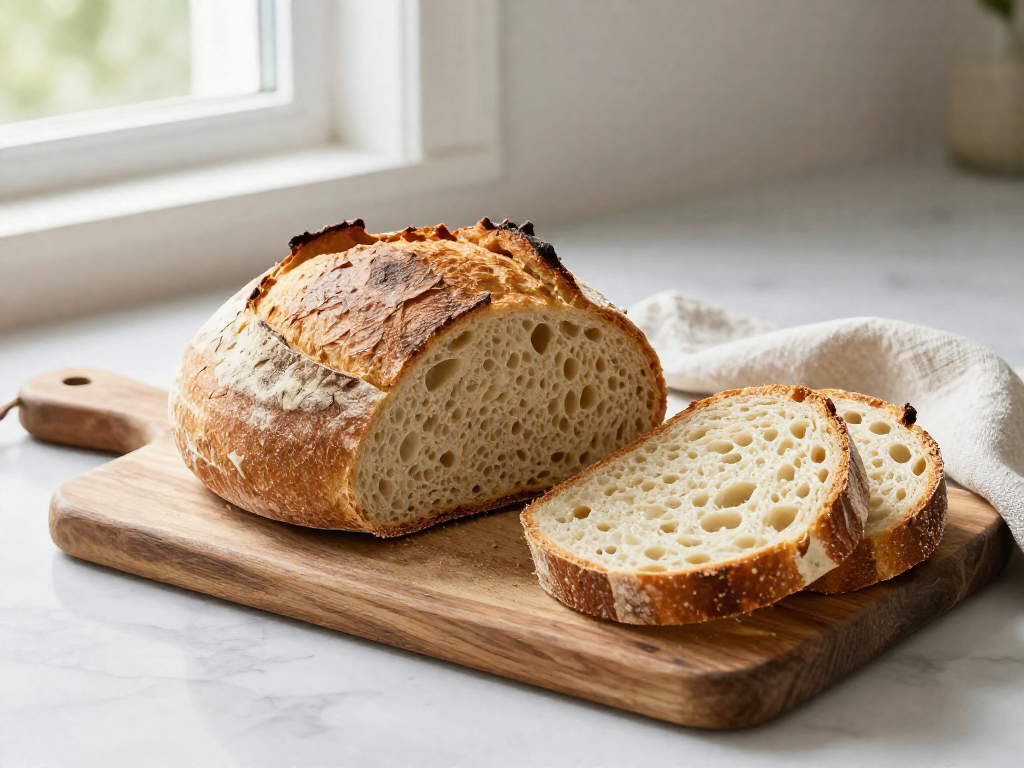
Why Sourdough Goes Stale (and Why It's Different)
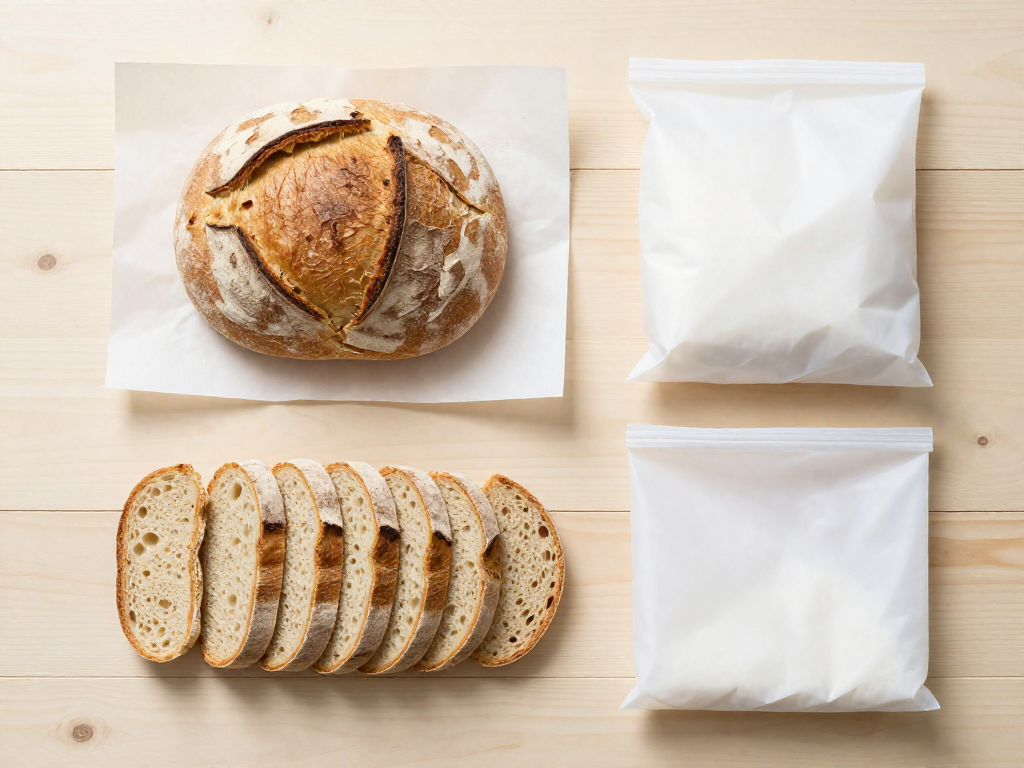
Quick answer: Never store sourdough in the fridge. Keep it cut-side-down on the counter, or freeze it. Here's why that works.
When bread "goes stale," it isn't only drying out. The bigger culprit is starch retrogradation — a fancy term for the cooked starch molecules slowly re-crystallizing as the loaf cools and sits, turning the crumb firm and crumbly. The crumb is the soft inside of the bread; the crust is the firm outside.
Here's the surprise: the fridge speeds up retrogradation. Cold temperatures are exactly where starch re-crystallizes fastest, so refrigerated bread stales faster than bread left on the counter. Skip the fridge.
The good news for sourdough: its natural acidity (from the wild fermentation that makes it rise) slows mold growth, so a sourdough loaf typically keeps a day or two longer than soft commercial bread.
Once you're storing it, you're managing two opposite enemies:
- Air exposure dries the crumb, making it stiff and crumbly.
- Trapped moisture softens the crust, turning that crackly crust leathery.
Good storage simply balances these two — which the next sections walk through step by step.
How to Store Sourdough on the Counter (First 3–4 Days)
For the first few days, your counter is the best place for a crusty sourdough loaf. The goal is simple: keep the inside soft while protecting that crackly crust. Here's exactly what to do.
Quick Steps
- Cool it completely first. Wait until the loaf is fully cooled to room temperature (usually 2–4 hours after baking) before you store it. A warm loaf releases steam, and trapped steam turns your crust soft and the crumb gummy.
- Cut the loaf, then store it cut-side down. Place the flat cut surface directly on a clean wooden board or inside a bread box. The loaf's own crust acts as a lid, sealing in moisture without plastic.
- Wrap it in something breathable. A paper bag, a cloth/linen bag, or a beeswax wrap (a reusable cotton wrap coated in beeswax) lets the crust breathe so it stays crisp. A bread box works the same way.
- Skip plastic for crusty loaves. Plastic bags trap moisture and soften the crust within hours. Only reach for plastic if you've baked a soft sandwich-style loaf, where a tender crust is actually what you want.
Realistic Timeline
A crusty sourdough loaf stays at its best for 3–4 days at room temperature. Results vary by kitchen and climate—humid rooms soften crusts faster, while dry rooms can stale the crumb sooner.
Sensory cues to watch for:
- Day 1–2: Crisp crust, soft springy crumb. Peak eating.
- Day 3–4: Crust slightly softer, crumb still pleasant—great for toast.
- Day 5+: Crumb feels dry or firm. Time to freeze leftovers (covered in the next section) rather than leave them out.
Tip: Never store sourdough in the fridge to keep it fresh. Refrigerator temperatures actually speed up staling, drying the crumb faster than the counter does.
How to Freeze Sourdough Bread
Freezing is the best way to keep sourdough tasting fresh beyond a few days. The single most important rule: freeze it the day it's baked, once the loaf has cooled completely. Don't wait until it starts to go stale—freezing locks in the freshness you have right now, it can't bring any back.
Whole loaf or sliced?
Choose based on how you'll eat it:
- Whole loaf — best if you want a crisp crust again later (you'll reheat the whole thing). Good for a weekend or a dinner.
- Pre-sliced — best for everyday, grab-and-go use. Pull out one or two slices at a time, no need to thaw the whole loaf.
Step-by-step
- Cool completely. A warm loaf releases steam, which becomes ice crystals and leads to freezer burn (dry, grayish, flavorless patches caused by air and moisture loss).
- Slice if needed. For slices, freeze them flat on a tray for about 1 hour first, then transfer to a bag—this stops them sticking together so you can grab one at a time.
- Wrap tightly. Wrap the loaf or slices in parchment or foil to hug the surface, then seal inside a freezer bag. Press out as much air as you can. The double layer is your main defense against freezer burn.
- Label with the date. Use within 3 months for the best quality; it stays safe longer but flavor and texture slowly fade.
Quick tip: A gallon freezer bag holds about half a sliced loaf laid flat—perfect single-serving stacks.
Results vary by freezer and climate, so check your first batch and adjust wrapping if you notice any drying.
How to Thaw and Revive Sourdough
Frozen or stale sourdough can come back to life. Here's exactly what to do, depending on what you've got.
Thaw a frozen loaf
Leave the whole loaf at room temperature in its wrapping (or a paper bag) for 2–3 hours. Keeping it wrapped lets the bread reabsorb its own moisture instead of drying out. The crust will soften slightly as it thaws — that's normal.
Toast frozen slices
No need to thaw. Drop pre-sliced sourdough straight from the freezer into the toaster on a medium setting. Run it through one extra cycle if needed. You'll get crisp edges and a warm, soft center in about 3 minutes.
Revive a stale loaf (the water trick)
This is the best way to rescue day-old bread that's gone dry:
- Quickly run the whole crust under cold running water so it's lightly wet all over — don't soak it.
- Bake directly on the oven rack at 350°F (175°C) for 10 minutes.
The water turns to steam inside, re-softening the crumb (the soft interior), while the crust crisps up. Eat within a few hours — revived bread stales again fast.
Refresh just the crust
For a loaf that's only slightly soft, skip the water and bake at 375°F (190°C) for 4–6 minutes until the crust crackles.
When it's too far gone
Rock-hard or weeks-old bread isn't waste. Turn it into:
- Croutons — cubed, tossed in oil, baked at 375°F until golden
- Breadcrumbs — blitzed dry or toasted
- French toast — stale slices soak up custard better than fresh
Results vary by oven and how dry the bread is, so check early the first time.
Common Sourdough Storage Mistakes to Avoid
Even a perfect loaf can turn gummy or stale fast if you store it wrong. Here are the five mistakes beginners make most often:
- Bagging it while still warm. A loaf needs to cool completely (at least 2–4 hours) before storage. Wrapping it warm traps steam, which condenses into moisture and makes the crumb (the soft inside) gummy.
- Refrigerating the loaf. The fridge actually speeds up staling. Cold temperatures cause the starches to firm up faster, so bread goes hard and dry in a day or two. Counter or freezer only.
- Sealing a crusty loaf in airtight plastic. Plastic traps moisture against the crust and turns that crisp exterior soft and leathery. Use a paper bag, bread box, or cloth for the first few days instead.
- Leaving the cut side exposed. The open crumb dries out fast. Store the loaf cut-side down on a board, or press the cut face against a sealed surface.
- Freezing without proper wrapping. Loose or single-layer wrapping invites freezer burn. Wrap tightly in plastic, then foil or a freezer bag (see the freezing section above).
Avoid these five and your loaf will stay fresh noticeably longer.
FAQ
How long does homemade sourdough bread last on the counter?
Stored cut-side down on a board or in a paper bag at room temperature, homemade sourdough stays good for about 2 to 4 days. The crust will be crispiest on day one and soften over time; the crumb (the soft inside) stays moist longest in the first 48 hours. Avoid sealing a fresh loaf in plastic on the counter, as trapped moisture softens the crust and can encourage mold. If your kitchen is warm and humid, expect the shorter end of that range. Once it firms up past day 3 or 4, slice and freeze the rest rather than letting it go stale.
Can you put sourdough bread in the fridge?
It's best not to. The fridge is the worst place to store sourdough because temperatures around 4°C (40°F) speed up staling – a process called starch retrogradation, where the starches recrystallize and the crumb turns dry and firm faster than it would on the counter. Bread can go stale in the fridge in a day or two. For storage beyond 3 to 4 days, freeze it instead, which pauses staling rather than accelerating it. The one exception is hot, humid weather where counter mold is a real risk; even then, freezing is the better choice.
What's the best way to freeze sourdough bread?
Freeze it sliced. Let the loaf cool completely (at least 2 hours), then cut it into slices so you can pull out only what you need. Wrap portions tightly in plastic wrap or place slices in a freezer bag, press out as much air as possible, and freeze for up to 3 months. Freezing while fresh locks in quality, so don't wait until the loaf is going stale. To use, toast slices straight from frozen, or thaw a whole wrapped loaf at room temperature. For a freshly baked feel, reheat a thawed loaf in a 180°C (350°F) oven for 8 to 10 minutes.
How do you keep sourdough crust crispy after storing?
Store the loaf cut-side down on a wooden board or in a paper bag (not plastic) so air can circulate and moisture escapes – this protects the crisp crust. To bring back crackle on a loaf that has softened, reheat it in a 200°C (400°F) oven for 5 to 10 minutes; the dry heat re-crisps the outside. For an extra-crisp result, run the crust briefly under water or spritz it lightly before reheating, which helps it shatter again. Note that no storage method keeps the crust as crisp as the first few hours after baking, and results vary with your kitchen's humidity.
How do you revive stale sourdough bread?
Run the whole loaf briefly under cold running water to lightly dampen the crust (a few seconds is enough – don't soak it), then bake it in a 180 to 200°C (350 to 400°F) oven for 10 to 15 minutes. The moisture turns to steam inside, softening the crumb, while the dry oven heat re-crisps the crust – the loaf comes out close to fresh. Let it cool 10 minutes before slicing. This works best once per loaf. For slices, toasting is the quickest revival, and frozen slices toast well straight from the freezer.
Should you store sourdough bread cut-side down?
Yes. Once you've cut into a loaf, stand it cut-side down on a wooden board or cutting surface. The exposed crumb is where moisture escapes fastest, so pressing it against a flat surface seals that face and slows drying, while the hard crust on the outside continues to protect the rest of the loaf. It's a simple, no-equipment way to keep a partially eaten loaf fresher for an extra day or two. Skip wrapping the cut face in plastic, which traps moisture and softens the surrounding crust.
See also
- Beginner sourdough bread recipe (basic loaf)
- How to tell when sourdough is fully baked
- What to do with leftover sourdough (recipes)
- Troubleshooting gummy or dense sourdough
- How to make sourdough croutons and breadcrumbs
Related articles
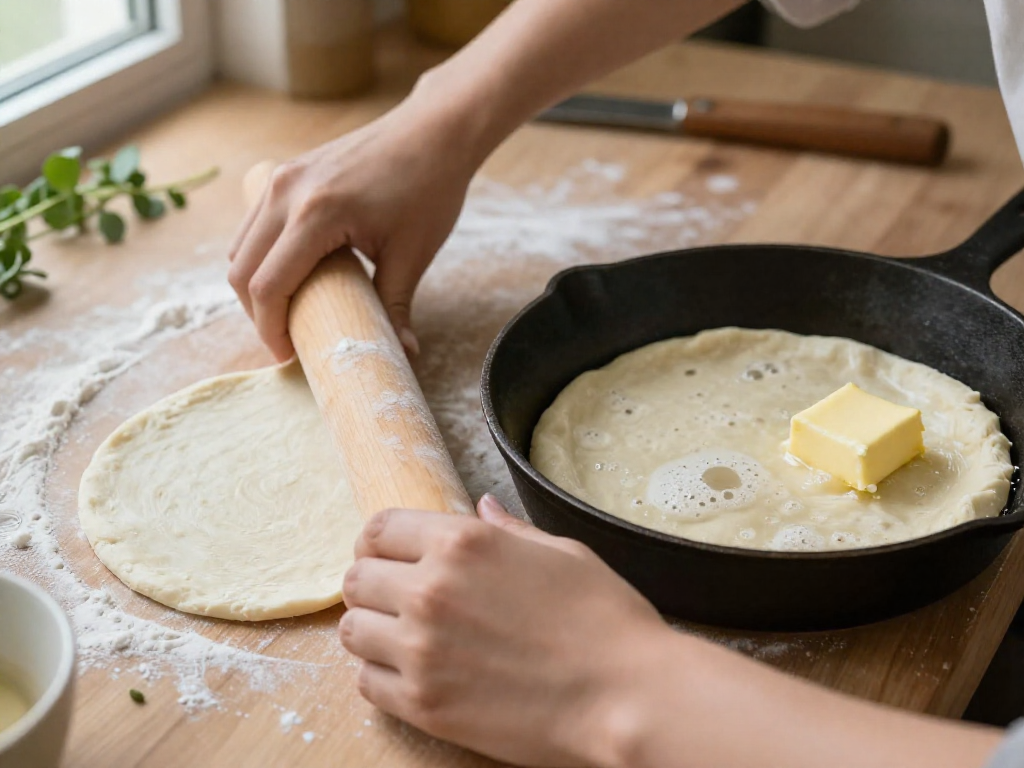
Sourdough Discard Flatbreads: Ready in Under an Hour
Make soft, tearable sourdough discard flatbreads in under an hour with no rise time. Easy stovetop recipe with herb & garlic variations.
Jul 28, 2026 · 8 min read
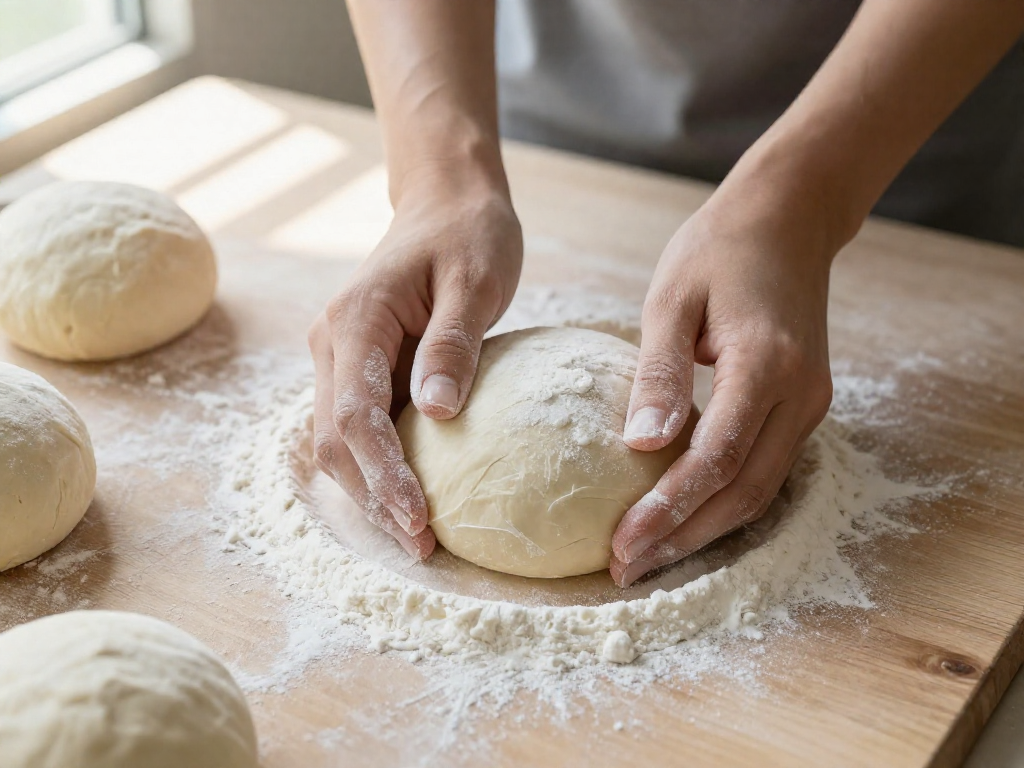
Soft Sourdough Dinner Rolls: A Forgiving Recipe for Beginners
Make soft, fluffy sourdough dinner rolls with this forgiving beginner recipe. No special pans needed—just a skillet. Includes tangzhong for incredible softness.
Jul 28, 2026 · 7 min read
Sourdough Pizza Dough for Beginners: A Forgiving Way to Practice Shaping
Can I use my sourdough starter to make pizza dough, and is it easier than a loaf?
Jul 20, 2026 · 9 min read