Can You Use Whole Wheat or Rye in Beginner Sourdough?
Should beginners add whole grain flours to their bread?
On this page
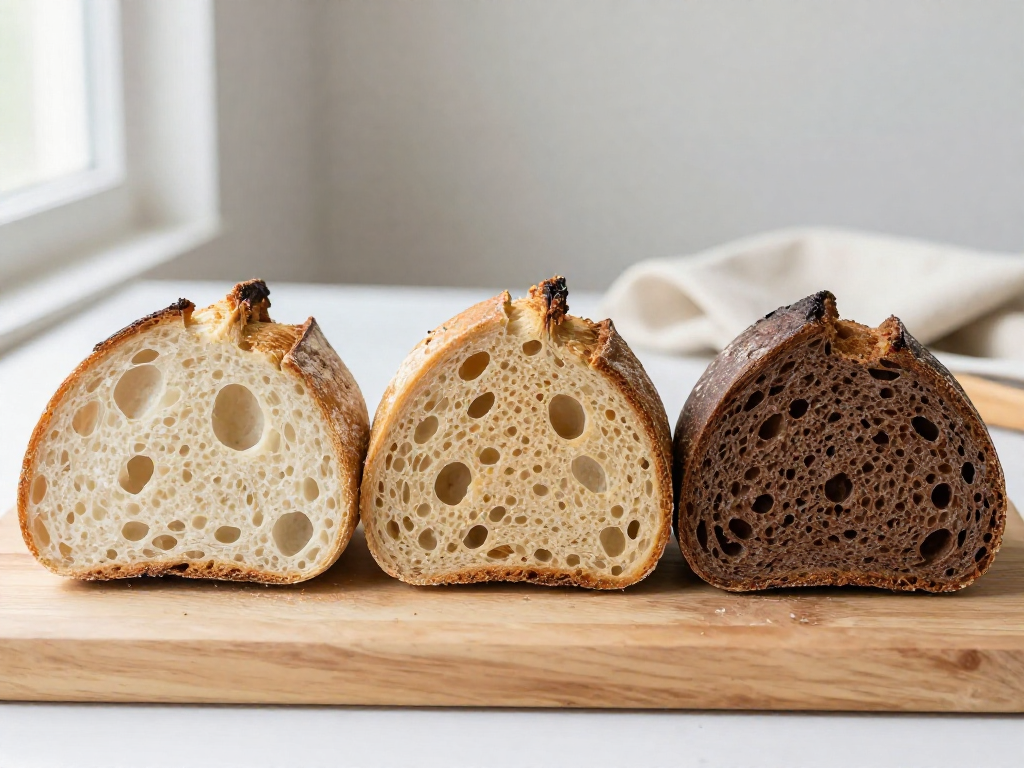
The Short Answer: Yes, But Start Small
Yes—you can absolutely use whole wheat or rye in beginner sourdough. In fact, a little goes a long way toward better flavor and a more forgiving rise. The key is to start small.
Here's the simple rule: replace only 10–25% of your white bread flour with whole wheat or rye. For a loaf using 500g of flour, that means swapping out just 50–125g for whole grain and keeping the rest as white bread flour. You get the nutty, tangy character of whole grain without the headaches.
Why not go all-in right away? Whole grain flours behave very differently from white flour. They soak up more water and contain sharp bran particles that cut through the stretchy gluten network—the web of proteins that traps gas and lets your dough rise. Jumping straight to a 100% whole wheat or rye loaf is the fastest way to get exactly the dense, gummy, flat bricks that scare new bakers off. (Hydration, by the way, just means how much water is in your dough relative to flour—we'll keep it simple here.)
What this article covers:
- How whole wheat and rye actually behave compared to white flour
- Exactly how much to use as a beginner (with gram and cup amounts)
- How to adjust your water and timing when you add whole grain
- Troubleshooting when your loaf turns out denser than you hoped
Start small, taste the difference, and scale up as your confidence grows.
How Whole Grains Actually Change Your Dough
Swapping in whole wheat or rye changes four things at once. Here's what's happening inside your dough, and what to do about each.
1. Bran cuts your gluten (weaker structure, less rise). Gluten is the stretchy protein network that traps gas and lets your loaf rise. Whole grain flours keep the bran—the sharp, fibrous outer husk of the grain—which acts like tiny blades that slice through those gluten strands. Weaker network, less trapped gas, a flatter and denser loaf. What to do: Start with no more than 20–25% whole grain (for every 400 g of flour, that's 80–100 g whole grain, the rest white bread flour). Handle the dough gently.
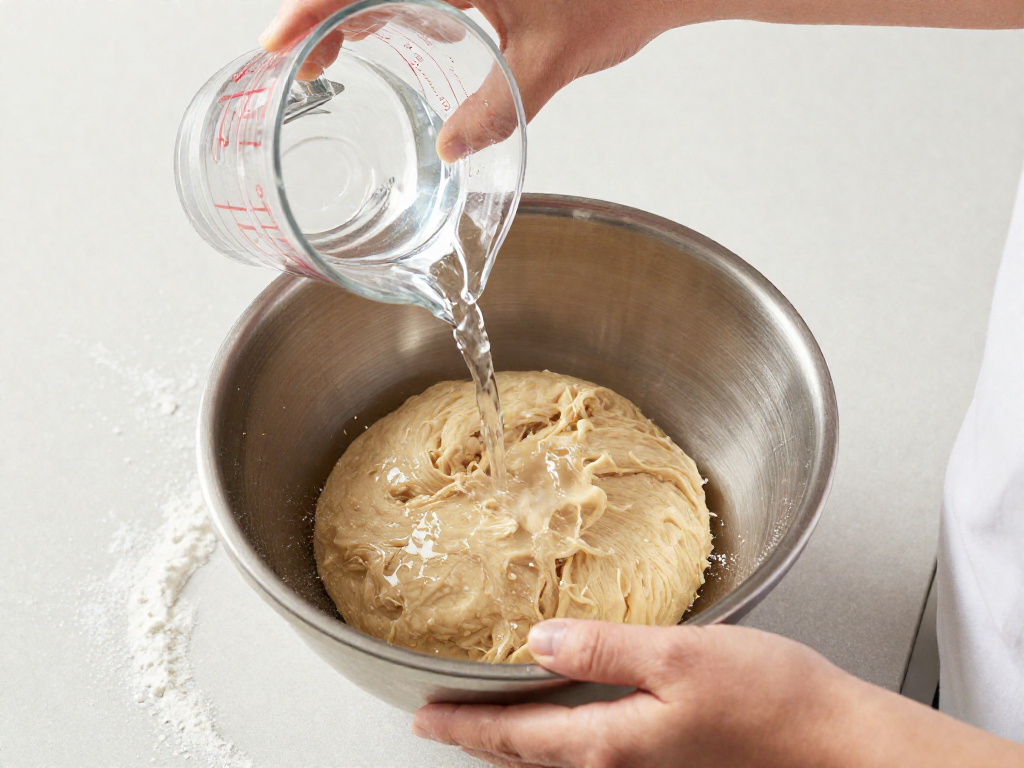
2. Whole grains drink more water (stiffer, drier dough). Bran and germ soak up far more water than white flour. If you use the same liquid as a white recipe, the dough feels tight, stiff, and hard to work. Hydration just means the weight of water compared to the weight of flour—a 70% hydration dough has 70 g water for every 100 g flour. What to do: Add about 5% more water when using whole grains. On a 400 g flour recipe, that's roughly 20 g (about 1.5 tablespoons) extra. Let the dough rest 30–60 minutes after mixing (an autolyse—just flour and water sitting together) so the bran fully absorbs the water before you judge the feel.
3. Faster fermentation (your timing shrinks). Fermentation is when the wild yeast and bacteria in your starter eat the flour and produce gas. Whole grains carry more of those natural nutrients, so they feed your starter harder and the dough ferments faster. What to do: Check your bulk ferment (the first rise, before shaping) early. Whole grain dough may be ready 30–60 minutes sooner. Watch for the dough roughly doubling and looking puffy with a few bubbles—don't just trust the clock.
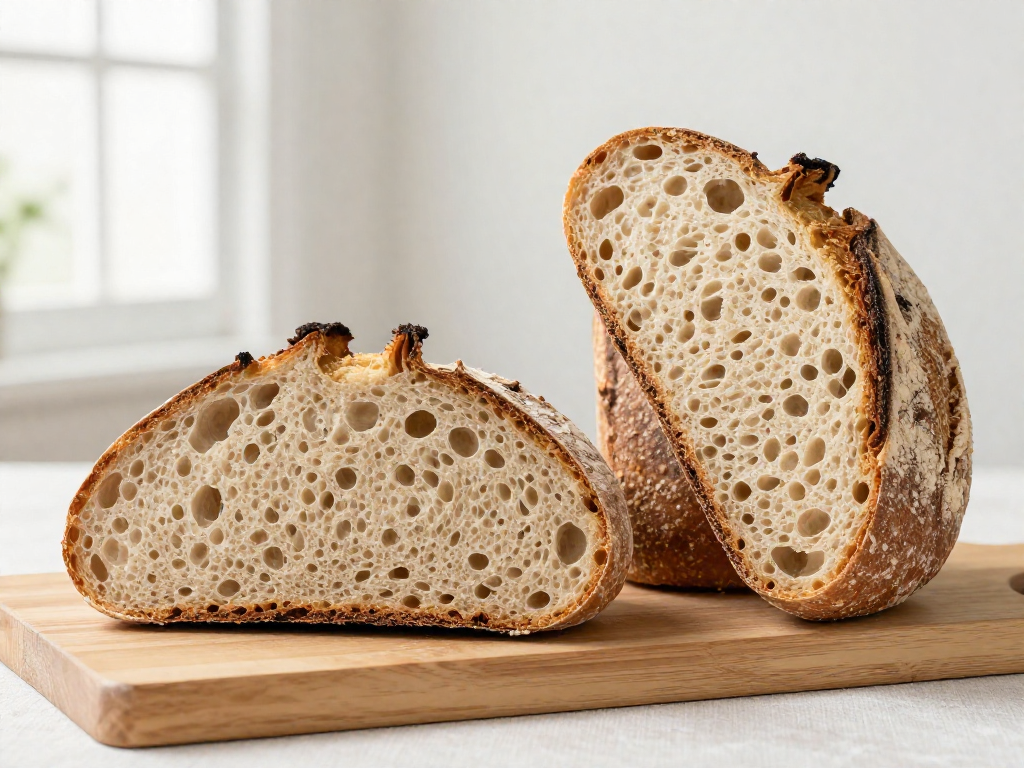
4. The trade-off: more flavor, denser crumb. You get nuttier, deeper flavor and more nutrition. In return, the crumb (the inside texture) sits a little tighter and denser. That's normal, not a failure—and a great reason to start small while you learn the feel.
Whole Wheat vs. Rye: What's the Difference for Beginners?
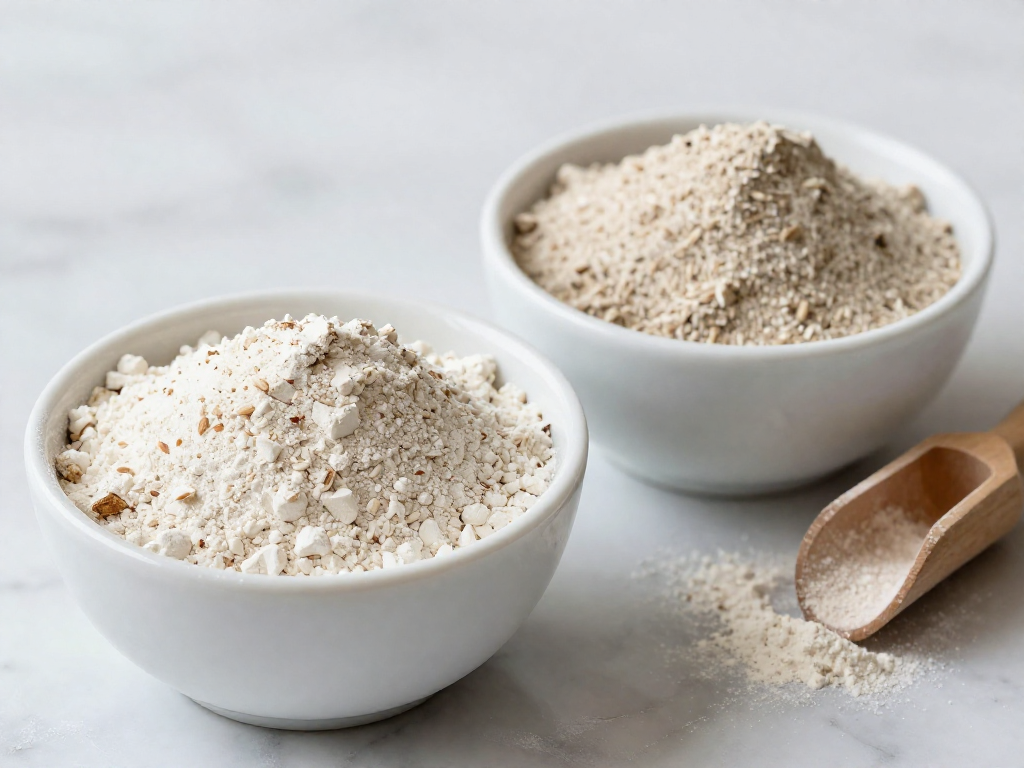
Quick answer: start with whole wheat. Save rye for later. Here's why these two flours behave so differently in your dough.
Whole wheat: the forgiving choice
Whole wheat flour still contains plenty of gluten—the stretchy protein network that traps gas and gives bread its rise and chew. That means it behaves a lot like the white bread flour you may already know, just with a nuttier, slightly earthier flavor and a bit more thirst for water.
For your first whole-grain loaf, swap 50g of your white flour (about ⅓ cup) for whole wheat in a standard 500g (4 cups) recipe. You'll notice the dough feels a touch rougher but still shapes into a smooth, tacky ball. This small swap adds flavor without putting your rise at risk.
Rye: powerful flavor, tricky handling
Rye is a different animal. It has very little usable gluten, so dough made with it turns sticky and tacky and never builds the same stretch. Rye also ferments fast—the natural enzymes break down starches quickly—so an overlong bulk ferment (the first long rise after mixing) can leave you with a dense, gummy crumb (the inside texture of the bread).
If you want rye flavor, keep it to 25g–50g (2–4 tablespoons) of your total flour and watch the dough closely. Less is genuinely more here.
Our recommendation
Master one whole wheat loaf first. Once you're comfortable reading your dough, add a small percentage of rye for that deep, malty flavor. Results vary by kitchen temperature and humidity, so treat these amounts as a starting point, not a guarantee.
How to Add Whole Grains Without Wrecking Your Loaf
The safest way to add whole wheat or rye is to swap a small amount of your white flour for whole grain, then increase slowly over several bakes. Here's the exact process.
1. Start small: 10–15% whole grain
If your recipe uses 500g of white flour, replace 50–75g of it with whole wheat or rye. After a successful bake, increase by another 5% (25g) next time. This slow ramp keeps your loaf rising while your starter and your hands adjust.
2. Add a little extra water
Whole grains soak up more water than white flour, so the same recipe will feel stiff and dry. Add about 5g extra water for every 50g of whole grain you swap in.
Hydration just means how much water is in your dough compared to flour, written as a percentage. More water = a softer, stickier dough.
3. Use a short autolyse
Autolyse is simply mixing your flour and water together (no salt, no starter) and letting it rest before kneading. A 30–45 minute rest softens the sharp bran in whole grains so it tears your dough less, giving you a better rise.
4. Pull the dough sooner
Whole grains speed up fermentation, so your bulk ferment (the first long rise after mixing in your starter) finishes faster. Watch the dough, not the clock: stop when it has grown about 50% and looks puffy and jiggly, often 30–60 minutes sooner than an all-white loaf.
Example: converting a basic beginner loaf to 20% whole wheat
| Ingredient | All-white | 20% whole wheat |
|---|---|---|
| White flour | 500g (≈4 cups) | 400g (≈3¼ cups) |
| Whole wheat flour | 0g | 100g (≈¾ cup) |
| Water | 350g (≈1½ cups) | 360g (≈1½ cups + 2 tsp) |
| Salt | 10g (≈1¾ tsp) | 10g (≈1¾ tsp) |
| Active starter | 100g (≈½ cup) | 100g (≈½ cup) |
Mix flour and water, autolyse 30 minutes, add starter and salt, then bulk ferment until 50% larger. Results vary by kitchen temperature, so trust the dough's look and feel over exact times.
Troubleshooting Common Whole Grain Problems
Whole grains behave differently than white flour, so a few problems show up again and again. Here's how to read the symptom and fix it next time.
Dense or flat loaf. The two usual culprits are too much whole grain or under-proofing (proofing means letting the shaped dough rise before baking). Whole wheat and rye add weight and cut the gluten that traps gas, so a loaf that's 50% whole grain often comes out heavier than a white one. Fix it by dropping back to 20–25% whole grain, and let the dough rise until it's visibly puffy and a poked fingertip leaves a slow-filling dent.
Gummy crumb. A sticky, paste-like inside usually means the loaf was either over-fermented or under-baked. Rye is the main offender here because it ferments fast. Watch the clock, and bake until the internal temperature hits 205–210°F (96–99°C); a thermometer is your most reliable cue.
Dough too stiff or dry. Whole grains soak up more water than white flour, so a recipe that feels right with white flour can feel like clay with whole wheat. Add water 15g (1 tablespoon) at a time until the dough is soft and slightly tacky but not soupy.
Bitter or sour taste. A sharp, overly sour flavor means fermentation ran too long. Shorten your bulk ferment (the first long rise after mixing) by an hour, or ferment somewhere cooler.
Results vary by kitchen and climate, so treat these as starting points and adjust from there.
A Simple Whole Grain Starting Point
Start here on your next bake: use 80% white bread flour and 20% whole wheat. For a standard beginner loaf, that means:
- 400g (about 3¼ cups) white bread flour
- 100g (about ¾ cup) whole wheat flour
Mix these together before adding water, then follow your usual recipe. This ratio adds noticeable nutty flavor and color while staying easy to handle, because the small amount of whole grain won't dramatically change your dough's hydration (the percentage of water relative to flour) or timing.
When to stay put: If your loaf comes out a little dense or slightly shorter than your all-white bakes, that's normal. Bake this same ratio 2–3 more times before changing anything.
When to scale up: Once you're getting an open, springy crumb, bump to 70/30, then 60/40.
Every bake teaches you how your flour behaves in your kitchen. Results vary by climate and flour brand, so treat each loaf as useful data, not a pass-or-fail test.
FAQ
Can I make 100% whole wheat sourdough as a beginner?
You can, but it's not the easiest place to start. 100% whole wheat is thirstier and ferments faster than white flour, so timing and water are less forgiving. For your first few bakes, use 20-30% whole wheat with 70-80% bread flour. This gives you whole-grain flavor with a more open, less dense crumb (the texture of the inside of the loaf). Once you're confident with bulk ferment (the first long rise after mixing, usually 4-6 hours at room temperature) and the float test for a ready starter, work your way up to higher percentages.
Do I need to change my recipe when adding whole wheat or rye?
Yes, two things change. First, add more water: whole grains absorb more, so raise hydration (the weight of water as a percentage of flour weight) by about 5%. Second, shorten your bulk ferment, because the extra nutrients and bran in whole grains feed the starter and speed fermentation. Watch the dough, not just the clock: stop bulk ferment when it has risen about 50% and looks puffy with a few bubbles on the surface. As a starting point, swap 100g of your white flour for 100g whole wheat or rye and add 15-20g extra water, then adjust on your next bake.
Why is my whole grain sourdough so dense?
Dense whole grain loaves usually come from one of three causes. 1) Not enough water: bran soaks up moisture, so a dough that feels right for white flour is too dry here. Fix: add 5% more water (about 15-25g per 500g flour). 2) Underfermented dough: whole grains need a shorter bulk ferment, but if the starter is weak or the kitchen is cold, the dough never gets enough rise. Fix: use a starter that doubles in 4-6 hours and passes the float test (a spoonful floats in water). 3) The bran cutting the gluten structure: fix by using a higher proportion of bread flour, or letting the dough rest for 30-60 minutes after mixing (an autolyse, where flour and water sit together so the flour fully hydrates) before adding starter and salt.
Is rye or whole wheat better for beginners?
Whole wheat is the friendlier choice for beginners. It still forms gluten (the protein network that traps gas and gives bread structure), so the dough behaves more like the white-flour loaves you've likely tried. Rye has very little usable gluten, gets sticky and sluggish, and is harder to shape, so a 100% rye loaf is an advanced bake. That said, rye is excellent in small amounts: adding 10-20% rye boosts flavor and actually makes your starter more active. Start with whole wheat for the bulk of any blend, and use rye as a small flavor and fermentation booster.
Do whole grains make sourdough ferment faster?
Yes. Whole wheat and rye keep the bran and germ, which carry more nutrients and natural enzymes that feed the wild yeast and bacteria in your starter. That means dough rises faster and your starter gets more active. The practical effect: your bulk ferment will likely finish sooner than a white-flour recipe, so check the dough earlier than you expect. Stop when it has risen about 50% and is puffy with surface bubbles, rather than waiting for a set number of hours. In a warm kitchen this can happen quickly, so over-fermenting (which causes flat, gummy loaves) is the main risk to watch for.
How much water should I add for whole grain flour?
As a rule of thumb, add about 5% more water than your usual white-flour recipe, then fine-tune. For a beginner-friendly blend of 400g bread flour + 100g whole wheat (500g flour total), start with around 350-360g water (70-72% hydration) instead of the ~325g (65%) you might use for all white flour. For higher percentages of whole grain or any rye, lean toward the higher end. The dough should feel tacky but not soupy; if it's stiff and tearing, add water 10g at a time. Because flours and kitchens vary, treat these numbers as a starting point and adjust based on how the dough feels.
See also
- Beginner sourdough starter guide
- Basic beginner sourdough bread recipe
- Understanding hydration percentages for beginners
- How to tell when sourdough is properly proofed
- Why is my sourdough gummy? Troubleshooting guide
- Best flour for sourdough beginners
Related articles
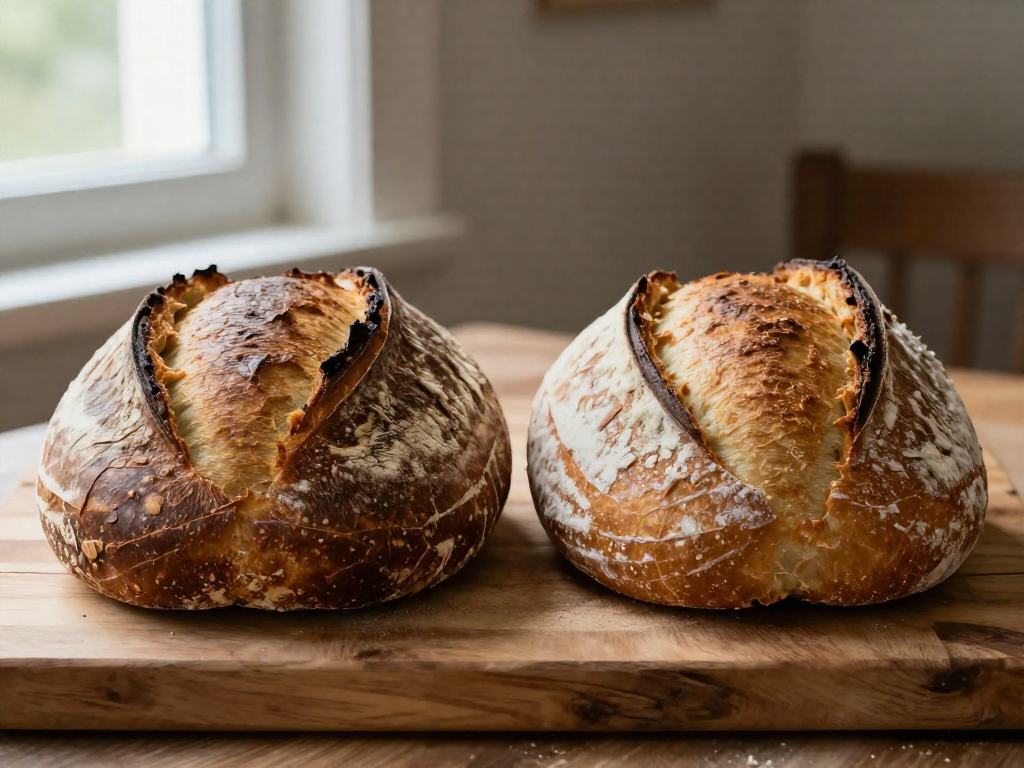
Baking Stone vs. Dutch Oven for Sourdough: A Beginner's Comparison
Can I use a baking stone instead of a Dutch oven for sourdough?
Jul 28, 2026 · 8 min read
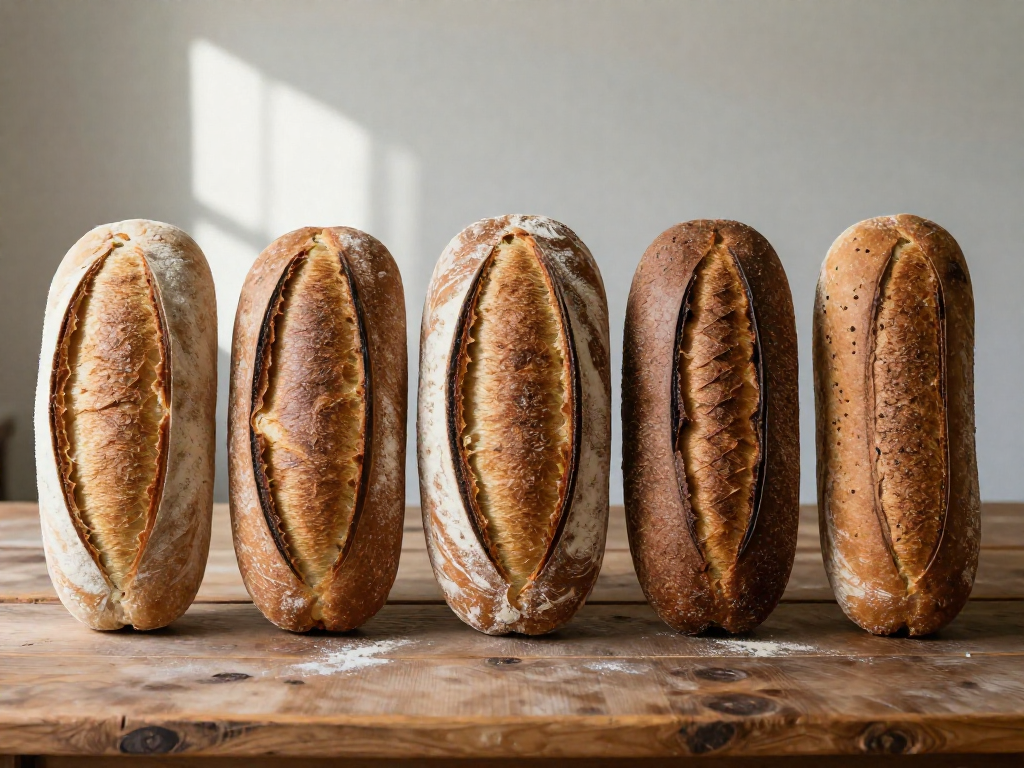
Flour Types for Sourdough: A Visual Guide to Protein Content and Results
How do different flours affect sourdough bread, and what do the results look like side by side?
Jul 20, 2026 · 11 min read
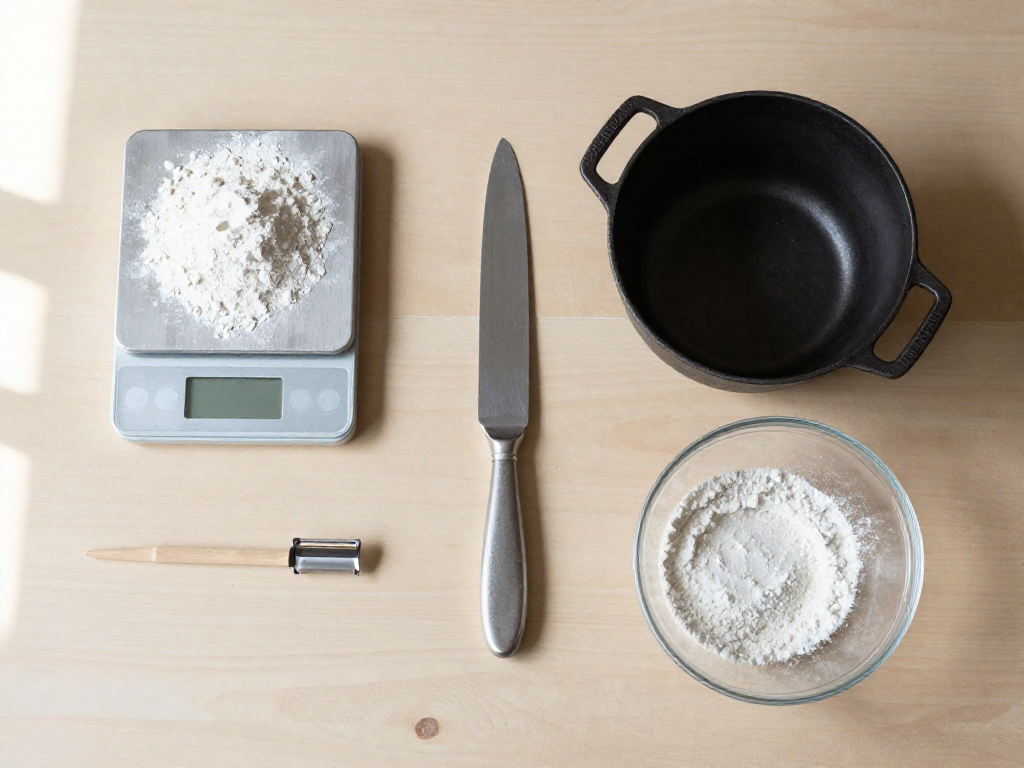
The Only 5 Tools You Really Need for Your First Sourdough Loaf
Start baking sourdough without the clutter and expense. These are the only 5 tools you really need—and the ones you can skip.
Jul 20, 2026 · 3 min read