Stop Aiming for 'Perfect': Redefining Sourdough Success as a Beginner
Should beginners lower their expectations for a perfect loaf?
On this page
Many beginners quit sourdough because their loaves don't look like Instagram photos. This article argues that imperfection isn't failure—it's the first step to delicious bread.
Introduction: Why We Chase the 'Perfect' Loaf (And Why It's Okay to Stop)
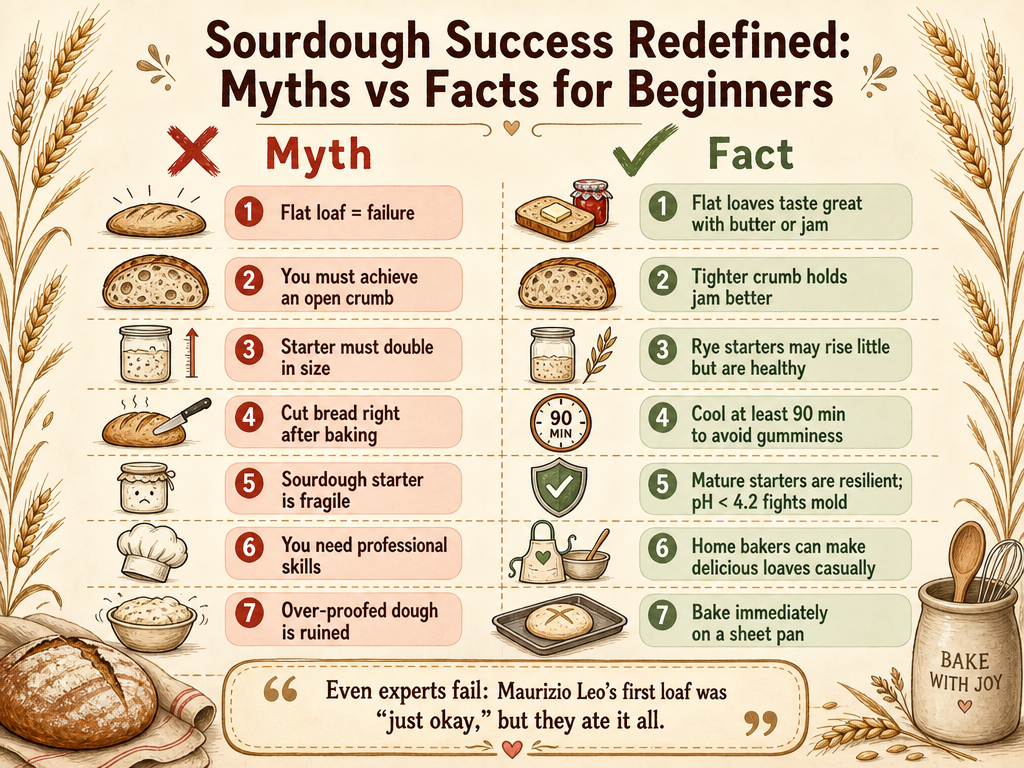
If your first loaves came out dense, flat, or just plain ugly, you're in good company. Yes, you should absolutely lower the bar—imperfection is not just normal, it's delicious and the whole point of the journey. Even expert Maurizio Leo's debut sourdough was 'actually just okay' by his wife's honest review, yet they ate every last slice (The Perfect Loaf). Instagram's towering, blistered loaves set a cruel standard that ignores the real wins: a crust that crackles, a crumb that holds butter, and the simple magic of bread you made yourself. Stop aiming for a photo shoot. Aim for jam-ready toast and a starter that bubbles. That's real success.
The 'Perfect' Loaf Is a Myth—Here's What Actually Matters
The Instagram-worthy loaf with giant open craters and a perfectly symmetrical ear is a fiction for most home bakers — and honestly, it’s not the goal you should chase right now. The most important measure of success is simple: does your bread taste good? A flat loaf that spreads instead of springs still has the tangy, complex flavor you nurtured over hours. As The Pantry Mama puts it, 'flat loaves will still taste ok.' Even the great Maurizio Leo of The Perfect Loaf confesses that his first loaf was 'actually just okay,' but he and his wife ate the entire thing. Because homemade sourdough — even the awkward ones — is almost always delicious with a smear of butter or jam.
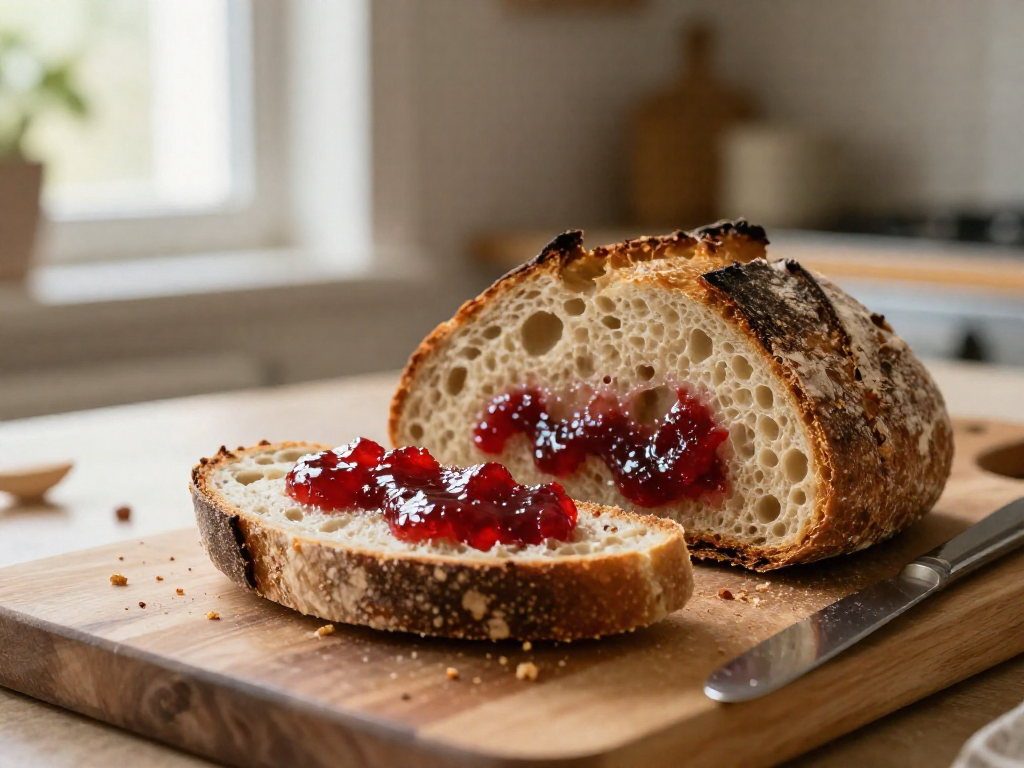
In fact, a tighter crumb, the kind beginners often get before mastering fermentation, has a hidden superpower: no jam will fall through the slice. That’s right — The Sourdough Framework points out that a denser bread can be the perfect vehicle for your favorite spreads, while an ultra-open crumb lets half your breakfast drip onto the plate. You don’t need to match the intensity of a professional baker to produce something wonderful; as Food & Wine’s Nora Allen says, 'if you're just making a casual loaf now and then, your intensity doesn't have to be at the level of a professional baker to produce something delicious.' So stop grading yourself on Instagram aesthetics. Sourdough success is a loaf that gets eaten — and yours will, trust me.
Common 'Failures' That Aren't Actually Deal‑Breakers
Many things that feel like disasters when you're starting out are actually just normal learning moments. Take the gummy, wet crumb that happens when you slice into a loaf too early. Sourdough continues cooking after it leaves the oven, and cutting it within that first hour and a half traps steam and creates a sticky mess. The Pantry Mama puts it bluntly: cutting too soon stops the cooking process and results in a gummy texture. Next time, just wait at least 90 minutes—your patience will be rewarded.
What if your dough over-proofs and turns into a soupy puddle that's impossible to shape? Don't throw it out. Grease a sheet pan, pour the dough in, dimple it with your fingers, and bake it immediately as a rustic focaccia. It’s a delicious salvage that turns a perceived failure into a win. Dense, under-proofed loaves feel discouraging, but they’re the single most common issue beginners face, and they don’t mean you’re doing anything wrong—it just takes practice to read fermentation. Even a neglected starter can bounce back with a few consistent feedings, so don’t panic if you miss a day or three.
Mindset: Even the Pros Made 'Just Okay' Bread (and Ate Every Slice)
Maurizio Leo, the baker behind The Perfect Loaf, describes his first sourdough loaf as “actually just okay.” But here’s the thing: his family ate the entire thing anyway. Even experienced bakers mess up—one YouTuber who’s been baking for years admits that failure is just part of the journey (15 Mistakes Most Beginner Sourdough Bakers Make). And if your loaf isn’t perfectly even? That’s fine. Another baker casually notes that he just keeps the smaller one for himself and gives the prettier loaf away. The point isn’t to avoid every misstep. It’s to realize that “just okay” bread is still warm, tangy, and real—and that eating your so-called mistakes is the fastest way to get better. Even a flat or gummy slice, toasted with butter, tastes like progress. No loaf ever went to waste.
Your Sourdough Journey, Redefined
Your loaf is already a win if it brings a little comfort to your table. Even technically flawed sourdough is still delicious with butter or jam (Food & Wine). So embrace the messy experiments, share the bread—imperfections and all—and just keep baking.
Sources
- Troubleshooting Sourdough Bread Problems - The Pantry Mama — pantrymama.com
- 21 Common Sourdough Starter Problems with Solutions — theperfectloaf.com
- How to Fix Flat Sourdough Bread and More Bread Baking Tips — foodandwine.com
- Sourdough Bread Troubleshooting Guide and FAQ - A Beautiful Plate — abeautifulplate.com
- Sourdough Troubleshooting: Dense, Flat & Gummy Bread Fixes — the-sourdough-framework.com
- Busting the Sourdough Starter Myths | Pastry Arts — pastryartsmag.com
- Beginner's Sourdough Bread (With Video) | The Perfect Loaf — theperfectloaf.com
- 15 Mistakes Most Beginner Sourdough Bakers Make — youtube.com
- The Ultimate Beginner Sourdough Bread Guide (Step By Step) — youtube.com
See also
- Sourdough Starter Troubleshooting
- Beginner Sourdough Recipe Step-by-Step
- How to Fix Over-Proofed Sourdough
- Understanding Sourdough Crumb Structure
Related articles
The Shaping Secret: How Your Technique Affects Oven Spring and Crumb
Discover why shaping is the secret to amazing oven spring and open crumb in sourdough. Learn how surface tension, dough shape, and proper technique can transform your loaves.
Jul 28, 2026 · 10 min read
Sourdough Lingo You Don’t Need: Simple Words Instead of ‘Autolyse’ and ‘Crumb’
Why do sourdough bakers use so much jargon, and what simple substitutions can I use?
Jul 20, 2026 · 4 min read
The Beginner’s Guide to Sourdough Gluten Development: Why Stretch and Folds Work
How does gluten development work in sourdough, and why are stretch and folds so effective for beginners?
Jul 20, 2026 · 9 min read