Beginner Sourdough Discard Pancakes and Waffles
How do I turn sourdough discard into pancakes or waffles?
On this page
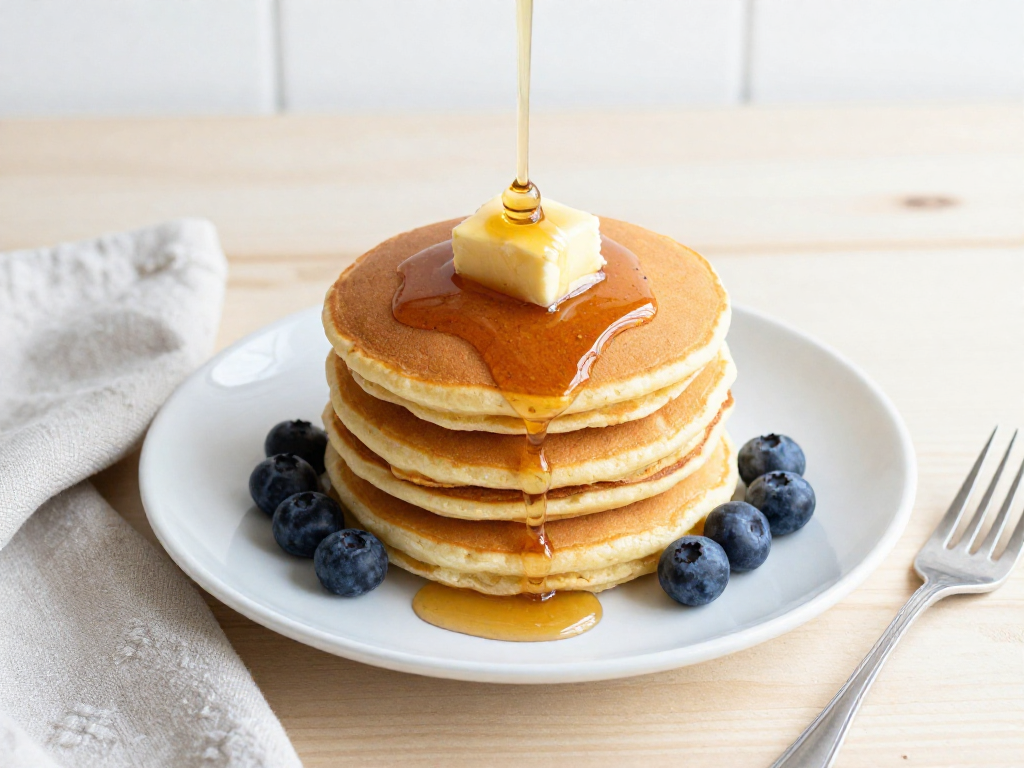
Open by validating the beginner's relief: unlike sourdough loaves, discard pancakes and waffles need zero fermentation timing, no hydration math, and no waiting. You can use discard straight from the fridge and have breakfast in 20 minutes. Frame this as the easiest possible "win" for someone intimidated by sourdough.
What Is Sourdough Discard (and Why It's Perfect for Pancakes)
Quick answer: Sourdough discard is simply the portion of starter you remove and set aside before you feed it. It's an everyday byproduct of keeping a starter alive—not garbage—and it makes excellent pancakes and waffles.
Here's why it works so well for this recipe:
- It doesn't need to be active. Discard is "unfed," meaning it hasn't had fresh flour and water recently, so it's not bubbly or strong enough to rise bread. That's totally fine here—we're not relying on it to lift anything.
- No fermentation timing required. Instead of waiting hours for natural rise, baking powder and baking soda do the lifting the moment your batter hits the hot pan. (Baking soda is a fast-acting leavener that reacts with the discard's acidity; baking powder gives an extra boost.)
- Fridge or fresh discard both work. Discard straight from a recent feeding is great, and so is discard you've stored in a jar in the fridge—up to about a week old is reliable. Older discard simply tastes more sour.
- It adds a gentle tang. That mild, pleasant sourness is the signature flavor discard brings—more noticeable with older discard, milder with fresh.
Bottom line: stop pouring it down the drain. Keep a jar in the fridge and you'll always have the base for a quick batch.
Ingredients and Simple Ratios
Here's the one ratio to remember: 1 cup discard + 1 cup milk + 1 egg + 1 cup dry mix. That's it. No hydration math (the baker's term for the water-to-flour percentage in a dough)—just scoop, pour, and stir.
The base recipe
| Ingredient | Grams | Cups |
|---|---|---|
| Sourdough discard | 240 g | 1 cup |
| Milk | 240 g | 1 cup |
| All-purpose flour | 120 g | 1 cup |
| Egg | 50 g | 1 large |
| Melted butter or oil | 28 g | 2 tbsp |
| Sugar | 12 g | 1 tbsp |
| Baking powder | 6 g | 1½ tsp |
| Baking soda | 3 g | ½ tsp |
| Salt | 3 g | ½ tsp |
One batch uses 1 cup (240 g) of discard, which is about what you scrape off after a typical feeding. It makes roughly 8–10 pancakes or 4 waffles.
Why the baking soda matters
Discard is acidic—that's the tang. The baking soda reacts with that acid to neutralize some of the sourness and create bubbles, giving you lift. Baking powder adds extra rise on top. Skip the soda and you'll likely get flat, sour results.
Easy swaps
- Buttermilk instead of milk: extra tang and tenderness.
- Dairy-free milk (oat, almond, soy): works fine; texture stays close.
- Melted butter vs. oil: butter adds flavor, oil keeps things slightly lighter—use whichever you have.
Results vary by kitchen and how active your discard is, so treat the batter's pourable, slightly bubbly consistency as your real guide.
How to Make Sourdough Discard Pancakes (Step by Step)
Yield: about 8 pancakes (4-inch) | Time: 15 minutes
1. Mix the wet ingredients. In a large bowl, whisk together 240 g (1 cup) sourdough discard (the unfed starter you'd normally throw away), 1 large egg, 180 g (¾ cup) milk, 28 g (2 tablespoons) melted butter, and 12 g (1 tablespoon) sugar until smooth.
2. Combine the dry ingredients separately. In a second bowl, stir together 120 g (1 cup) all-purpose flour, 4 g (1 teaspoon) baking powder, 3 g (½ teaspoon) baking soda, and 3 g (½ teaspoon) salt.
3. Fold, don't whisk. Pour the dry mix into the wet and fold with a spatula until just combined. A few lumps are good — overmixing builds gluten and makes pancakes tough and flat.
4. Optional 10-minute rest. Let the batter sit for 10 minutes. It will thicken and bubble slightly, giving fluffier pancakes. Skip this if you're in a hurry.
5. Heat the pan correctly. Set a non-stick or cast-iron pan over medium-low heat. Too hot and the outside burns before the inside cooks. Test it: a drop of water should sizzle gently, not spit. Lightly grease.
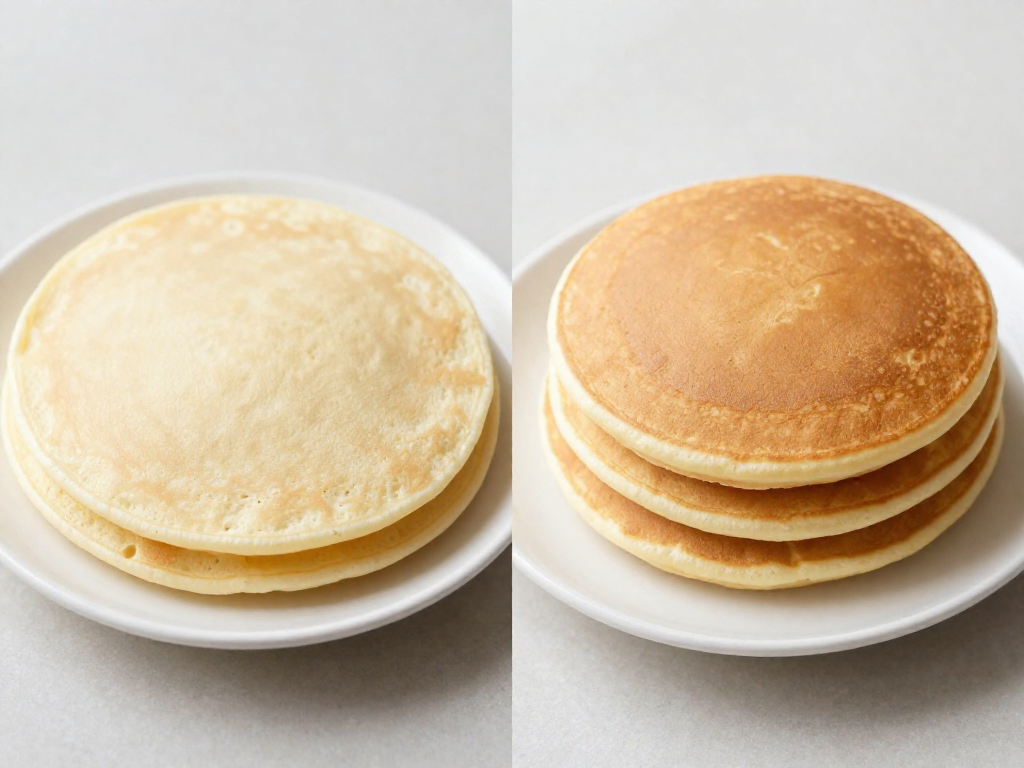
6. Watch the flip cue. Pour ~60 g (¼ cup) batter per pancake. Flip only when bubbles form across the surface and the edges look set and dry — about 2–3 minutes. Cook 1–2 minutes more.
Serve warm with maple syrup, fresh berries, or a dollop of yogurt. Results vary by stovetop, so use the visual cues over the clock.
How to Make Sourdough Discard Waffles (Step by Step)
Waffles use the same batter as the pancakes above, with two tweaks for crisp results.
What to change:
- More fat: add an extra 15 g (1 tbsp) melted butter or oil to the batter. Fat is what makes waffles crisp instead of soft.
- Separate the egg (optional): whisk the yolk into the batter, then beat the white to soft peaks and fold it in last. This adds a crisp-outside, fluffy-inside texture.
Steps:
- Preheat your waffle iron fully and brush both plates with oil, even on nonstick models.
- Pour batter to cover about ¾ of the surface (roughly 80–100 g per waffle); it spreads as it cooks.
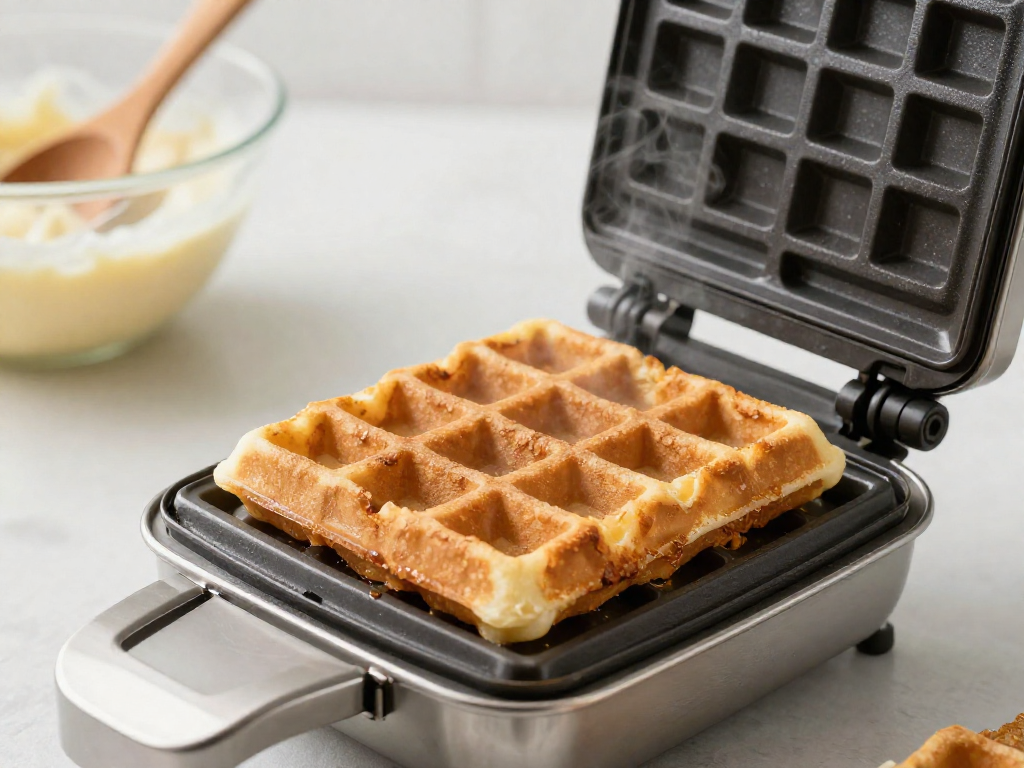
- Close and don't peek early. Lots of steam means it's still cooking. Wait until the steam slows to a thin wisp (about 3–5 minutes) before opening.
- The waffle should release easily and look golden brown. If it sticks, it usually needs another minute.
Keep them crisp: stacking traps steam and makes waffles soggy. Instead, set finished waffles directly on an oven rack at 95°C (200°F) in a single layer until serving.
Yield: about 4 waffles. Serve with butter and maple syrup, fresh berries, or a savory fried egg.
Troubleshooting: Dense, Flat, or Gummy Results
Match your symptom to the fix below. Results vary by kitchen and climate, so treat these as starting points.
| Symptom | Likely Cause | Fix |
|---|---|---|
| Flat or dense | Expired baking soda/powder (leveners, the ingredients that make batter rise), or overmixing | Use fresh leveners; stir just until combined—lumps are fine |
| Gummy center | Pan too hot, so the outside cooks before the inside sets | Lower heat to medium; cook slower and flip only when bubbles pop and edges look dry |
| Too sour | Older discard (the starter you remove before feeding) | Add an extra pinch of baking soda to neutralize acidity, or use fresher discard |
| Too thick | Batter dropped in a stiff mound | Stir in milk 1 tablespoon (15 g) at a time until it ribbons off the spoon |
| Too thin | Batter runs and spreads | Stir in flour 1 tablespoon (8 g) at a time |
| Waffles sticking | Iron under-greased or not hot enough | Brush with oil and fully preheat until the indicator light signals ready |
Quick test: a finished pancake should spring back when lightly pressed. If your finger leaves a dent, give it 30–60 more seconds per side.
Make-Ahead, Storage, and Variations
Make it ahead: You can mix the batter and refrigerate it overnight in a covered bowl. Just know that baking powder (the chemical leavener that adds lift) loses some of its rise over time, so morning pancakes may be a touch flatter. Stir gently before cooking.
Freeze for later: Cook the pancakes or waffles fully, cool them on a rack, then freeze flat in a single layer. Once solid, stack with parchment between each one in a freezer bag. Reheat straight from frozen in the toaster until hot and crisp—no thawing needed.
Easy add-ins (per 1 batch): fold in a small handful of blueberries or chocolate chips, 1 tsp cinnamon, or 1 tsp vanilla after mixing.
Beginner flour swaps: replace up to 1/4 of the flour with whole wheat or oat flour. Expect a denser, nuttier result; add a splash more milk if the batter feels thick.
Use more discard: double the recipe to clear out a larger jar—the ratios scale evenly.
FAQ
Can I use sourdough discard straight from the fridge for pancakes?
Yes. Cold discard works fine for pancakes and waffles since you're not relying on it to rise like a loaf. Sourdough discard is the unfed portion of starter you'd normally throw away, and for batters it just adds tangy flavor. For best results, let it sit on the counter for 15–20 minutes while you gather other ingredients so it mixes more smoothly, but baking straight from the fridge still works.
How old can sourdough discard be before it's unsafe to use?
Discard kept covered in the fridge is generally fine to use for up to 1–2 weeks. It should smell sour, tangy, or slightly boozy (the liquid layer on top, called hooch, is harmless and can be stirred in or poured off). Throw it out if you see any pink, orange, or fuzzy mold, or if it smells like nail polish remover or rotten food rather than pleasantly sour. When in doubt, discard it.
Do I need baking powder if I'm using sourdough discard?
Yes, for fluffy pancakes and waffles you still want baking powder (and often a little baking soda). Discard adds flavor but very little lift, since it's unfed and not actively bubbling. The baking soda also reacts with the discard's acidity to create extra rise and tenderness. A typical ratio is about 1 teaspoon baking powder plus 1/2 teaspoon baking soda per cup (about 125g) of flour in the recipe.
Why are my sourdough discard pancakes gummy in the middle?
Gummy centers usually mean the inside hasn't finished cooking before the outside browns. The most common causes: heat too high (lower to medium or medium-low so the center sets before the surface burns), batter too thick (thin with a splash of milk until it pours and spreads), pancakes too large or thick (use about 1/4 cup batter per pancake), or flipping too early (wait until bubbles form across the surface and the edges look set). Also make sure your baking powder and soda are fresh.
Can I make the batter the night before?
Yes, with one adjustment. Mix the discard, flour, milk, and eggs the night before and refrigerate, but leave out the baking powder and baking soda. Stir those in just before cooking, because they begin reacting as soon as they hit the wet, acidic batter and lose their lift overnight. An overnight rest also deepens the sour flavor and relaxes the flour for a more tender result.
Can I use the same batter for both pancakes and waffles?
Almost. The same base recipe works for both, but waffles turn out crispier and less likely to stick if you add a bit more fat. For waffles, stir in 1–2 extra tablespoons of melted butter or oil per batch, and make the batter slightly thicker than pancake batter. Pancake batter should pour and spread easily; waffle batter can be a touch thicker for that crisp exterior and soft inside.
See also
- How to Make a Sourdough Starter from Scratch
- What to Do With Sourdough Discard: Beginner Recipe Ideas
- Beginner's Guide to Sourdough Hydration (Without the Math)
- Easy Beginner Sourdough Sandwich Loaf
- Sourdough Troubleshooting: Why Is My Loaf Dense or Gummy?
Related articles
Sourdough Discard Flatbreads: Ready in Under an Hour
Make soft, tearable sourdough discard flatbreads in under an hour with no rise time. Easy stovetop recipe with herb & garlic variations.
Jul 28, 2026 · 8 min read
Soft Sourdough Dinner Rolls: A Forgiving Recipe for Beginners
Make soft, fluffy sourdough dinner rolls with this forgiving beginner recipe. No special pans needed—just a skillet. Includes tangzhong for incredible softness.
Jul 28, 2026 · 7 min read
Sourdough Pizza Dough for Beginners: A Forgiving Way to Practice Shaping
Can I use my sourdough starter to make pizza dough, and is it easier than a loaf?
Jul 20, 2026 · 9 min read