Why a Kitchen Scale Matters More Than Measuring Cups
Do I need a scale to bake sourdough?
On this page
The Short Answer: Yes, and Here's Why It's Worth It
Yes—a kitchen scale is the single most important tool for sourdough, more than any fancy banneton (the basket that shapes a rising loaf) or Dutch oven.
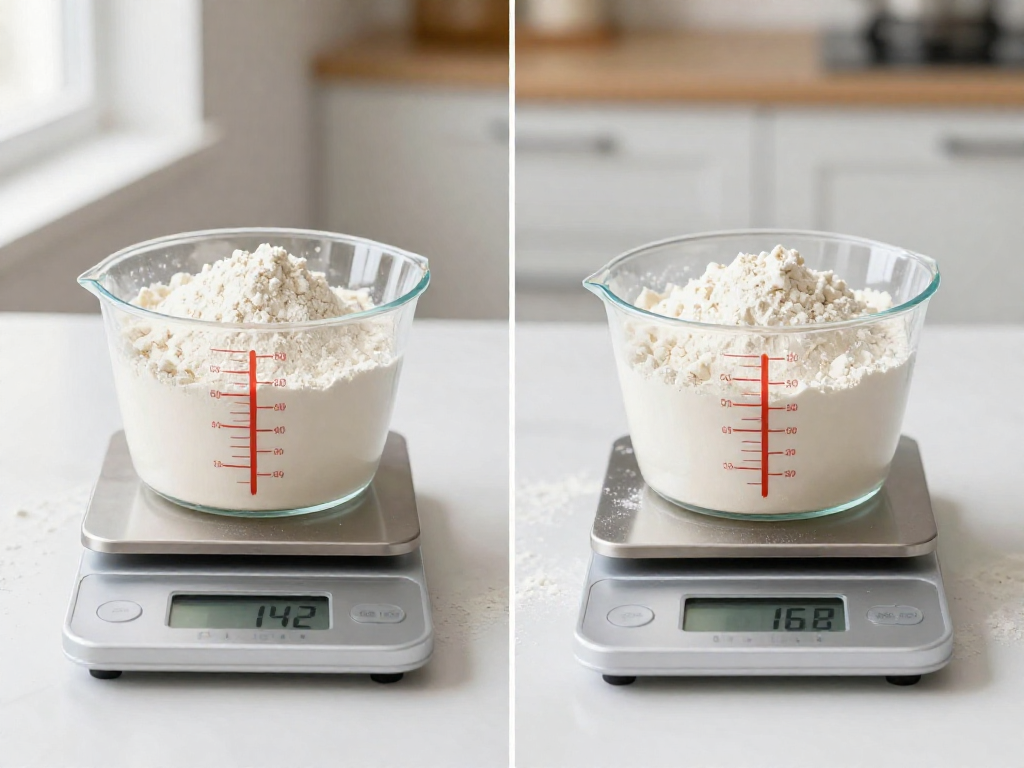
Here's why: measuring cups measure volume, but a scooped cup of flour can weigh anywhere from 120 to 170 grams depending on how packed it is. Sourdough baking is about ratios by weight—the proportion of flour to water to starter—and even small swings throw those ratios off. That's why one day your dough feels right and the next it's soup or a brick.
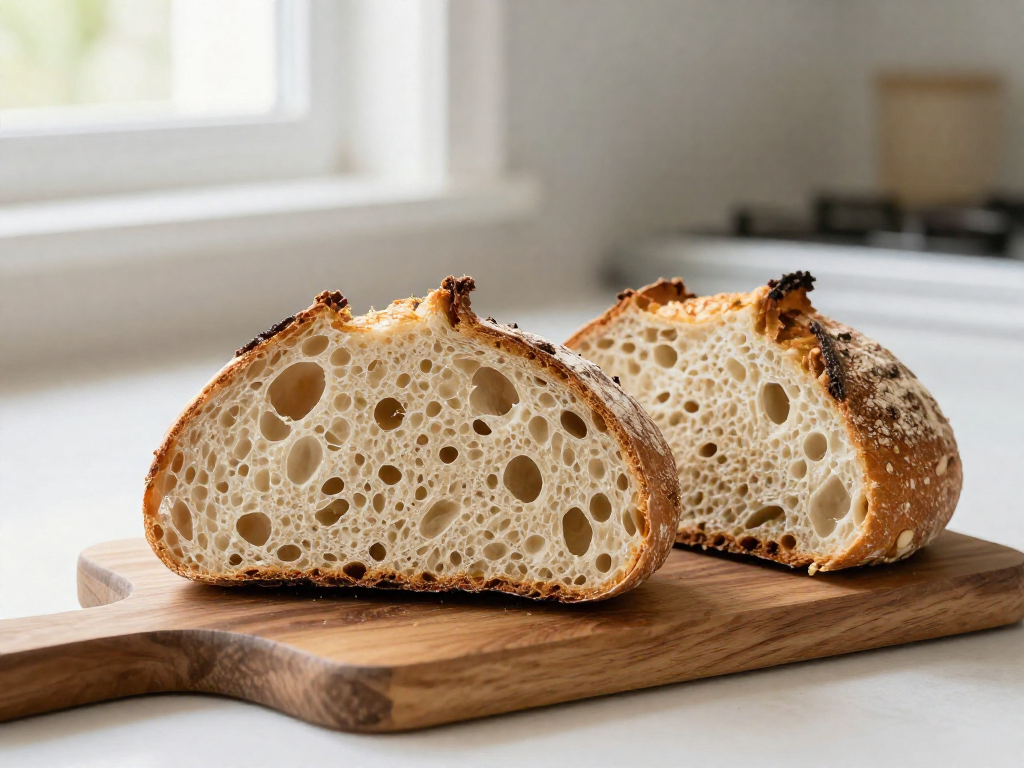
A scale fixes this. Weighing in grams gives you the same dough every time, which means consistent, repeatable loaves you can actually troubleshoot when something goes wrong.
Why Measuring Cups Sabotage Your Loaf
Here's the practical problem: a single "cup of flour" isn't a fixed amount. Depending on whether you scoop straight from the bag, spoon it in, or pack it down, one cup of all-purpose flour can weigh anywhere from about 120g to 150g or more. Same recipe, same cup, wildly different amounts.
That swing of 20–30% wrecks your hydration—the ratio of water weight to flour weight, written as a percentage. A standard beginner dough at 75% hydration (750g water for every 1,000g flour) is forgiving and easy to handle. But if your "1,000g" of flour is actually 1,200g because you packed the cups, your real hydration drops closer to 62%. Now the dough is stiff, dry, and hard to develop. Scoop too lightly and you swing the other way into a slack, soupy mess.
For a beginner, this is exactly why loaves come out wrong:
- Too little water relative to flour → dense, tight crumb that barely rises.
- Too much water relative to flour → flat loaves that spread instead of standing tall, plus a gummy, undercooked-feeling interior.
- Inconsistent cups batch to batch → you can never tell whether the recipe or your technique was the problem.
Water and starter add error too—a "cup" of bubbly starter traps air and varies a lot—but flour is the biggest offender because you use the most of it, so its measurement error gets multiplied.
A scale removes the guesswork entirely. Weigh 1,000g of flour and it's 1,000g every single time, no matter how you scoop. That repeatability is what lets you actually learn from each bake.
What Weighing Actually Unlocks
A scale does more than make your measurements accurate—it changes how fast you improve. Here's what it unlocks:
- Repeatability. When you weigh every ingredient, you can bake the exact same loaf twice. That's how you actually learn: if loaf #2 comes out better, you know why, because the only thing you changed was the one thing you meant to change.
- Baker's math becomes simple. Recipes describe dough using hydration—the weight of water as a percentage of the weight of flour. A dough with 500g flour and 350g water is "70% hydration" (350 ÷ 500 = 0.70). You can't calculate that from cups, but with a scale it's just one quick division. Higher hydration means a wetter, more open crumb; lower means a tighter, easier-to-handle dough.
- Easy scaling. Want a bigger loaf or two smaller ones? Multiply or divide every weight by the same number and the ratios stay perfect. Try doing that with "1½ cups plus a heaping spoonful" and you'll see the problem.
- Any recipe, anywhere. Grams are universal. A baker in Paris, Tokyo, or your neighbor's kitchen can write down a formula in grams and you'll get the same dough—no guessing whether their "cup" matches yours.
Results still vary with your flour, kitchen temperature, and starter, but a scale removes one big source of mystery so you can troubleshoot the rest with confidence.
How to Start Cheaply
You do not need to spend much. A basic digital kitchen scale costs $10–15, and that's all sourdough asks of you. Skip the fancy models—the cheap one weighs flour just as accurately as the expensive one.
What to look for (the only four things that matter):
- Grams. Sourdough recipes are written in grams because they're precise. Make sure your scale switches to grams (most do).
- A tare/zero button. "Tare" means resetting the display to zero so you can add the next ingredient without doing math. This one button is the whole point.
- 0.1g or 1g precision. 1g is fine for flour and water. If you want to weigh salt or yeast exactly, look for 0.1g.
- At least 5kg capacity. Your mixing bowl plus dough can get heavy. A 5kg (about 11 lb) ceiling gives you room.
The tare trick (fewer dishes, less mess):
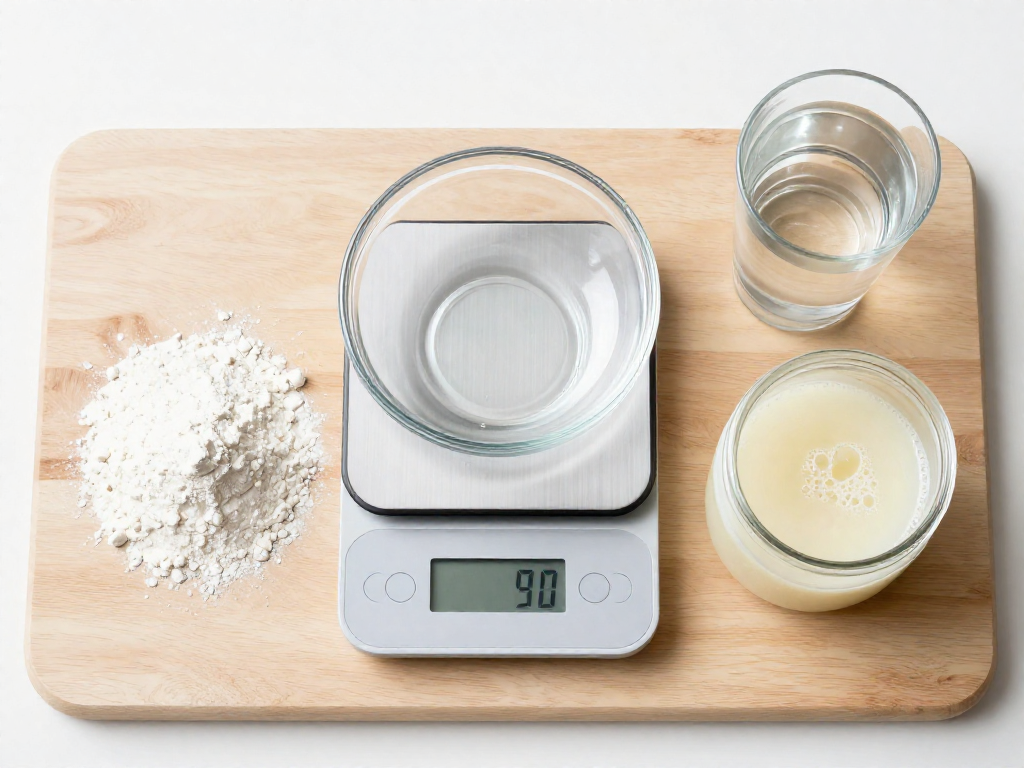
Put your empty bowl on the scale and press tare so it reads 0. Add flour until you hit your target weight. Press tare again to return to 0, then pour in water to the next target. Repeat for each ingredient. Everything lands in one bowl, and you never dirty a second cup.
What you can safely skip: built-in timers (your phone works fine), app or Bluetooth connectivity, and anything labeled a "baking scale" at a premium price. The branding costs more; the weighing is identical.
Your First Weighed Bake: A Simple Conversion
Ready to try it today? Here's how to turn a cup-based recipe into a weighed one. Set your bowl on the scale, press tare to zero it out, and add each ingredient by weight—no spoons, no guesswork.
Quick conversion reference:
| Ingredient | Per Cup/Tsp | Grams |
|---|---|---|
| Bread flour | 1 cup | ~120g |
| Water | 1 cup | ~236g |
| Salt | 1 tsp | ~6g |
Now reframe a standard beginner loaf entirely by weight:
- 500g bread flour (~4 cups)
- 350g water (~1½ cups)
- 100g active starter (the bubbly flour-and-water mix you feed to leaven the bread)
- 10g salt (~1¾ tsp)
Notice how the starter is given in grams, not "a scoop." A scoop can vary wildly depending on how thick or airy your starter is that day—weighing it removes that variable completely.
From here on, write every recipe in grams. Once you do, your loaves become repeatable, and fixing problems gets far easier because you'll know exactly what went into the bowl.
The Bottom Line
If you change just one thing about your sourdough setup, make it a kitchen scale. Weighing in grams removes the guesswork that flour-packed measuring cups create, so you can stop worrying about whether your amounts were right and start focusing on the skills that actually shape your loaf: technique and timing.
Ready to put it into practice? Try our beginner recipe measured entirely by weight. Every ingredient is listed in grams (with cup equivalents), alongside a clear timing schedule and what to look and feel for at each stage—so your next bake is one you can repeat.
See also
- Beginner sourdough starter guide
- Easy beginner sourdough bread recipe
- Understanding hydration and baker's percentages
- Troubleshooting a dense or gummy sourdough loaf
- Essential sourdough tools for beginners
Related articles
Baking Stone vs. Dutch Oven for Sourdough: A Beginner's Comparison
Can I use a baking stone instead of a Dutch oven for sourdough?
Jul 28, 2026 · 8 min read
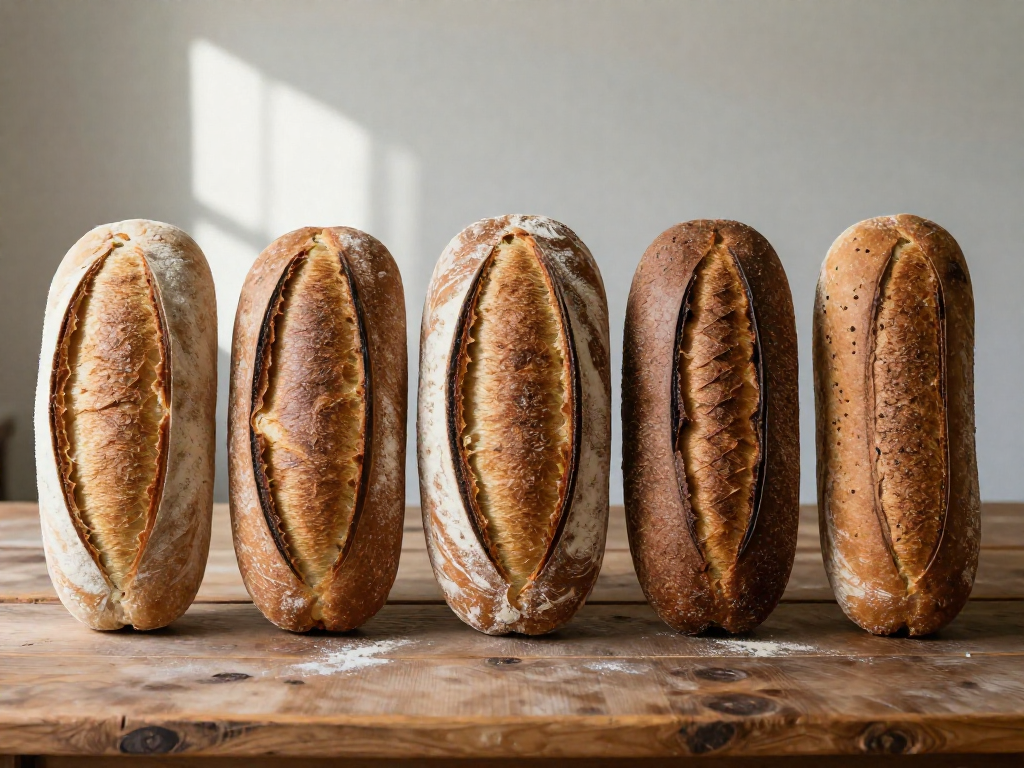
Flour Types for Sourdough: A Visual Guide to Protein Content and Results
How do different flours affect sourdough bread, and what do the results look like side by side?
Jul 20, 2026 · 11 min read
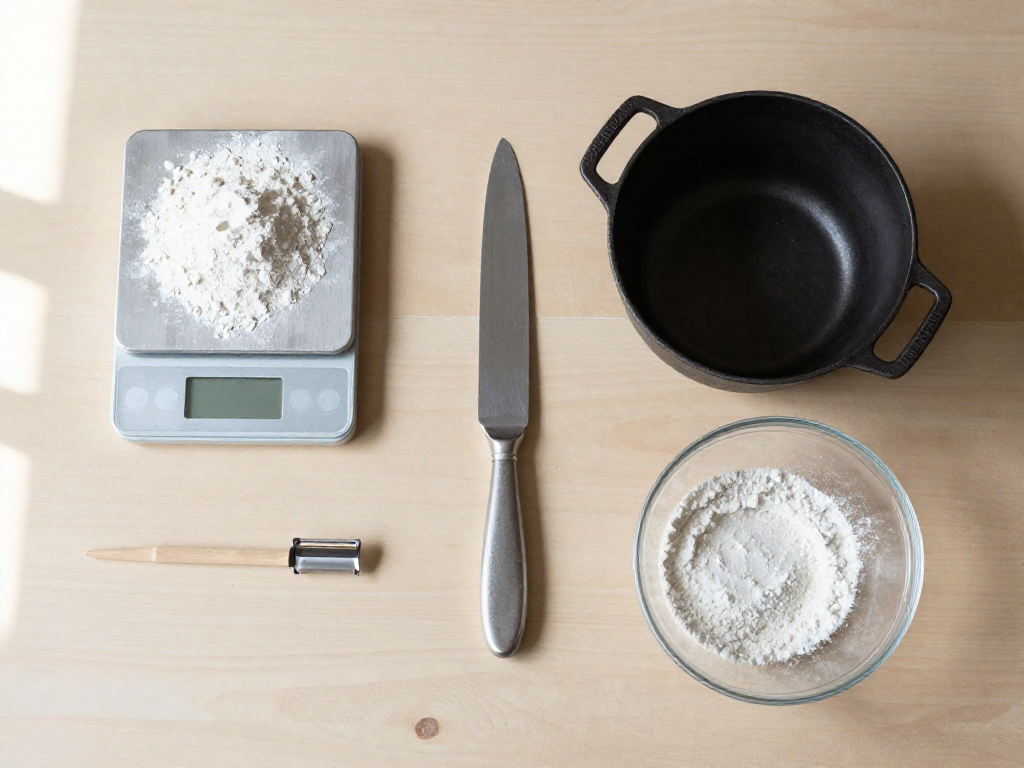
The Only 5 Tools You Really Need for Your First Sourdough Loaf
Start baking sourdough without the clutter and expense. These are the only 5 tools you really need—and the ones you can skip.
Jul 20, 2026 · 3 min read