The Only 5 Tools You Really Need for Your First Sourdough Loaf
What is the absolute minimum set of tools a beginner needs to bake a successful sourdough loaf?
On this page
A strongly opinionated selection of only five essential items, with justifications and skip-the-rest advice.
Why You Need Only 5 Tools to Start Baking Sourdough
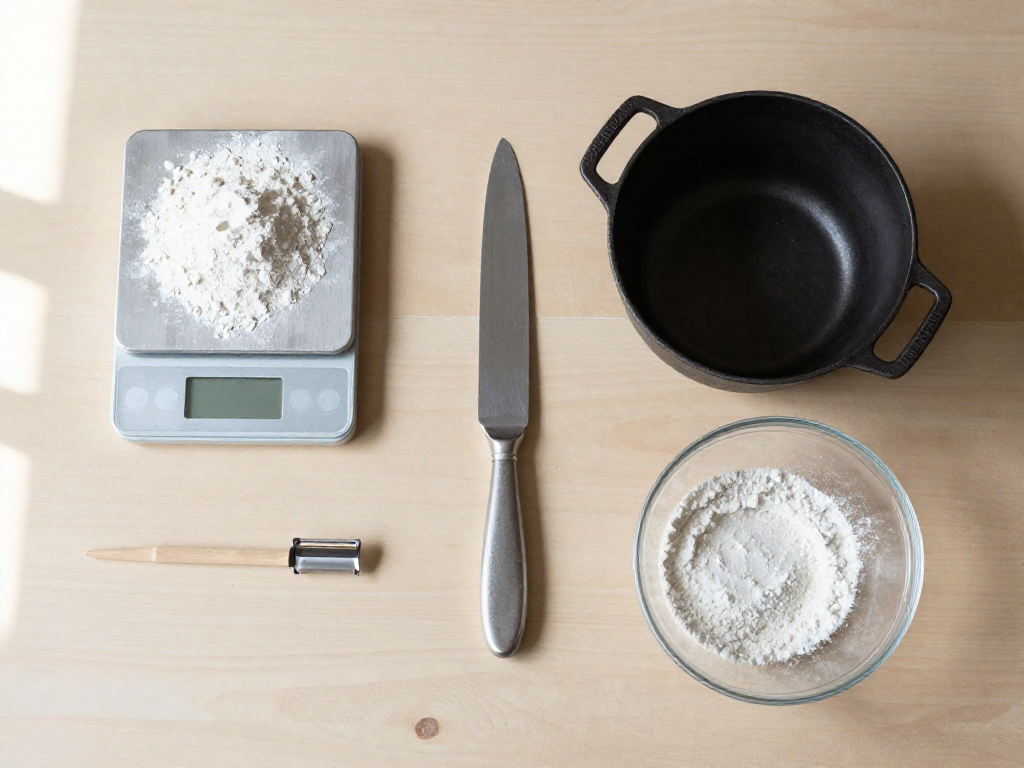
Forget the endless ‘essential’ lists. You only need five: a digital scale—the most important tool you’ll own (Mirlandra’s Kitchen)—a clear glass bowl, a Dutch oven, a towel-lined bowl, and a razor. No stand mixer, no banneton, no clutter.
1. The Digital Scale: Your Non-Negotiable Foundation
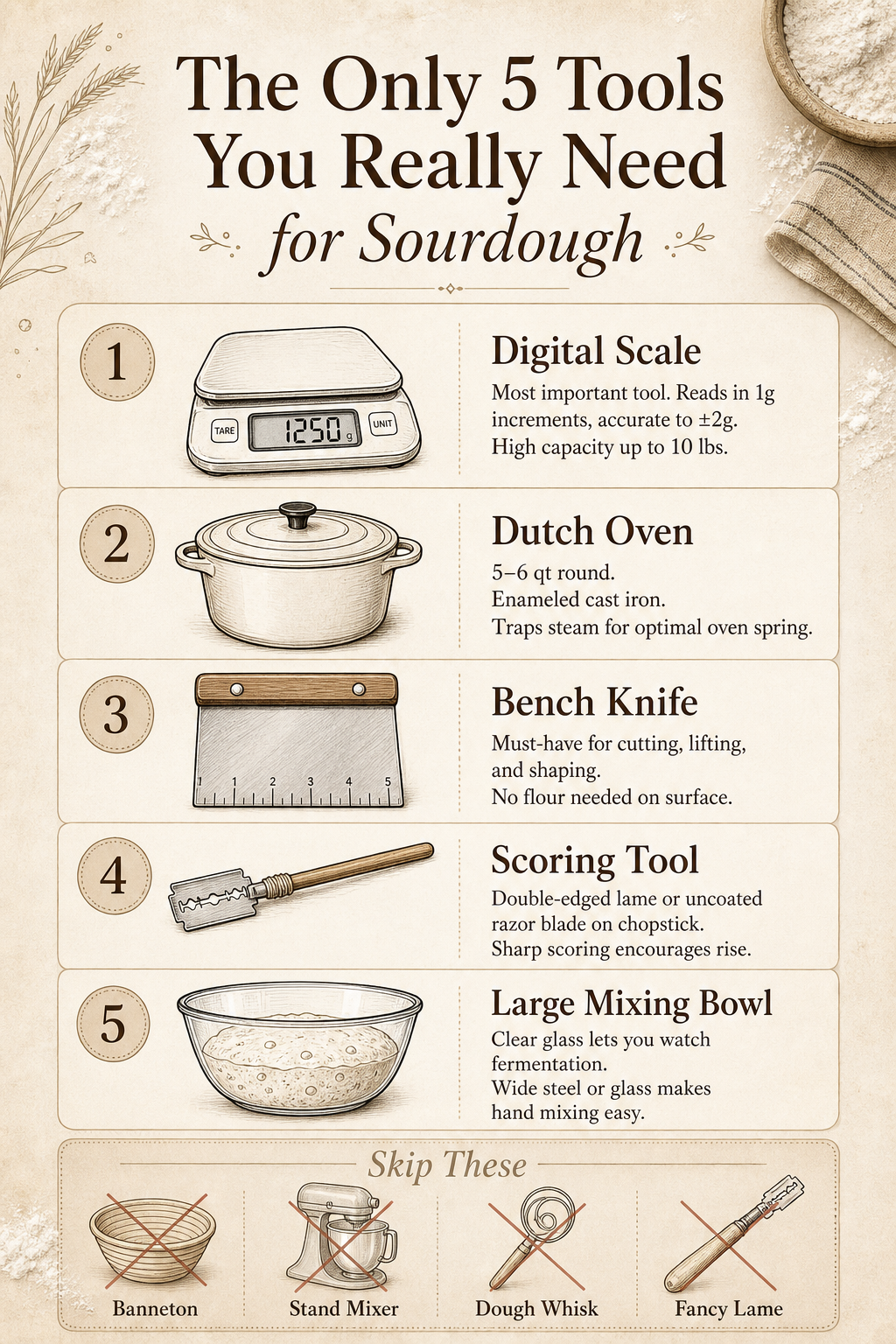
If you take one piece of advice from this entire guide, let it be this: buy a digital kitchen scale before you mix a single gram of flour. Without it, you're guessing—and guessing is the fast track to dense, gummy, frustrating loaves. Sourdough is a game of precision, especially for beginners. Hydration (the ratio of water to flour by weight) controls everything from dough handling to the airy crumb you're after. A cup of flour can easily vary by 50 grams depending on how you scoop it, turning a carefully crafted recipe into a sticky mess or a brick.
As Mirlandra's Kitchen puts it starkly, "This is the most important sourdough tool you can own." That's not hyperbole. A good scale doesn't need to be expensive; it just needs to read in 1-gram increments, be accurate within ±2 grams, and handle up to 10 pounds (enough for your bowl plus dough). Serious Eats recommends exactly those specs. When your starter, flour, and water are all weighed rather than scooped, you'll hit the same hydration every single bake. That consistency is what lets you learn what the dough should feel like and troubleshoot with confidence. Ditch the measuring cups for dry ingredients—you'll never look back.
2. A Dutch Oven (or Any Heavy, Lidded Pot)
You don't need a fancy $300 pot. A heavy, lidded 5- to 6-quart cast iron Dutch oven is all it takes to bake a gorgeous loaf with a crackly crust and open crumb. The lid traps steam, creating the humid environment that gives you dramatic oven spring—that final, rapid rise in the oven. As The Perfect Loaf explains, a Dutch oven "traps steam to encourage optimal dough rise."
A combo cooker works even better: you bake the loaf on the shallow skillet side and cover with the deep pot, making it easier to load dough without burning yourself. But any heavy lidded pot that can handle 450°F (230°C) will do. If you already have an enameled cast iron pot, use that. No need to buy a dedicated “bread oven” to start.
3. A Bench Knife: The 10-Second Dough Handler
A bench knife is that simple, rectangular metal scraper you’ve seen bakers use. It does three jobs in 10 seconds flat: cuts dough portions cleanly, lifts sticky dough from the counter, and pre-shapes rounds without your hands getting glued to the dough. Because it scrapes the surface bare, you can often skip flouring your worktop entirely—essential for keeping your dough’s hydration where it should be (Alexandra's Kitchen). Look for a sturdy stainless blade with a comfortable handle; most are under $10 and dishwasher-safe.
4. A Scoring Tool: Razor Blade or Lame
Scoring—slashing the dough right before baking—directs expansion so your loaf springs up instead of bursting. A plain double-edged razor blade, held between your fingers or taped to a chopstick, makes clean cuts. Replace it often; a dull blade drags. According to Serious Eats, a sharp disposable blade is all you need.
5. A Mixing Bowl (Glass to See the Magic)
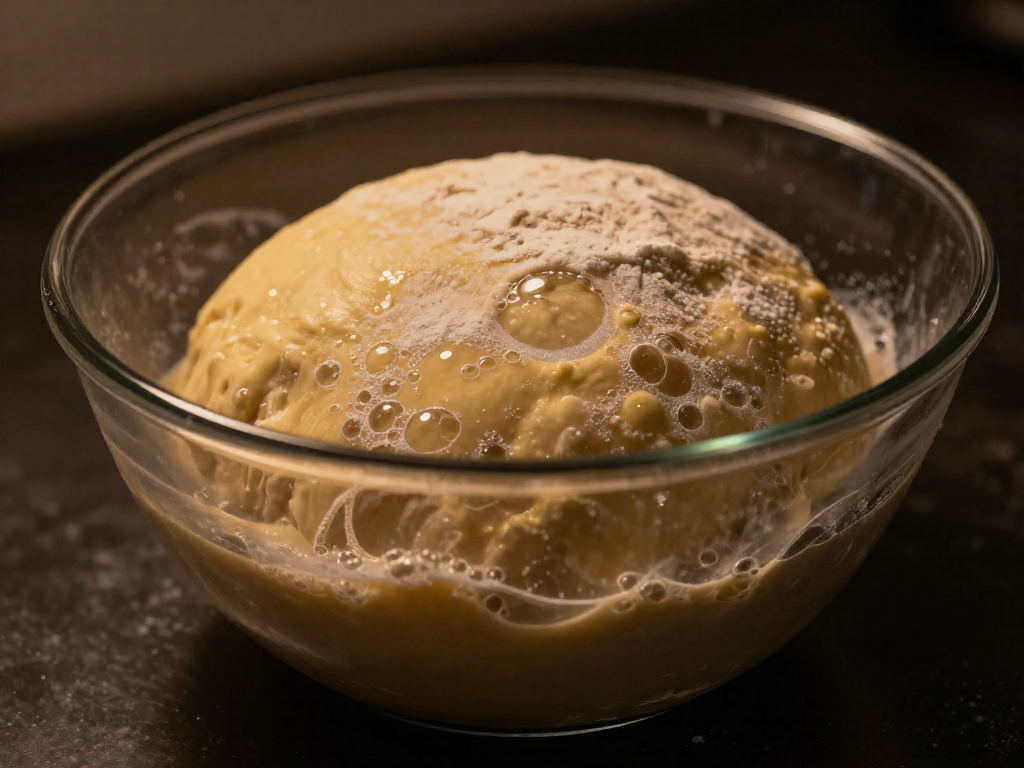
A wide, shallow mixing bowl makes hand mixing effortless, but choose glass and you’ll get a front-row seat to fermentation. Watching tiny bubbles multiply through the clear walls is how you know exactly when your dough is ready—something opaque bowls hide. A clear glass bowl is a game-changer for beginners because it lets you watch the magic happen (Mirlandra's Kitchen). Any large bowl works in a pinch, but glass gives you that extra confidence.
What You Can Happily Skip
You absolutely do not need a banneton. A bowl lined with a tea towel and floured with rice flour works perfectly (The Fresh Loaf). Skip the stand mixer: stretch-and-folds build gluten just as well. Mix with your hands instead of a dough whisk, and score with a cheap razor blade.
Sources
- The Ultimate Sourdough Tools Guide: Everything You Need (and What You Don't) - Mirlandra's Kitchen — mirlandraskitchen.com
- The 18 Essential Tools Needed for Sourdough Bread at Home — seriouseats.com
- Essential Tools and Equipment for Sourdough Baking | Alexandra's Kitchen — alexandracooks.com
- Sourdough Must Haves: A Round-Up of Tools You Need to Start Baking – Tea Addicts Anonymous — teaaddictsanonymous.com
- My Highly Curated Baking Tools | The Perfect Loaf — theperfectloaf.com
- What do you consider to be essential "tools of the trade" for home sourdough baking? — reddit.com
- Banneton Alternatives — cravethegood.com
- No banneton yet | The Fresh Loaf — thefreshloaf.com
See also
- Sourdough Starter Guide: How to Create and Maintain a Starter
- The Simplest First Sourdough Loaf Recipe for Absolute Beginners
- Troubleshooting Dense, Gummy Sourdough: 5 Common Fixes
Related articles
Baking Stone vs. Dutch Oven for Sourdough: A Beginner's Comparison
Can I use a baking stone instead of a Dutch oven for sourdough?
Jul 28, 2026 · 8 min read
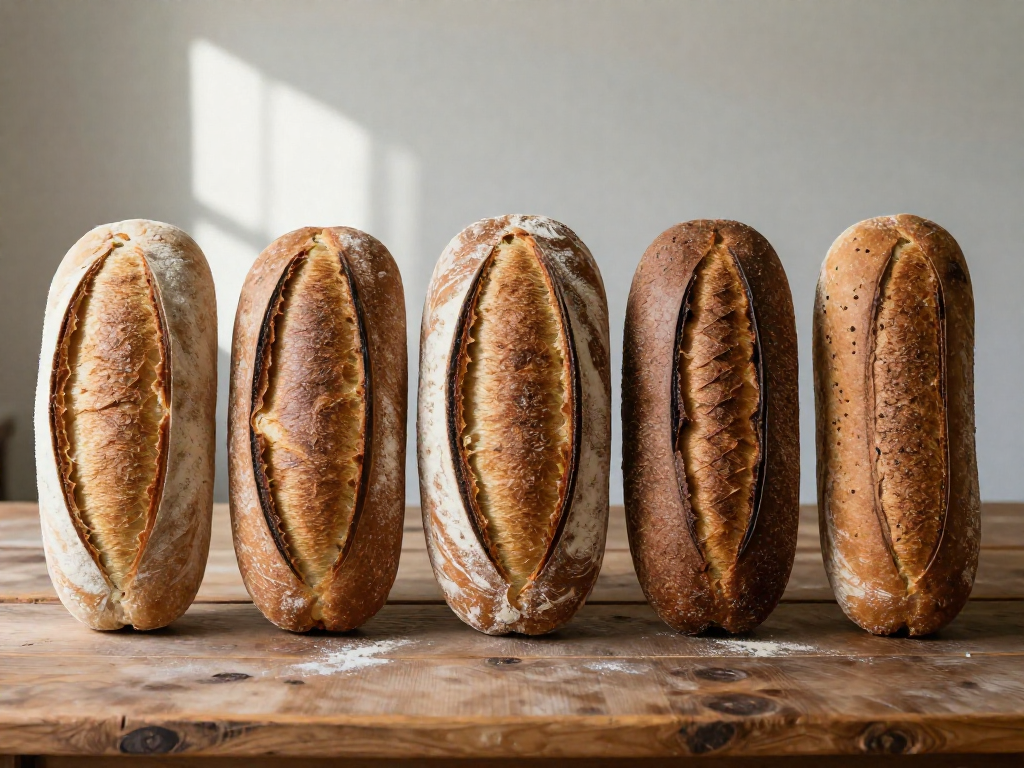
Flour Types for Sourdough: A Visual Guide to Protein Content and Results
How do different flours affect sourdough bread, and what do the results look like side by side?
Jul 20, 2026 · 11 min read
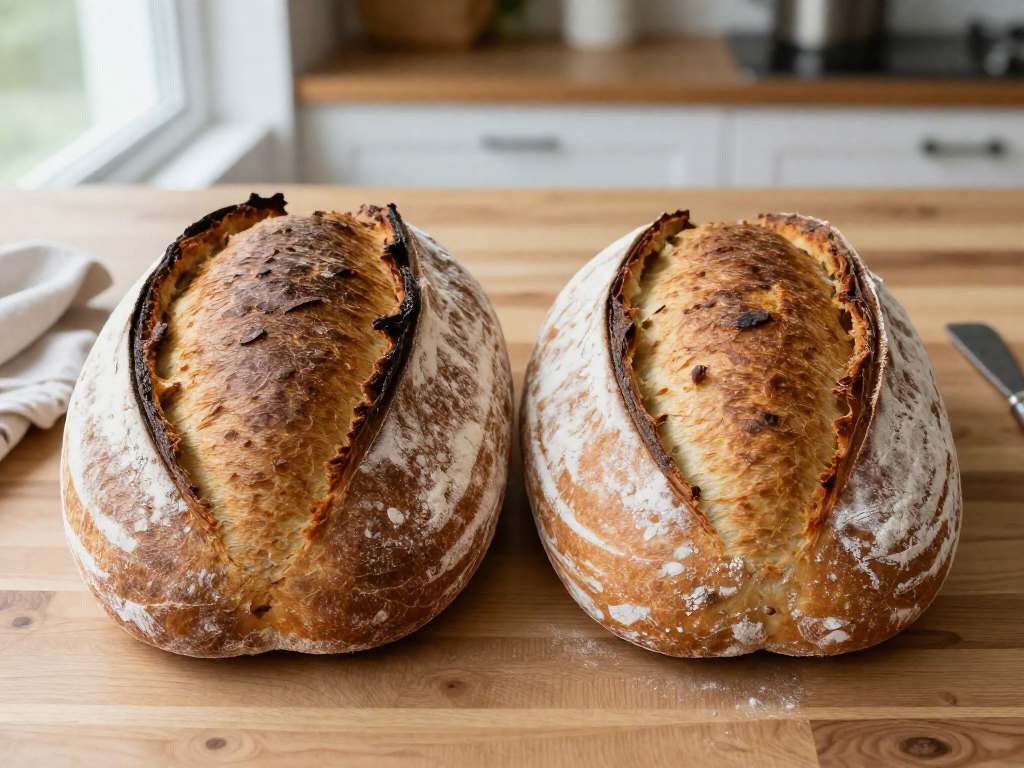
Dutch Oven vs. Open Bake: Which Sourdough Method Is Best for Beginners?
Dutch oven or open baking with steam for sourdough? Compare ease, cost, and crust so beginners can pick the right method and bake a great loaf.
Jul 14, 2026 · 4 min read