Which Salt for Sourdough? Types, Amounts, and Why It Matters
What kind of salt should I use and how much?
On this page
Why Salt Matters More Than You Think in Sourdough
Short answer: salt isn't just for taste. It controls how fast your dough ferments, makes the dough stronger, and gives you a better crust. Skip it and your loaf will likely turn out bland, slack (loose and hard to handle), and over-proofed (risen too long, so it collapses). Here's what salt actually does.
It slows fermentation down. Sourdough rises from wild yeast and bacteria in your starter (the living mix of flour and water you feed to keep it active). Salt slows that activity, which means a slower, more predictable rise. That's a good thing for beginners: it widens your timing window so you're less likely to over-ferment and end up with a gummy or flat loaf.
It builds dough strength. Salt tightens the gluten network — the stretchy protein structure that traps gas and holds the loaf's shape. A salted dough feels firmer and less sticky, holds its rise during bulk ferment (the first long rise after mixing), and is easier to shape.
It improves flavor and crust. Beyond seasoning, salt helps the crust brown deeper and develop more flavor in the oven.
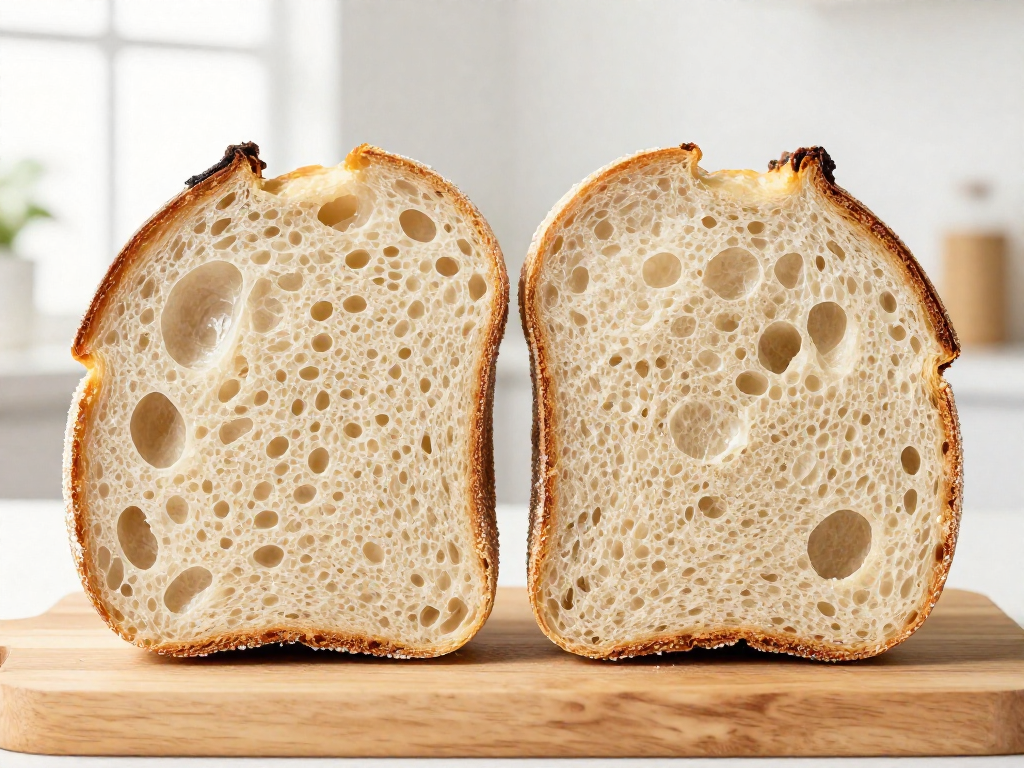
What a no-salt loaf looks like: in side-by-side tests, the unsalted dough fermented too fast, felt loose and slack, spread out flat instead of rising tall, and tasted flat and dull. Results vary by kitchen temperature and flour, but the pattern is consistent — salt is doing real work.
Next we'll cover exactly which salt to use and how much.
Best Types of Salt for Sourdough
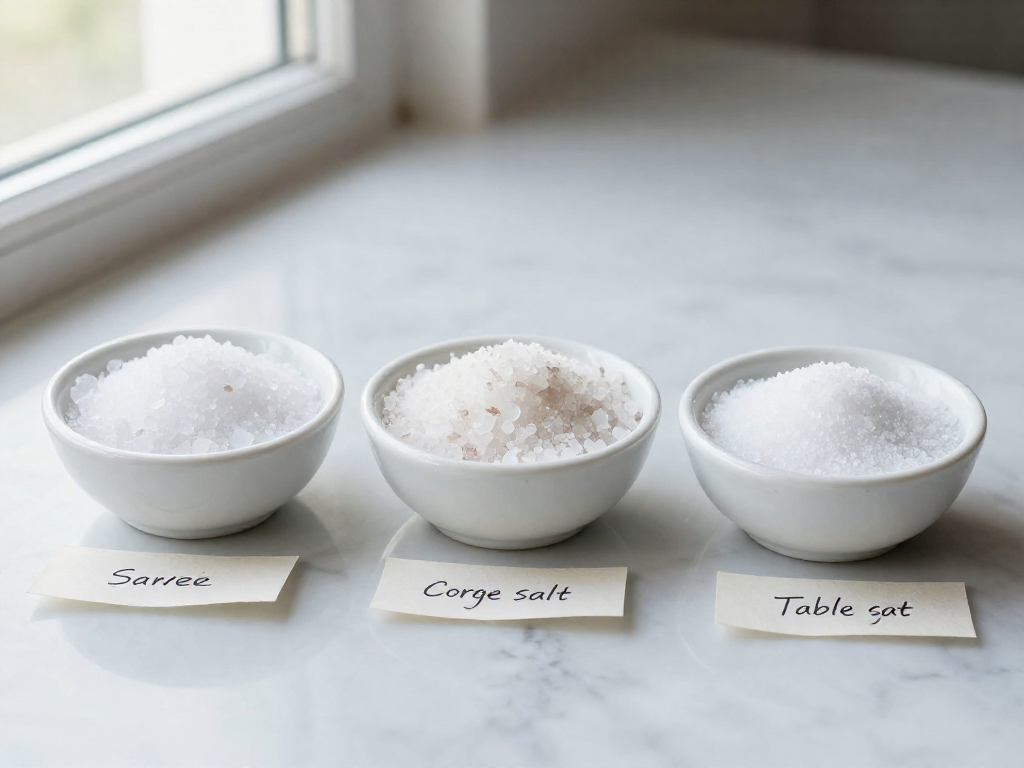
Quick answer: fine sea salt is the best default for beginners. It dissolves easily, measures consistently by weight, and has no additives that affect flavor. Here's how each common type stacks up.
Fine sea salt — the easy, reliable default
This is what we recommend if you're just starting out. The small grains dissolve fast into your dough, and because it's dense and uniform, the weight on your scale matches what you actually get. Use 10g (about 2 tsp) per 500g flour and you'll be in the right range every time.
Kosher salt — great, but mind the brand
Kosher salt works well and is a favorite for its clean taste. The catch is that flake size varies by brand, so volume measurements differ a lot:
- Diamond Crystal: lighter, larger flakes — needs roughly double the volume
- Morton: denser flakes — closer to table salt by volume
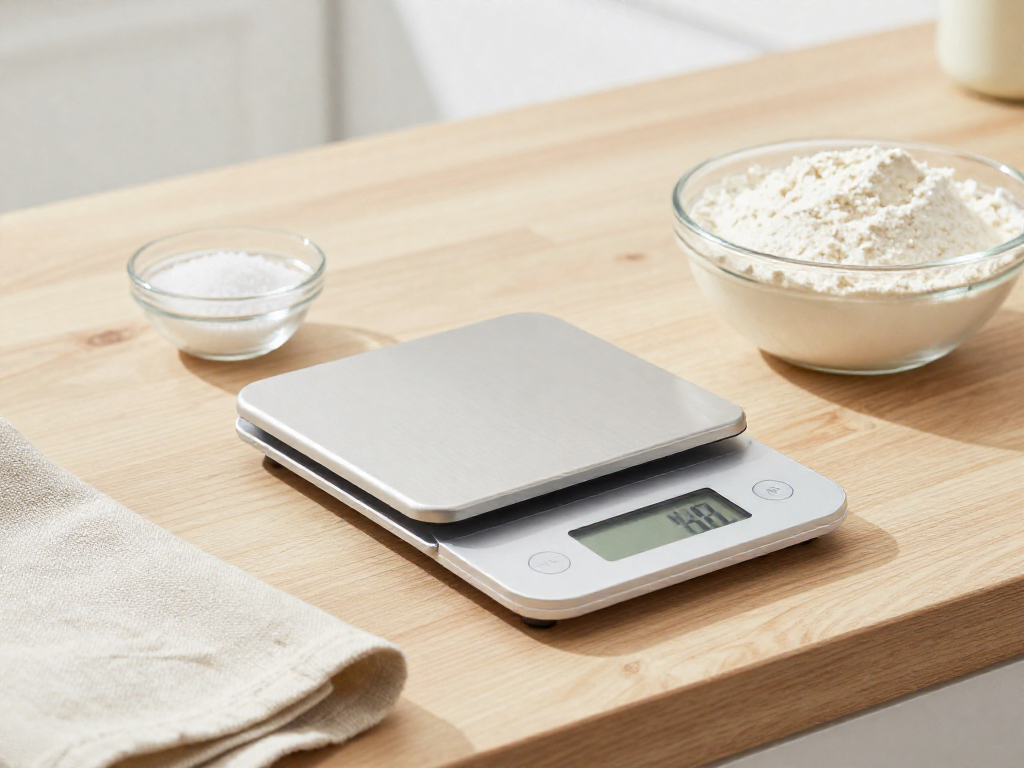
This is exactly why we measure salt in grams, not teaspoons. Weigh 10g and the brand difference disappears.
Table salt — works, with two cautions
Table salt will leaven and season your loaf just fine, but watch for two things: iodine, which can add a faint metallic note, and anti-caking agents, which some bakers find muddy the flavor. If table salt is what you have, plain (non-iodized) is best. Because the grains are tiny and dense, use slightly less by volume — but again, just weigh 10g.
Specialty salts — fine, but unnecessary
Himalayan pink salt and fleur de sel both work, but they cost more and won't improve a beginner loaf. Save the fancy stuff for finishing.
Skip: heavily iodized salt and any salt loaded with additives — they're the most likely to leave an off taste.
How Much Salt to Use (The Baker's Percentage Made Simple)
The short answer: use 2% salt based on your flour weight. That's the only number you need to remember.
"Baker's percentage" sounds technical, but it just means you measure every ingredient as a percentage of the flour. Flour is always 100%. So 2% salt simply means 2 grams of salt for every 100 grams of flour.
The quick math
Take your flour weight and move the decimal: 2% of your flour = flour ÷ 50.
| Flour | Salt (2%) |
|---|---|
| 500 g (about 4 cups) | 10 g (about 2 tsp fine sea salt) |
| 750 g (about 6 cups) | 15 g (about 1 Tbsp) |
| 1,000 g (about 8 cups) | 20 g (about 4 tsp) |
For a standard beginner loaf using 500 g flour, use 10 g salt. Done.
No scale? Use this fallback
If you don't own a kitchen scale yet, use roughly 1 to 1¼ teaspoons of fine table salt per 2 cups of flour. It's a starting point, not a guarantee — keep reading for why.
Why weighing beats measuring by spoon
Salt crystals vary wildly in size. A teaspoon of fine table salt can weigh nearly twice as much as a teaspoon of flaky sea salt, because the big flakes trap air. Measure by spoon and you might accidentally use half the salt you need (flat, bland loaf) or double it (a dense loaf, since too much salt slows your starter — the living mix of flour and water that makes the bread rise).
A small digital scale costs little and removes the guesswork. It's the single best beginner upgrade.
Adjusting to taste
The safe range is 1.8% to 2.2% (9–11 g for 500 g flour). Go to 1.8% if you find 2% slightly salty, or 2.2% if your loaves taste flat. Stay inside this range — straying too far affects both flavor and how well the dough rises.
When and How to Add Salt to Your Dough
Quick answer: Add salt right after the autolyse, dissolved in a little water, then mix until you can't feel any grains.
Follow these steps:
- Mix flour and water first, then rest (autolyse). Autolyse (auto-lize) just means letting flour and water sit together—usually 30–60 minutes—before adding anything else. This step softens the dough and makes it easier to work.
- Add your starter, then mix it in.
- Add the salt last. Dissolve it in a small amount of reserved water (about 15g / 1 tablespoon) so it spreads evenly. Pour it over the dough and squeeze it through with wet hands for 1–2 minutes.
- Check by feel. Pinch the dough—if you still feel gritty grains, keep mixing.
Why not just dump dry salt on top? Undissolved salt clumps in spots, leaving some areas over-salted and others bland. It can also leave gritty patches that don't fully dissolve during the bulk ferment (the dough's first long rise).
Quick Reference: Salt Conversion Chart
Use 2% salt (baker's percentage—salt weight ÷ flour weight). Weigh whenever you can; volume varies by brand and how packed the spoon is.
| Flour weight | Salt (grams, 2%) | Fine sea salt | Kosher (Diamond) | Kosher (Morton) | Table salt |
|---|---|---|---|---|---|
| 300 g | 6 g | ~1 tsp | ~1½ tsp | ~1 tsp | ~1 tsp |
| 500 g | 10 g | ~1¾ tsp | ~2½ tsp | ~1¾ tsp | ~1¾ tsp |
| 1000 g | 20 g | ~3½ tsp | ~5 tsp | ~3½ tsp | ~3½ tsp |
A note on volume: these spoon measures are approximate. Diamond Crystal kosher salt has large, airy flakes, so it takes more volume to hit the same weight than dense table salt. For consistent loaves, a cheap kitchen scale set to grams is your most reliable tool—pinch in the gram amount and skip the guesswork.
See also
- Beginner sourdough bread recipe (step-by-step)
- How to feed and maintain a sourdough starter
- Sourdough hydration explained for beginners
- Troubleshooting dense or gummy sourdough
- Essential tools for sourdough baking
Related articles
Baking Stone vs. Dutch Oven for Sourdough: A Beginner's Comparison
Can I use a baking stone instead of a Dutch oven for sourdough?
Jul 28, 2026 · 8 min read
Flour Types for Sourdough: A Visual Guide to Protein Content and Results
How do different flours affect sourdough bread, and what do the results look like side by side?
Jul 20, 2026 · 11 min read
The Only 5 Tools You Really Need for Your First Sourdough Loaf
Start baking sourdough without the clutter and expense. These are the only 5 tools you really need—and the ones you can skip.
Jul 20, 2026 · 3 min read