What Should a Sourdough Starter Smell Like? Normal vs. Warning Smells
Is my starter's smell normal or a sign something's wrong?
On this page

The Short Answer: What a Healthy Starter Smells Like
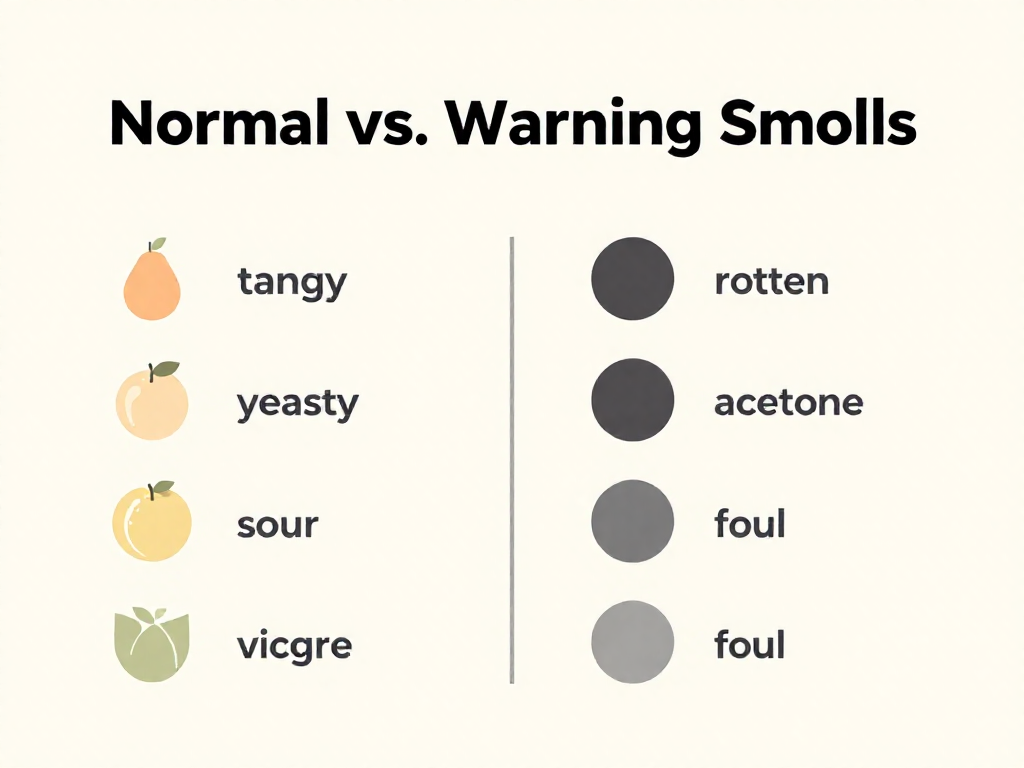
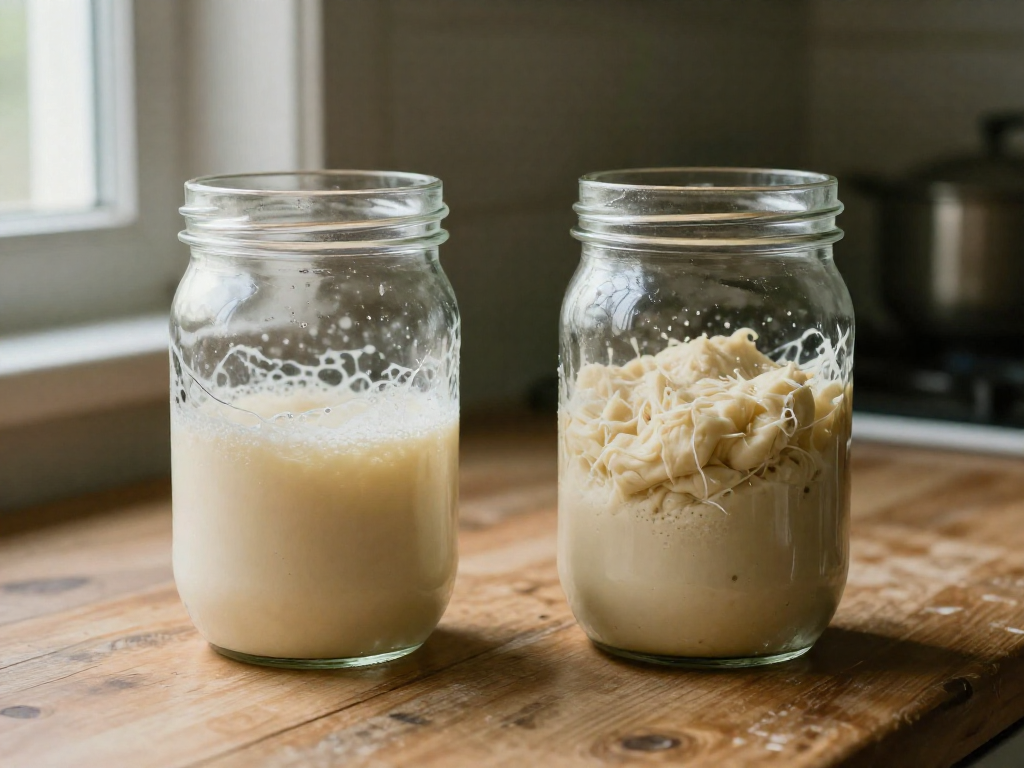
A healthy sourdough starter (the living mix of flour and water that you feed to leaven your bread) smells pleasantly sour and tangy, often with hints of yeast, beer, or plain yogurt. If yours falls anywhere in that range, you're fine.
Here's the quick read:
- Normal range: mildly sour, tangy, yeasty, or slightly beer- or yogurt-like.
- It changes through the feeding cycle (the regular routine of discarding some starter and adding fresh flour and water). Expect a mild smell right after feeding and a stronger, sharper smell when your starter is "hungry" and ready to eat again.
- A little sharpness is normal—it does not mean your starter has failed.
One key rule: smell tells you a lot, but it's only one signal. Pair it with how your starter looks (bubbly and risen) and how active it is. Together those three cues give you the full picture—and we'll cover the warning smells next.
Normal Smells (No Action Needed)
Good news first: nearly every smell that makes new bakers panic is completely normal. If your starter smells like any of these, it's alive and doing its job. Here's how to read each scent and what (if anything) to do.
| What you smell | What it means | What to do |
|---|---|---|
| Tangy or sour, like plain yogurt | Healthy lactic acid from the bacteria in your starter | Nothing — this is the ideal "ready to bake" smell |
| Bready, sweet, or faintly fruity | Active, well-fed, and happy | Nothing — bake when it's doubled and bubbly |
| Beer, wine, or boozy | A hungry starter that has eaten through its food | Feed it (discard most, then add fresh flour and water) |
| Sharp acetone or nail-polish | Very hungry — it's been too long since the last feeding | Feed it now; the smell fades within a feeding or two |
| Vinegary or like sour milk | On the acidic side, but still perfectly safe | Feed it; for a milder flavor, feed more often or use a touch more flour |
The pattern to remember: sour, tangy, boozy, and even nail-polish-sharp are all signs of a living starter, not a spoiled one. The boozy and acetone smells simply mean your starter is overdue for a feeding — a quick feed resets it.
A quick term you'll see often: a feeding (sometimes called refreshing) means discarding most of your starter, then stirring in fresh flour and water so the microbes have new food to eat.
Smells like rot, gym socks, or anything that turns your stomach are different — we cover those warning signs in the next section.
Warning Smells (Time to Investigate or Toss)
Most off smells are harmless, but a few mean your starter is in trouble. Here are the ones that warrant action.
Discard immediately if you see any of these:
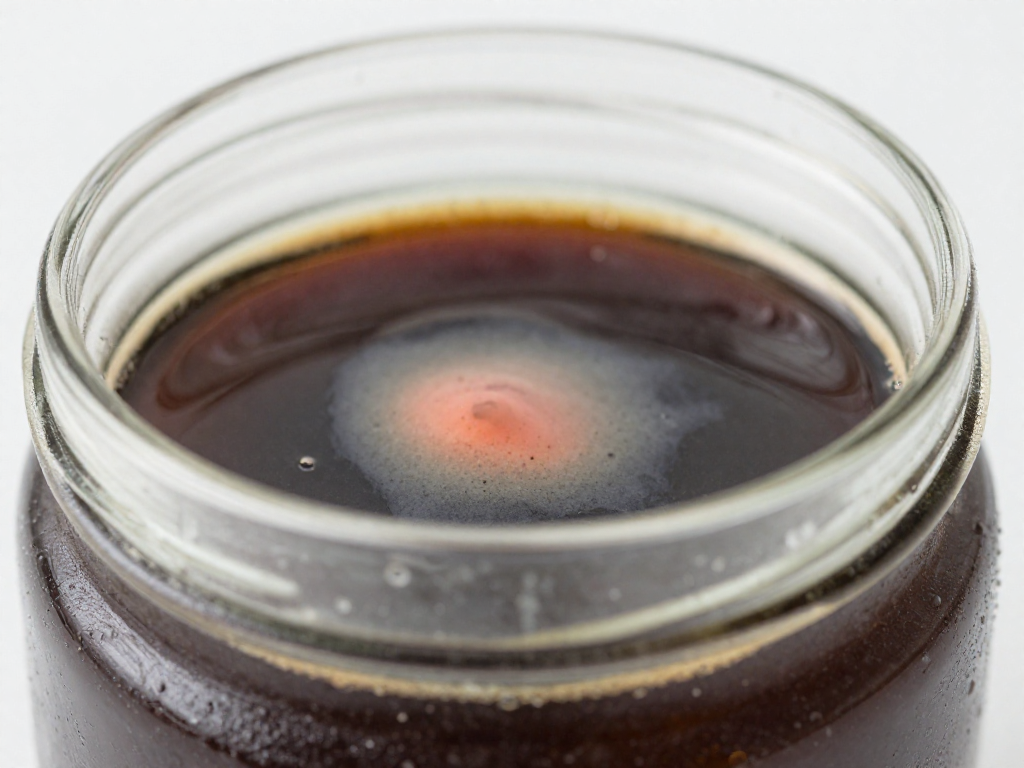
- Pink, orange, or fuzzy mold. Any patch of pink/orange streaking or fuzzy growth (white, green, or black) paired with an odd smell means harmful microbes have moved in. Don't scrape it off and feed the rest—throw out the whole jar, lid and all.
Investigate, then likely toss, if you smell:
- Rotten, putrid, or sewage-like odor. A healthy starter can smell sharp or sour, but never like garbage or rot. This signals real spoilage.
- Nail polish remover (acetone) that won't fade. A faint acetone smell just means your starter is hungry, and a feeding or two usually fixes it. But if it stays strong after several feedings on a regular schedule, the culture isn't recovering.
- Overpowering, persistent cheesy or foot odor. A mild cheesy note is normal (see the previous section). An aggressive, stinky-sock smell that lingers across feedings is a red flag.
The simple rule: when in doubt with mold or unusual color, toss it out. Starters are cheap and fast to rebuild from flour and water—your health is not worth the risk.
If your starter smells fine but still seems sluggish, that's a feeding or temperature issue, not spoilage, and it's fixable.
Quick Reference: Smell-to-Solution Cheat Sheet
Screenshot or pin this table for fast checks at feeding time.
| Smell | What it means | What to do |
|---|---|---|
| Tangy or yogurt-like | Healthy, active fermentation | Normal — bake as usual |
| Boozy or beer-like, with gray liquid on top | Hungry starter; that liquid is "hooch" (alcohol from underfeeding) | Feed it — stir in or pour off the hooch, then feed |
| Sharp vinegar | A bit overripe, slightly hungry | Feed it — refresh and watch it rise |
| Acetone or nail-polish remover | Very underfed and overly acidic | Feed it — feed twice daily for 2–3 days to revive |
| Rotten, like trash or rotten eggs | Bad bacteria have taken over | Toss it — start fresh |
| Musty, with fuzzy pink, orange, or black spots | Mold contamination | Toss it — discard the whole jar |
Results vary by kitchen and climate, so use your nose alongside how your starter looks and rises.
Why Your Starter Smells the Way It Does
Your starter's smell comes from two groups of microbes working in the flour-and-water mix. Lactic acid bacteria create the soft, yogurt-like or milky tang. Acetic acid bacteria create the sharp, vinegary, nail-polish-like notes. The balance between them shifts with three things:
- Hunger: A starter that hasn't been fed (refreshed with flour and water) in a while smells sharper and more sour as acids build up.
- Temperature: Warmer spots (75–82°F / 24–28°C) favor the mild, tangy lactic smell; cooler spots push it sharp and acetic.
- Hydration (the ratio of water to flour by weight): Wetter starters lean mild; stiffer, drier ones lean sharp.
To nudge the smell milder: feed more often, keep it warmer, and use a higher feeding ratio—for example, 1 part starter to 5 parts each of flour and water (1:5:5) instead of 1:1:1. Results vary by kitchen, so adjust gradually.
How to Fix a Smelly or Off Starter
Most "off" starters are salvageable. Try this rescue routine before giving up:
- Discard down to a small amount. Keep just 20 grams (about 1½ tablespoons) of starter and throw the rest away. A smaller base is easier to revive.
- Feed with fresh flour and water. Add 20 grams flour (about 2½ tablespoons) and 20 grams water (about 1½ tablespoons), stir well, and cover loosely. This is a 1:1:1 feeding (equal parts starter, flour, water by weight).
- Feed more often. Repeat this feeding twice a day—roughly every 12 hours—for 3 to 5 days to rebalance the yeast and bacteria.
- Find a warm, stable spot. Aim for 75–80°F (24–27°C), like inside an oven with just the light on. Steady warmth speeds recovery.
Watch for: a fresher, yeasty-tangy smell and bubbles returning within a few days. Results vary by kitchen and climate.
When to start fresh: if you see fuzzy mold (pink, orange, or black spots) or the smell never improves after a week, discard it. Starting over is completely normal and no failure on your part.
See also
- How to Make a Sourdough Starter from Scratch
- How to Tell If Your Sourdough Starter Is Ready to Bake
- Sourdough Starter Mold: What It Looks Like and What to Do
- How Often Should You Feed a Sourdough Starter?
- Why Is My Sourdough Starter Not Rising?
Related articles
Why a Rye Starter Might Be Your Best Beginner Sourdough Hack
Is a rye sourdough starter easier for beginners? Yes! Learn why rye flour ferments faster, is more forgiving, and how to create your own 100% rye starter with step-by-step instructions, plus tips for using it in any recipe.
Jul 28, 2026 · 8 min read
The Emotional Side of Sourdough: Dealing with Starter Anxiety and Failure
How do I cope with the stress and disappointment when my sourdough starter fails or seems to die?
Jul 20, 2026 · 7 min read
Sourdough Starter Fasting: What to Do When You Go on Vacation
How do I prepare my sourdough starter for a multi-week absence and revive it smoothly?
Jul 20, 2026 · 9 min read