Hooch, Liquid, and Discoloration: What's Happening to My Starter?
What is the liquid on top of my starter and is it bad?
On this page
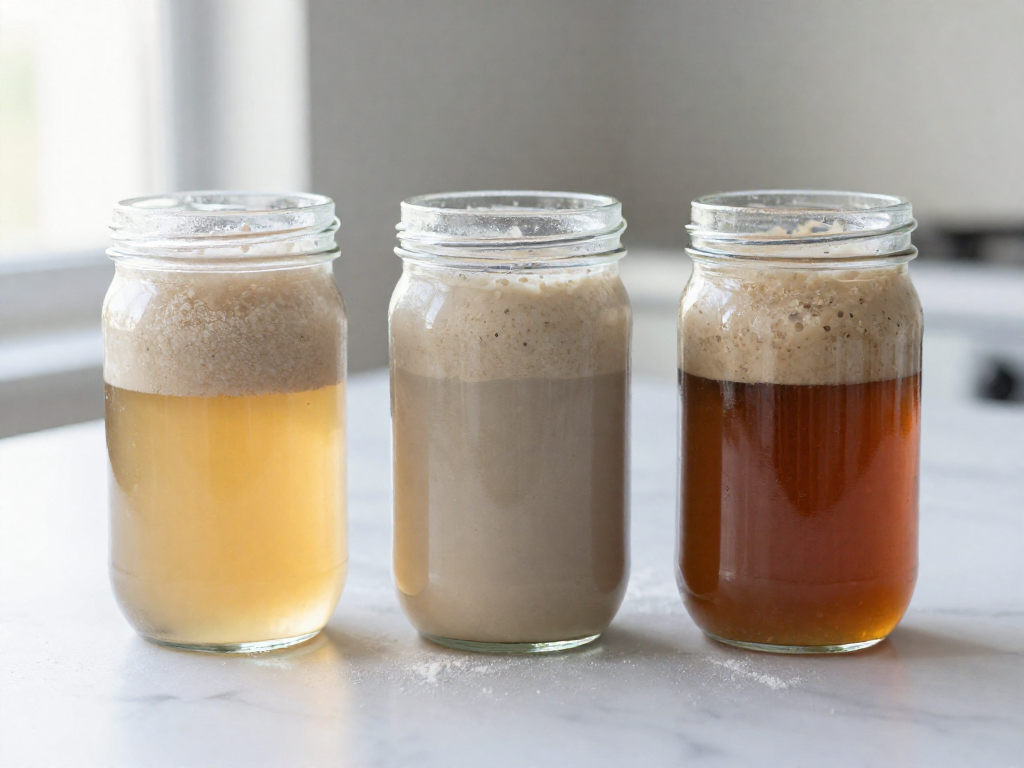
The Short Answer: It's Almost Always Hooch (and Hooch Is Fine)

That liquid pooling on top of your starter is almost certainly hooch — a thin layer of mostly alcohol and water that your starter produces as it ferments. The name comes from old moonshine slang, and yes, it really does smell a little boozy.
Here's the reassuring part: hooch is a sign of a hungry starter, not a spoiled one. When the wild yeast and bacteria in your starter run out of flour to eat, they release these liquid byproducts. It's a signal that says "feed me," not "throw me out."
So no — you almost never need to start over. Just pour off the liquid (or stir it back in for a slightly tangier flavor), then feed your starter as usual with fresh flour and water. Within a few hours it should perk back up and start bubbling.
The liquid can range from clear to amber to dark brown; darker usually just means it's been hungry longer. It only becomes a real concern if you see fuzzy mold or streaks of pink or orange — true red flags we'll cover in the section below.
What Is Hooch and Why Does It Form?

Hooch is the thin liquid that collects on (or under) your starter when the yeast and bacteria have run out of food. It's a normal byproduct, not a sign your starter is ruined. Here's what's actually going on.
Your starter is a living culture of wild yeast and bacteria. As they ferment, they eat the sugars in the flour and release two things: carbon dioxide (the bubbles that make your starter rise) and alcohol. That alcohol, mixed with a little water, is the hooch you see.
A few simple factors control how much forms:
- Time between feedings: The longer your starter goes unfed, the more food the microbes use up, and the more hooch they produce. Hooch is basically your starter saying, "I'm hungry."
- Temperature: Warmer kitchens speed up fermentation, so hooch appears faster. A starter on the counter in summer will separate sooner than one in the fridge.
- Hydration: Hydration just means how much water is in your starter compared to flour. A wetter (higher-hydration) starter forms thin, visible liquid more readily than a stiff one.
What the color tells you:
- Clear or straw-colored, slightly cloudy liquid = normal, just hungry. Stir it in or pour it off, then feed.
- Gray or light brown = your starter is very hungry but still fine after a feeding or two.
- Pink, orange, or fuzzy mold = that's not hooch. Discard and start fresh.
The fix is almost always the same: feed your starter more often or move it somewhere cooler.
Decoding the Color: Gray, Brown, Clear, and When to Worry
Here's the quick read on starter colors, from totally fine to throw-it-out:
| What you see | What it means | What to do |
|---|---|---|
| Clear or straw-yellow liquid | Normal hooch (the alcohol-and-water layer your starter releases when hungry) | Stir it in or pour it off, then feed |
| Gray liquid or gray-tinged top | Normal, just a bit hungrier | Feed as usual |
| Brown or dark amber liquid | Very hungry or overdue for a feeding | Pour off the darkest layer, feed, and feed more often |
| Pink, orange, or red streaks or tint | Danger sign — possible harmful bacteria | Discard the whole starter and begin again |
| Fuzzy white, green, or black spots | Mold | Discard the whole starter and begin again |
The rule of thumb: darker usually just means hungrier or older, not spoiled. A starter that's gone a few extra days between feedings will build up more hooch and the liquid will deepen from clear to gray to brown. None of that is dangerous. Stir it back in for a slightly tangier loaf, or pour it off for a milder one.
The two things that mean stop: any pink, orange, or red coloring, and any fuzzy growth. These are not hooch and not normal. You can't rescue them by scraping the top off — when in doubt, throw it out and start a fresh starter. It only costs flour and a few days.
One common false alarm: a dry, crusty, slightly darkened skin on top is just dried-out starter, not mold. Mold is fuzzy and raised; a crust is flat and leathery. Scrape the crust off and feed the healthy starter underneath.
Stir It In or Pour It Off? How to Handle Hooch
Both options are correct—the choice just changes your starter's flavor. Decide first, then feed.
Option A — Stir it in (for a more sour, tangy bread)
Hooch is the alcohol-and-acid liquid your starter releases when it's hungry. Stirring it back in keeps those acids in the mix.
- Use a clean spoon to stir the hooch fully into the starter until smooth. It will look slightly looser and thinner than usual—that's normal.
- Feed as normal (see Option B, step 2).
Option B — Pour it off (for a milder, less tangy bread)
- Tip the jar and pour off the liquid layer. Don't scrape; a thin film left behind is fine.
- Feed as normal: discard all but 50 g of starter (about ¼ cup), then add 50 g flour (about ⅓ cup) and 50 g water (about 3½ tablespoons). Stir, mark the level, and wait until it doubles—usually 4–8 hours at room temperature.
Getting a LOT of hooch every single time?
That's your starter telling you it's overdue for food. Try one of these:
- Feed twice a day instead of once.
- Feed a bigger ratio—1 part starter to 2 parts flour to 2 parts water (1:2:2)—so it has more to eat.
- Keep it in the fridge between bakes if you're not baking daily.
Results vary by kitchen temperature, so adjust timing to what you see, not just the clock.
How to Stop Getting So Much Hooch
Hooch (the layer of liquid that forms on top of your starter) is a sign your starter is hungry. Here's how to slow it down:
-
Feed on a regular schedule. Hooch builds up when a starter goes too long without food. If you bake often, feed once a day at room temperature. The fix is simply feeding before the liquid appears.
-
Lower the hydration. Hydration just means the ratio of water to flour. A wetter (higher-hydration) starter separates faster. Try feeding with equal weights of flour and water—for example, 50g starter + 50g flour + 50g water—or stiffen it further to 50g flour + 35g water. Less water means slower, more stable fermentation.
-
Store it in the fridge between bakes. Cold slows the yeast and bacteria way down, so you can go a week or more between feedings. Feed it, let it sit out 1–2 hours, then refrigerate.
-
Keep less starter. Maintaining a small amount (as little as 20–30g) means less to feed and far less discard, while still building plenty for a loaf.
Results vary with your kitchen's temperature, so adjust the timing to what you see.
Quick Reference: Normal vs. Toss It
Save or pin this for next time you peek under the lid.
✅ Normal — keep using your starter:
- A layer of liquid on top (this is hooch, the alcohol-and-water byproduct of a hungry starter)
- Gray, brown, amber, or clear liquid
- A sharp, sour, tangy, or boozy smell (like vinegar or nail polish)
- A dried, hardened, or slightly darkened crust on top
🚫 Toss it — start fresh:
- Pink, orange, or red streaks anywhere in the starter
- Fuzzy, raised spots in white, green, blue, or black (that's mold)
- A foul, rotten, or genuinely off smell that makes you recoil
Rule of thumb for beginners: If it's just liquid and a sour smell, stir it in and feed it; if you see color (pink/orange) or fuzz, throw it out and begin again.
See also
- How to Create a Sourdough Starter from Scratch
- A Beginner's Sourdough Starter Feeding Schedule
- How to Store Your Sourdough Starter in the Fridge
- Sourdough Starter Troubleshooting: Why Isn't My Starter Rising?
- Understanding Hydration Percentages for Beginners
Related articles
Why a Rye Starter Might Be Your Best Beginner Sourdough Hack
Is a rye sourdough starter easier for beginners? Yes! Learn why rye flour ferments faster, is more forgiving, and how to create your own 100% rye starter with step-by-step instructions, plus tips for using it in any recipe.
Jul 28, 2026 · 8 min read
The Emotional Side of Sourdough: Dealing with Starter Anxiety and Failure
How do I cope with the stress and disappointment when my sourdough starter fails or seems to die?
Jul 20, 2026 · 7 min read
Sourdough Starter Fasting: What to Do When You Go on Vacation
How do I prepare my sourdough starter for a multi-week absence and revive it smoothly?
Jul 20, 2026 · 9 min read