What Flour Should Beginners Use for Sourdough?
Which flour is best for starting sourdough?
On this page
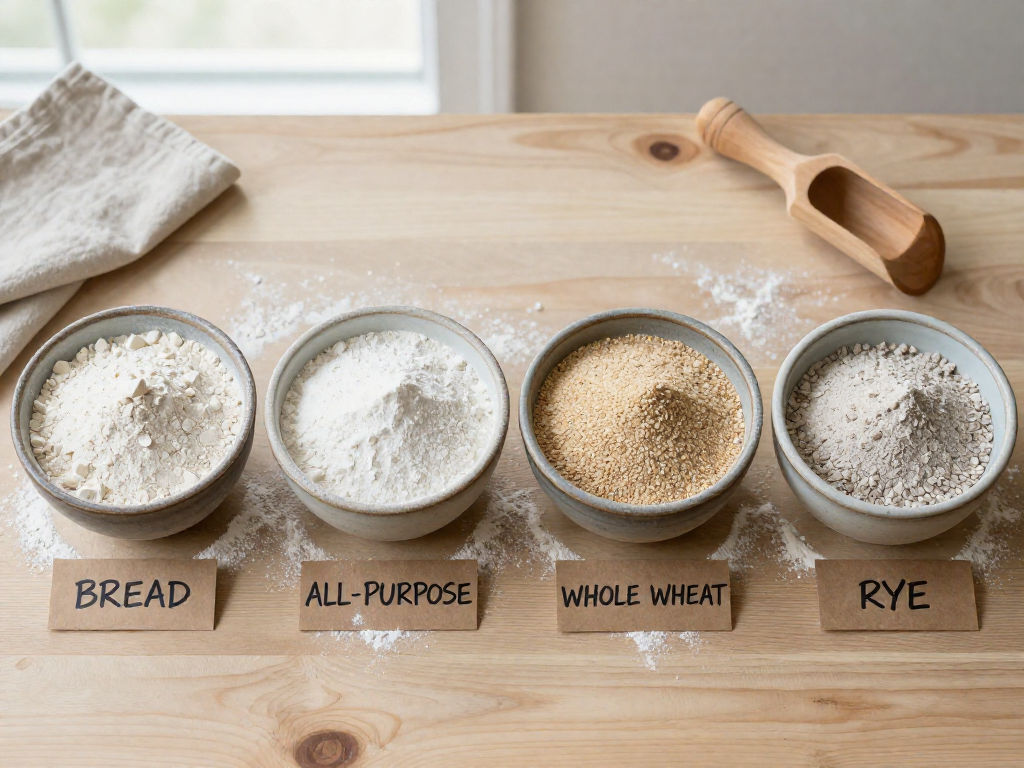
The Short Answer: What to Buy First
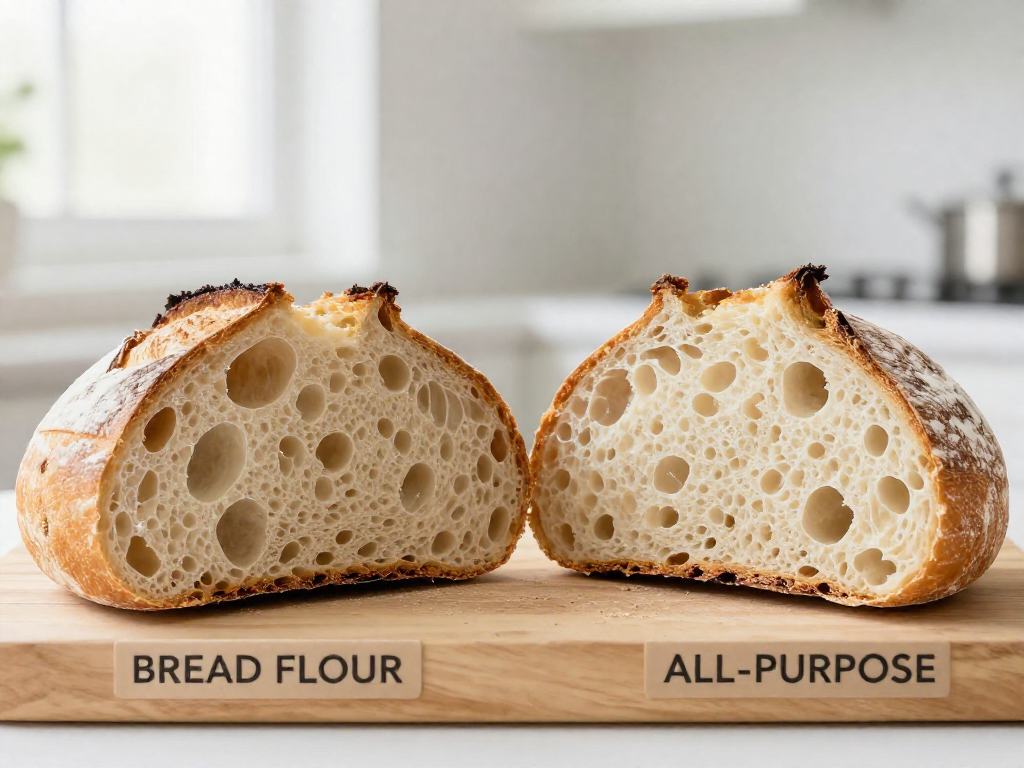
If you just want to start baking, here's the combo that works best for beginners:
- For your dough: unbleached bread flour (a high-protein white flour that builds strong gluten — the stretchy network that traps gas and gives you an open, airy loaf).
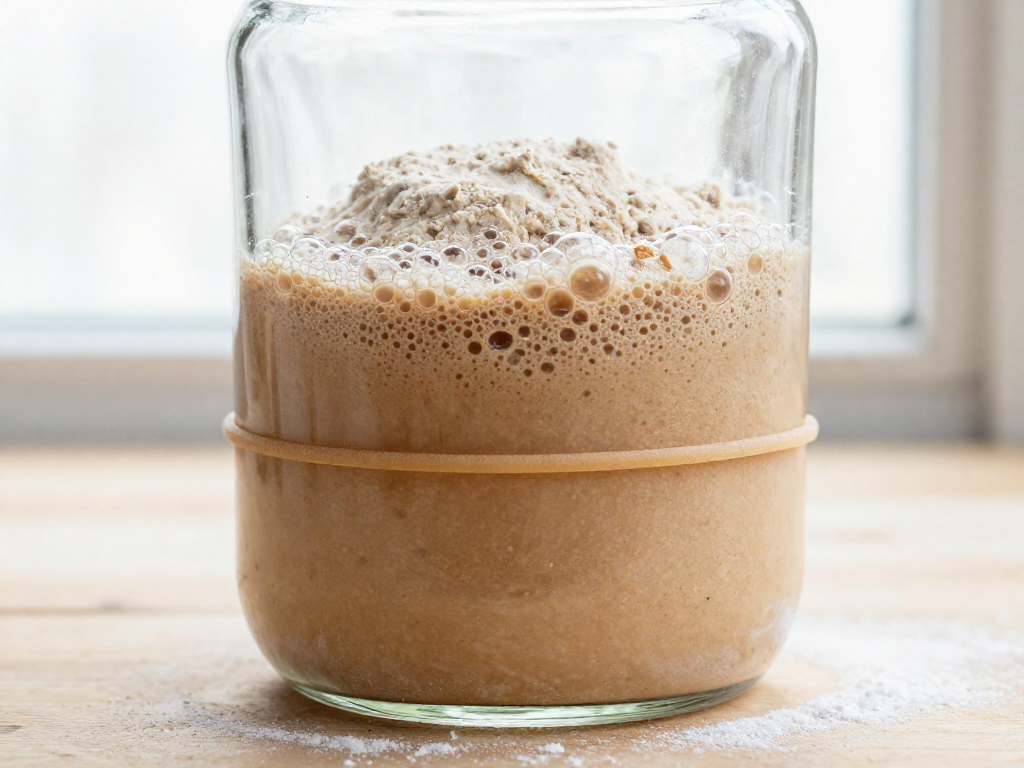
- For your starter: a whole grain flour, either whole wheat or rye. Whole grains carry more wild yeast and natural sugars, so they get your starter bubbling faster and keep it active.
Why this pairing is the most forgiving: bread flour holds its shape and tolerates the long fermentation (the hours of rising while the dough develops flavor) that trips up beginners, so you're less likely to end up with a flat, gummy, or dense loaf. The whole grain starter, meanwhile, is more reliable and easier to revive when you forget to feed it.
No bread flour? Plain all-purpose flour works in a pinch. Your loaf will be a little softer and less puffy, but it absolutely still bakes into good bread.
The rest of this guide explains why each flour behaves the way it does — so once you understand the differences, you can confidently swap, mix, and adapt to whatever's in your pantry. Results vary by kitchen and climate, so treat these as starting points, not guarantees.
Why Flour Choice Makes or Breaks a Beginner Loaf
Here's the one-sentence version: flour with more protein gives you more gluten, and gluten is the stretchy web that traps gas and holds your loaf tall. If your bread keeps coming out flat, dense, or gummy, the flour itself is often the hidden culprit.
Protein = gluten = structure. When you add water to flour and mix, two proteins (glutenin and gliadin) link up to form gluten—a stretchy network. As your starter ferments, it produces carbon dioxide gas. Strong gluten traps that gas like a balloon, so the dough puffs up and holds its shape. Weak gluten lets the gas escape, and the loaf spreads flat or stays squat and tight.
Check the protein number on the nutrition label (per ~30 g / ¼ cup serving):
- Bread flour: ~12–14% protein. The most forgiving choice for beginners—holds shape, rises well.
- All-purpose (AP) flour: ~10–12%. Works, but the lower end can give you weaker structure.
- Whole wheat / rye: high in nutrients but trickier to handle alone (more on that below).
Low protein is a top cause of flat, gummy loaves. If you grabbed a soft, low-protein AP flour (some store brands sit around 9–10%), the dough simply can't hold gas, and the crumb stays wet and pasty even after baking. Switching to bread flour fixes this more often than any fancy technique.
Bleached vs. unbleached. Bleached flour is treated with chemicals to whiten it faster. For sourdough, choose unbleached—the bleaching process can dampen the wild yeast and bacteria your starter and dough rely on. Unbleached flour keeps fermentation lively.
Whole grains feed your starter faster. Whole wheat and rye keep the bran and germ, which carry more wild yeast and minerals. A small amount mixed in gives the starter and dough a real boost in activity—great as a supporting player even when bread flour is your base.
Results vary by kitchen, climate, and brand, so treat these as starting points, not guarantees.
Bread Flour: The Beginner Default
Start with bread flour. It's the most forgiving option for your first loaves, and it's the one we reach for whenever we want a reliable rise.
Here's why it works so well for beginners:
- Higher protein (around 12–14%). Protein is what forms gluten, the stretchy network that traps gas as the dough ferments. More protein means a stronger network, which means your dough holds its shape instead of spreading into a flat puddle.
- Better oven spring and open crumb. Oven spring is the burst of rise a loaf gets in the first 10–15 minutes of baking. Crumb is the inside texture — the holes you see when you slice it. Strong gluten gives you taller loaves with that airy, open interior beginners are chasing.
- More forgiving of rough handling. If your shaping is sloppy or you handle the dough too much (and you will at first — that's normal), bread flour tolerates the abuse better than weaker flours and still bakes up well.
Brands to look for in the US:
- King Arthur Bread Flour (~12.7% protein) — widely stocked and very consistent
- Bob's Red Mill Artisan Bread Flour
- Store-brand bread flour (Kroger, Costco's, etc.) also works fine
Any bag simply labeled "bread flour" is a safe pick. Check the protein on the nutrition panel if you want to compare: aim for at least 4g protein per 30g serving.
The trade-offs: bread flour costs a little more than all-purpose, and the higher protein makes the dough feel stiffer and harder to mix by hand at first. That stiffness is the gluten doing its job — it softens as the dough rests. Neither downside is a reason to skip it for your early bakes.
Results vary with your kitchen's temperature and humidity, so treat these as starting points, not guarantees.
All-Purpose Flour: Works, With Caveats
Short answer: Yes, the all-purpose (AP) flour in your pantry will make sourdough bread. Just expect a tighter, denser crumb (the network of holes inside the loaf) and a little less rise than you'd get from bread flour.
The reason is protein. Protein forms gluten, the stretchy web that traps gas and holds your loaf's shape. AP flour usually runs 10–12% protein, while bread flour runs 12–14%. That gap matters, but the bigger surprise for beginners is how much AP varies by brand:
- King Arthur AP — ~11.7% (high; behaves almost like a weak bread flour)
- Gold Medal / store-brand AP — ~10.5% (softer, weaker dough)
Lower-protein flours absorb less water, so the same recipe can leave you with slack, sticky dough that bakes up gummy. The fix is simple: drop your hydration by about 5%. Hydration just means water weight as a percentage of flour weight. If a recipe calls for 375g water to 500g flour (75% hydration), use 350g water (70%) instead. Your dough will feel more manageable and hold its shape better.
When AP is genuinely fine:
- You're practicing technique and don't need a showpiece loaf
- You're using a higher-protein AP like King Arthur
- You're mixing it with a stronger flour
When to upgrade to bread flour:
- Your loaves keep coming out flat or dense despite good technique
- You want taller, more open results
One firm rule: never use bleached AP for your starter. Bleaching can interfere with the wild yeast and bacteria you're trying to grow. Choose unbleached for both starter and dough.
Results vary by kitchen, flour batch, and climate—treat these numbers as a starting point and adjust to how your dough actually feels.
Whole Wheat: Great for Starters, Tricky for Whole Loaves
Quick take: Use whole wheat to feed your starter, not to bake your first loaves. It's a beginner's best friend in the jar and a common cause of frustration in the oven.
Why it's perfect for your starter
Whole wheat flour contains the bran and germ of the wheat berry—the outer layers and seed core—which are packed with the wild yeast and natural sugars your starter eats. That means faster, more vigorous fermentation (the bubbling, rising activity that shows your starter is alive). If your starter is sluggish, feeding it a spoonful of whole wheat often wakes it up within a day.
Why 100% whole wheat loaves are hard
Those same bran particles act like tiny knives that cut the gluten strands your dough needs to trap gas and rise tall. The result for beginners is usually a dense, heavy loaf that won't open up. Whole wheat also ferments fast, so it's easy to over-proof (let the dough rise too long), leaving you with a flat or gummy crumb.
The beginner-friendly fix: blend it in
Don't go all-or-nothing. Replace just 10–20% of the bread flour in your recipe with whole wheat. You'll get the nutty, deeper flavor without sacrificing the rise.
- For 500 g total flour: use 400–450 g bread flour + 50–100 g whole wheat.
Adjust the water (hydration)
Bran soaks up more water than white flour, so a whole-wheat blend can feel stiff and dry. Add about 15–25 g extra water per 500 g flour (roughly 1–2 tablespoons). The dough should feel soft and slightly tacky, not crumbly.
Results vary by kitchen and climate—watch your dough, not just the clock.
Rye: A Starter Superpower (Not a Beginner Loaf)
The practical takeaway: Use rye to feed your starter, not to bake your first loaves.
Rye flour is the single best thing you can add to a sluggish starter (the living mix of flour and water that makes your bread rise). It's packed with the natural sugars and wild yeast that fermentation feeds on, so it tends to produce the most active, reliable, bubbly starters—often perking up a slow one within a feeding or two.
How to use it in feedings:
- Replace about 1 tablespoon (roughly 8 g) of your usual flour with rye at a feeding.
- Expect faster, more vigorous activity. Your starter may peak (rise to its highest point, then start to fall) sooner than usual—sometimes in 3–4 hours instead of 5–6.
- Because it ferments faster, watch your timing closely so you catch the starter at its peak instead of after it collapses.
Why it's tricky as a main bread flour: Rye is very low in gluten—the stretchy protein network that traps gas and gives bread its airy structure. Less gluten means a sticky, slack, dense dough that's genuinely hard to shape and easy to end up gummy. That's a frustrating place for a newcomer to start.
So enjoy rye's superpower where it shines—in your starter—and save 100% rye breads for later in your journey, once you've baked a few confident loaves with bread flour. Results vary by kitchen and climate, so treat the timing above as a starting point, not a guarantee.
Side-by-Side Comparison Table
Here's every flour at a glance. Protein % matters because more protein means more gluten (the stretchy network that traps gas and gives your loaf height and an open, airy crumb).
| Flour | Protein % | Best Use | Difficulty | Crumb Result | Beginner Verdict |
|---|---|---|---|---|---|
| Bread flour | 12–14% | Dough | Easy | Open, springy, good rise | ✅ Best all-rounder — start here |
| All-purpose (AP) | 10–12% | Dough | Easy | Decent, slightly tighter | 👍 Acceptable if it's what you have |
| Whole wheat | 13–15% | Starter + blend (10–25% of dough) | Medium | Denser, hearty, lower rise | ⚠️ Great in your starter; blend into dough, don't go 100% |
| Rye | ~8–10% (low gluten) | Starter only | — | Gummy and flat as a full loaf | 🌟 Starter superpower, not a beginner loaf |
Quick takeaway: Buy bread flour for your dough and keep a little whole wheat or rye on hand to feed a lively starter. Results vary by kitchen temperature and humidity, so treat this as a starting point, not a guarantee.
My Recommended Starter Setups for Beginners
Pick the setup that matches your budget and pantry. Each works for both your starter (the live fermented flour-and-water mix that leavens your bread) and your dough.
Budget setup — under $10
- One 5 lb (2.3 kg) bag of bread flour for dough
- One small 2 lb (900 g) bag of whole wheat for feeding your starter
- Why: whole wheat ferments fast and keeps a sluggish starter active.
Best results setup
- Bread flour for the dough (high protein = better structure and rise)
- Rye flour for starter feeds (the most reliable starter food I've tested)
- Why: this combo gave me the most consistent rise across cool and warm kitchens.
Pantry-only setup
- Unbleached all-purpose (AP) flour for everything
- Lower the water slightly — try 70% hydration (700 g water per 1,000 g flour) instead of 75%, since AP's lower protein absorbs less.
What I'd buy on one grocery trip: one bag of bread flour and one small bag of rye. That's it — enough to feed a starter and bake your first several loaves.
Results vary by kitchen and climate, so adjust as you go.
Common Flour Mistakes That Cause Dense, Gummy Loaves
If your loaves keep coming out dense, flat, or gummy (raw and sticky in the center even after baking), flour is often the hidden culprit. Here are the most common mistakes and how to fix them.
-
Using bleached flour. The chemical bleaching process can slow down your starter (the living mix of flour and water that ferments your dough). Fix: Buy unbleached flour for both your starter and your dough.
-
Using low-protein all-purpose (AP) flour at high hydration. Hydration just means how much water is in the dough relative to flour. AP flour has less protein, so it can't hold much water and turns slack and flat. Fix: Stick to bread flour, or lower your water by 20–30g per 500g flour.
-
Going 100% whole grain too soon. Whole wheat and rye drink up more water and ferment fast, which beginners often misread as "done." Fix: Start with 10–20% whole grain mixed into bread flour.
-
Not adjusting water when switching flour types. Different flours absorb different amounts. Fix: Hold back 20–30g of water and add it only if the dough feels stiff.
-
Switching brands mid-recipe. Even two bread flours behave differently. Fix: Finish a bag before changing, and expect to tweak water with a new one.
Results vary by kitchen and climate, so treat these as starting points, not guarantees.
See also
- How to Make and Maintain a Sourdough Starter
- Beginner Sourdough Bread Recipe (Step-by-Step)
- Why Is My Sourdough Gummy? Troubleshooting Guide
- Understanding Hydration in Sourdough for Beginners
- Essential Sourdough Tools for Beginners
Related articles
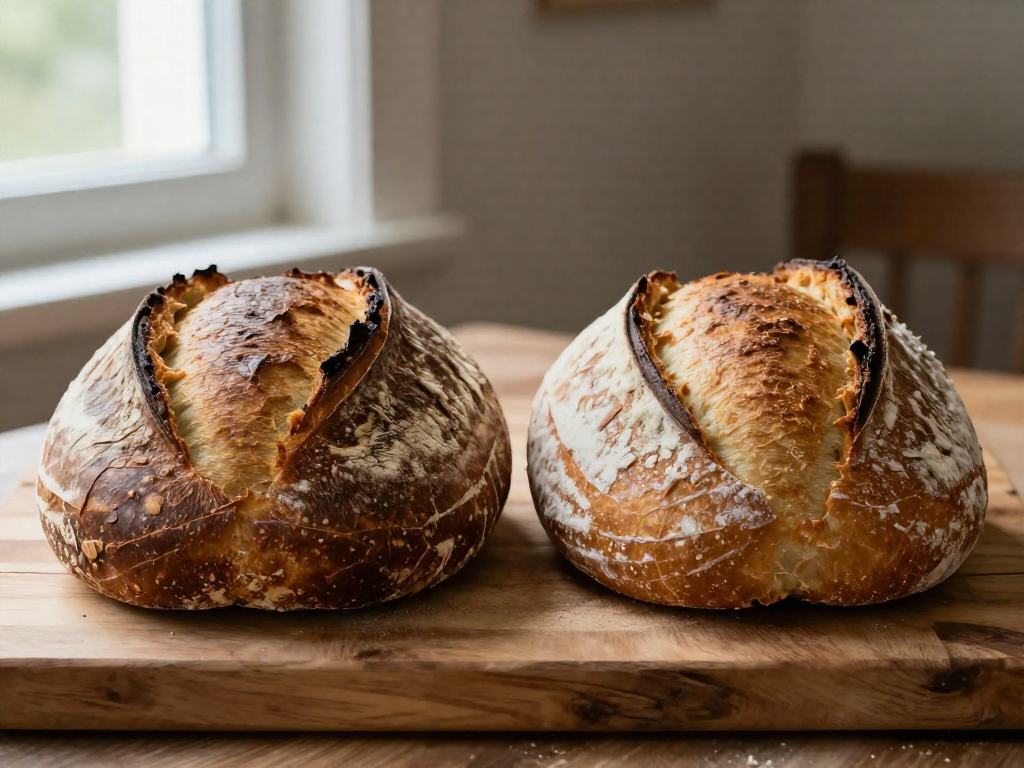
Baking Stone vs. Dutch Oven for Sourdough: A Beginner's Comparison
Can I use a baking stone instead of a Dutch oven for sourdough?
Jul 28, 2026 · 8 min read
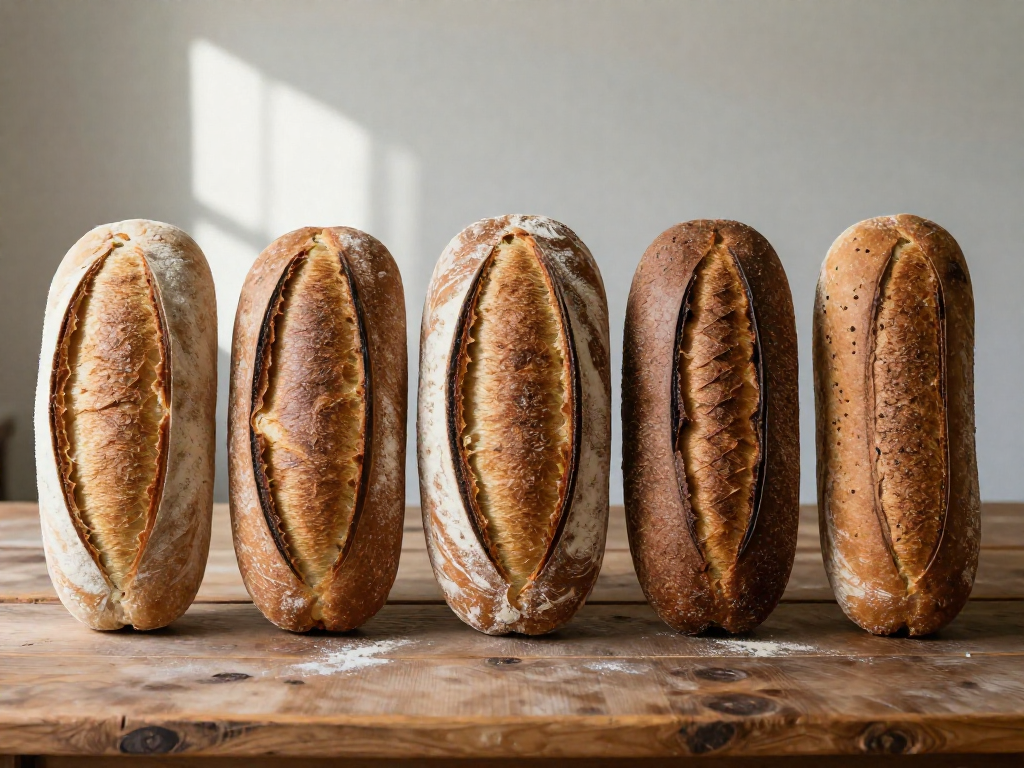
Flour Types for Sourdough: A Visual Guide to Protein Content and Results
How do different flours affect sourdough bread, and what do the results look like side by side?
Jul 20, 2026 · 11 min read
The Only 5 Tools You Really Need for Your First Sourdough Loaf
Start baking sourdough without the clutter and expense. These are the only 5 tools you really need—and the ones you can skip.
Jul 20, 2026 · 3 min read