Sourdough Terms Glossary: Plain-English Definitions
What do all these sourdough words actually mean?
On this page
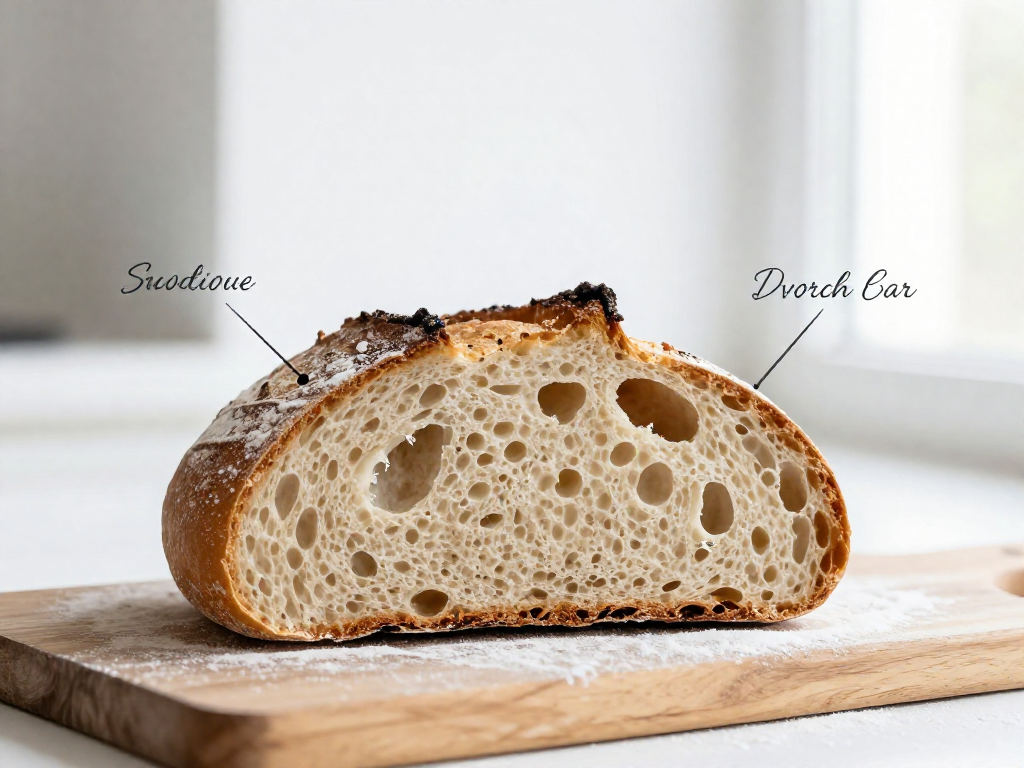
Open by naming the frustration directly: every sourdough recipe reads like a foreign language full of words like "levain," "autolyse," and "75% hydration." Reassure the reader that none of these terms are as complicated as they sound, and position this glossary as the one bookmark-able page they can pull up mid-recipe to instantly decode any word. Set expectations that terms are grouped by stage so they can find what they need fast.
How to Use This Glossary
You don't need to read this page top to bottom, and you definitely don't need to memorize anything. Just look up each word as it pops up in a recipe.
Here's how to find what you need fast:
- Jump by baking stage. Terms are grouped in the order you'll meet them: starter, mixing, fermenting, shaping, baking, and troubleshooting. There's also an A–Z note at the end for quick lookups.
- Use your browser's search. Press
Ctrl+F(Windows) orCmd+F(Mac) and type the exact word you're stuck on to jump straight to it. - Bookmark this page. Keep it open mid-recipe so you can check a term the moment you hit it, flour-dusted hands and all.
Confused by a word like hydration or autolyse? Don't worry, we define each one in plain English right where it matters.
Starter & Culture Terms
These are the words that scare off most beginners. Here's what each one actually means.
Sourdough starter: A living mix of flour and water that captures wild yeast and helpful bacteria from your kitchen and the flour itself. The yeast makes your bread rise; the bacteria make it tangy. Once it's bubbly and active, it replaces the packet of commercial yeast in your recipe.
Wild yeast and lactic acid bacteria: "Wild yeast" just means naturally occurring yeast (not store-bought). "Lactic acid bacteria" are the friendly microbes that produce the sour flavor. Together they live in your starter as a small ecosystem.
Mother / mother culture: Your main, ongoing starter that you keep alive long-term. When you bake, you usually take out a portion to use and leave the mother behind to feed and reuse. The mother is the source; the portion is what goes in the dough.
Levain: A smaller offshoot built from your mother specifically for one recipe. You mix some starter with fresh flour and water hours before baking so it's at full strength right when you need it. Think of it as a single-use batch made from your permanent starter.
Feeding / refreshing: Adding fresh flour and water to keep your starter alive and strong. A feeding ratio like 1:1:1 means equal weights of starter, flour, and water (e.g., 50g : 50g : 50g). A bigger ratio like 1:5:5 feeds it more and slows it down.
Discard: The portion you remove before feeding so your starter doesn't grow endlessly. Don't toss it—use it in pancakes, crackers, or waffles.
Float test: Drop a spoonful of starter in water. If it floats, it's full of gas and likely ready (results vary, so use it as a hint, not a guarantee).
Peak / active: When your starter has roughly doubled and is domed and bubbly—the best time to bake. Sluggish or dormant means it's slow or barely rising and needs more feedings.
Hooch: A thin, gray-to-brown liquid layer on top, signaling a hungry starter. Stir it back in or pour it off, then feed.
Mixing & Dough Terms
When a recipe throws around words like "hydration" and "autolyse," it can feel like a foreign language. Here's what each one actually means.
Hydration percentage — How much water is in the dough compared to flour, by weight. Take the water weight, divide by the flour weight, and multiply by 100. Example: 350g water ÷ 500g flour = 70% hydration. Higher hydration (75%+) means a wetter, stickier dough; lower (65%) is easier to handle. Beginners do well around 70%.
Baker's percentage — A way of writing recipes where flour is always 100%, and every other ingredient is listed as a percentage of that flour. So "2% salt" with 500g flour means 10g salt. Recipes use it because it scales cleanly: double the flour, double everything else.
Autolyse (pronounced AUTO-lize) — Mixing just the flour and water and letting it rest 30–60 minutes before adding salt and starter. This rest lets the flour fully absorb the water and starts forming structure on its own, so less kneading is needed later.
Gluten development — Gluten is the stretchy protein network that traps gas and gives bread its chew. You build it through mixing, kneading, or folding.
Windowpane test — A check for gluten development: stretch a small piece of dough thin. If it forms a translucent "window" without tearing, the gluten is ready.
Inclusions — Extra add-ins like seeds, olives, or cheese. Enrichment means adding fat, eggs, milk, or sugar for a softer, richer crumb.
Bread flour — Higher in protein (12–14%) than all-purpose, which means stronger gluten and a better rise. Worth using for sourdough.
Why grams beat cups — A cup of flour can vary 20–30g depending on how you scoop it. A scale removes that guesswork, which is the single biggest fix for inconsistent loaves.
Fermentation & Proofing Terms
These are the timing words that trip up most beginners. Here's what each one means in plain English.
Bulk fermentation (first rise): The long rise right after mixing, while the dough is still in one big mass ("bulk"). This is where most of the flavor and strength develops. Look for the dough growing by roughly 50–75%, becoming puffy and jiggly, with a few bubbles on the surface.
Final proof (second rise): The shorter rise after you've shaped the dough into its final form. It's done when the dough looks relaxed and slightly puffed, not doubled.
Stretch and fold: Instead of kneading, you grab one side of the dough, stretch it up, and fold it over the center, rotating the bowl and repeating. This builds strength gently.
Coil fold: You lift the dough from the middle, let the ends tuck under, and set it back down. Good for wetter dough later in bulk fermentation.
Lamination: Stretching the dough out thin like a sheet on your counter, then folding it back up. Often used to mix in add-ins like seeds.
Cold retard (cold proof): Resting the shaped dough in the fridge, usually 8–16 hours. The cold slows fermentation, deepens the sour flavor, and lets you bake on your own schedule the next morning.
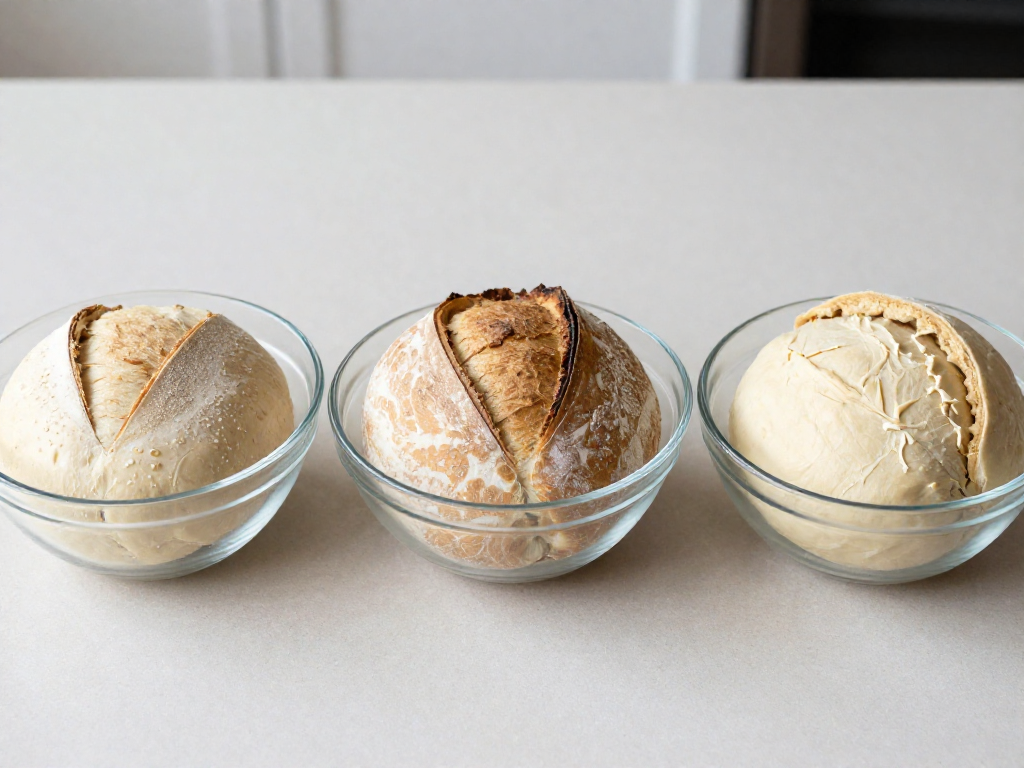
Underproofed dough: Risen too little. It feels tight and springs back fast when poked; loaves often come out dense or burst open.
Overproofed dough: Risen too long. It feels slack, spreads flat, and may smell sharply sour; loaves come out flat with a weak structure.
Poke test: Lightly press the dough with a wet finger. If it springs back slowly and leaves a slight dent, it's ready. Springs back fast = needs more time. Stays fully dented = overproofed.
Ambient temperature: The room temperature where your dough sits. Warm kitchens (around 78°F/26°C) speed everything up; cool kitchens slow it down. This is why exact times always vary by kitchen.
Shaping & Baking Terms
Here are the words you'll see in the shaping and baking steps, in plain English.
- Pre-shape: A loose, rough round you form before the final shape. It rests, then gets shaped again. This builds surface tension—the taut, smooth "skin" on the dough that helps it hold a tall shape instead of spreading flat.
- Final shape: The last, tighter shaping that locks in that tension before the dough goes into its basket.
- Bench rest: The short rest (usually 20–30 minutes) between pre-shape and final shape, so the dough relaxes and is easier to handle.
- Banneton / proofing basket: The round or oval basket that holds the shaped dough while it proofs (rises). It supports the shape and leaves a pretty ringed pattern.
- Seam side: The side where the dough edges were pinched together during shaping. In the basket it usually faces up; on the baking surface it usually faces down.
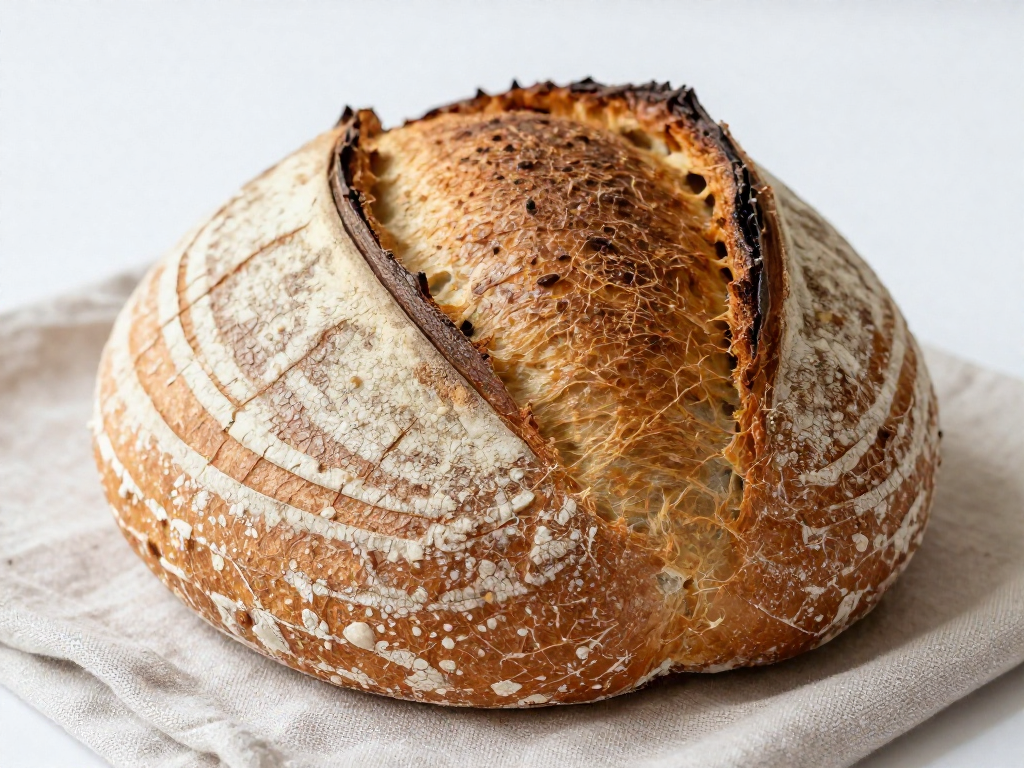
- Scoring (slashing): Cutting the top of the dough just before baking. This gives the loaf a planned place to expand, so it doesn't burst at the side.
- Lame: The handled razor blade used to score. (Pronounced "lahm.")
- Ear: The raised, crispy flap that lifts up along a score line—a sign of good expansion.
- Oven spring: The rapid rise in the first few minutes of baking, before the crust sets.
- Dutch oven: A heavy lidded pot that traps the dough's own steam. Steam keeps the surface soft long enough to get good oven spring and a glossy, crackly crust.
- Bake stone & peel: A stone (or steel) that holds heat for a crisp bottom, and the flat paddle (peel) used to slide the loaf onto it.
- Crust: The browned outer shell. More steam early plus a hot oven gives a thinner, crisper crust; less steam gives a thicker, chewier one.
Results vary by oven and kitchen, so treat these as guides, not guarantees.
Troubleshooting & Crumb Terms
These are the words you'll meet when you cut into a loaf and try to figure out what went wrong. Each one points to a specific fix.
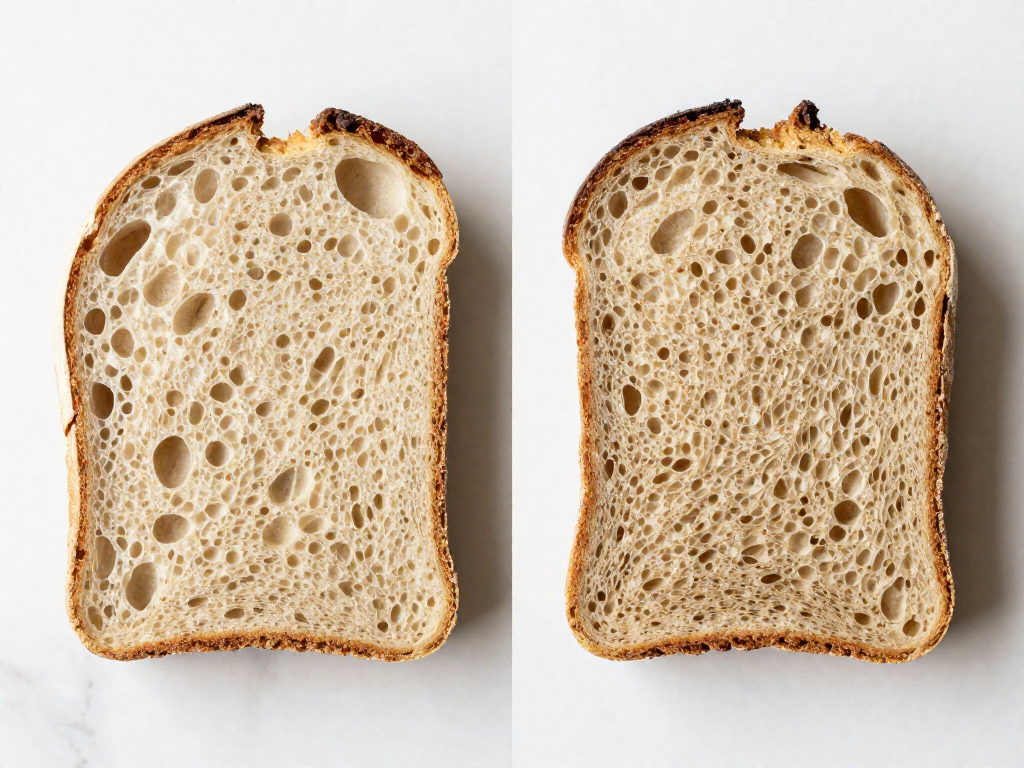
- Crumb — The inside texture of the bread (everything that isn't crust). When bakers say "the crumb," they mean the holes and the soft network around them.
- Open crumb — Lots of irregular holes, light and airy. Usually a sign of good fermentation and gentle handling.
- Tight crumb — Small, even holes and a denser feel. Common in beginner loaves; often means under-fermentation (dough didn't rise enough) or too little water in the dough.
- Dense — Heavy and compact with almost no holes. Frequent causes: a weak or young starter (the bubbly flour-and-water culture that makes the bread rise), or not enough rising time.
- Gummy — Sticky, paste-like, and clings to the knife. Almost always means the loaf was underbaked or sliced while still warm.
- Gum line (underbaked streak) — A wet, dense band of dough near the bottom crust. A classic sign of cutting too early or baking too short.
- Gnarly — Slang for an uneven, rough, or torn surface — usually cosmetic, not a real problem.
- Flat loaf — A loaf that spread out instead of rising up. Often over-proofed (left to rise too long) or shaped without enough surface tension.
- Oven spring — The quick rise a loaf gets in the first 10–15 minutes of baking. Good spring means a tall, domed loaf.
- Blistering — Small bubbles on the crust, usually from a long cold rise in the fridge. Purely cosmetic and often prized.
Results vary by kitchen, flour, and climate, so treat these as starting points, not guarantees.
Quick A–Z Cheat Sheet
Save or screenshot this one-line recap of every term above:
- Autolyse: A rest (20–60 min) where flour and water mix before salt or starter, making dough easier to work.
- Banneton: A basket that supports and shapes dough during its final rise.
- Bench rest: A short pause (15–30 min) after pre-shaping, before final shaping.
- Bulk ferment: The first long rise of the whole dough mass after mixing.
- Crumb: The inside texture of the baked loaf (the holes and softness).
- Discard: The portion of starter you remove before each feeding.
- Float test: Dropping a spoon of starter in water to check if it floats (a readiness clue).
- Gummy: A dense, sticky, undercooked-feeling crumb.
- Hooch: The dark liquid on a hungry starter; stir it in or pour it off.
- Hydration: The water amount as a percentage of flour weight.
- Lame: A blade used to score (cut) the dough top before baking.
- Levain: A starter portion built specifically for one bake.
- Oven spring: The fast rise a loaf gets in the first minutes of baking.
- Proof: The final rise of shaped dough before baking.
- Scoring: Slashing the dough so it expands in a controlled way.
- Starter: A living flour-and-water culture of wild yeast and bacteria.
- Stretch and fold: Gently pulling and folding dough to build strength without kneading.
- Windowpane: Stretching dough thin to check gluten development.
Results vary by kitchen and climate, so treat these as friendly guides, not guarantees.
See also
- Beginner sourdough starter guide: how to make and feed a starter
- Easy beginner sourdough bread recipe (step-by-step)
- Sourdough troubleshooting: why is my loaf dense, flat, or gummy?
- Understanding hydration: a beginner's guide to sourdough ratios
- Sourdough discard recipes for beginners
Related articles
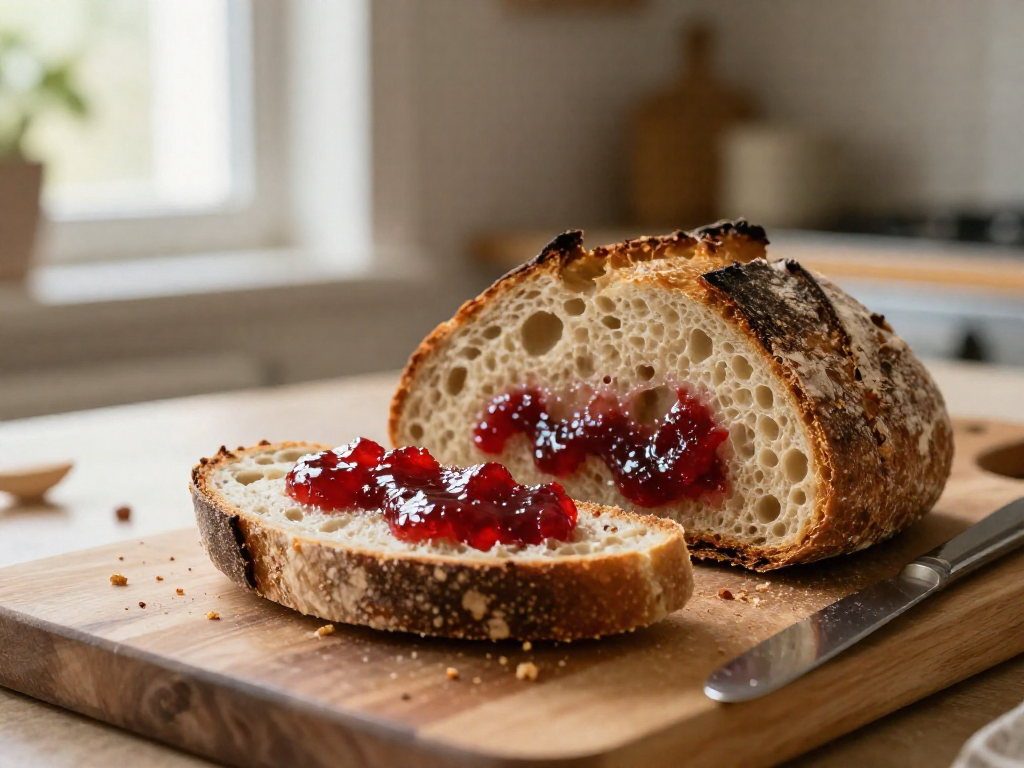
Stop Aiming for 'Perfect': Redefining Sourdough Success as a Beginner
Should beginners lower their expectations for a perfect loaf?
Jul 28, 2026 · 4 min read
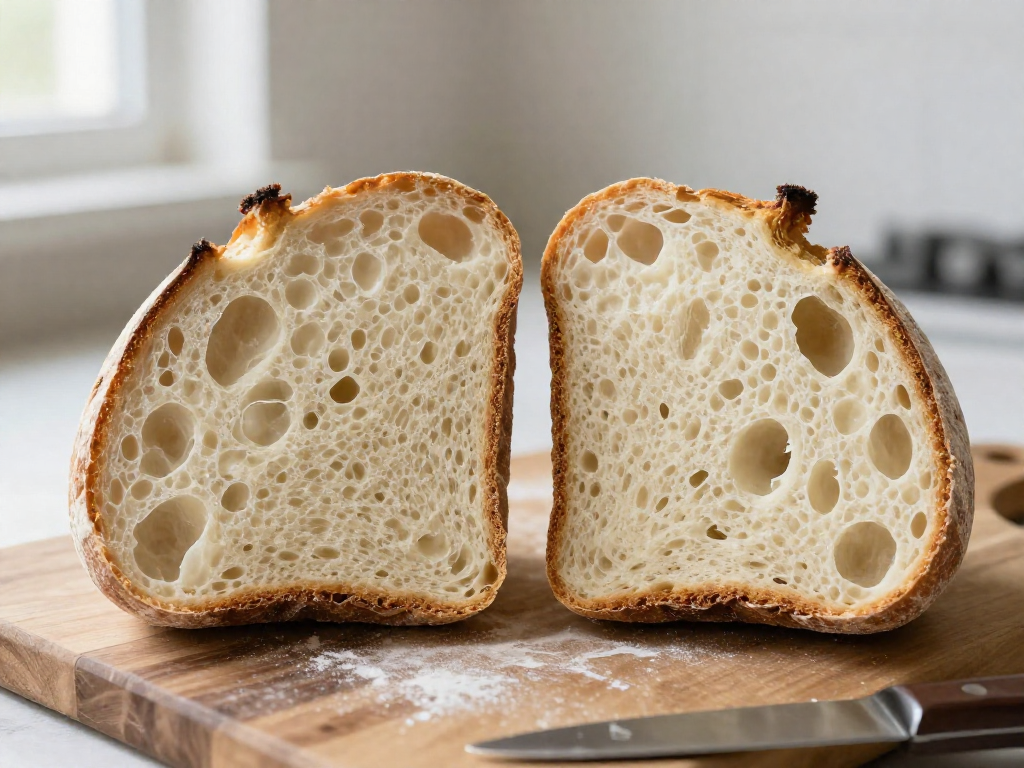
The Shaping Secret: How Your Technique Affects Oven Spring and Crumb
Discover why shaping is the secret to amazing oven spring and open crumb in sourdough. Learn how surface tension, dough shape, and proper technique can transform your loaves.
Jul 28, 2026 · 10 min read
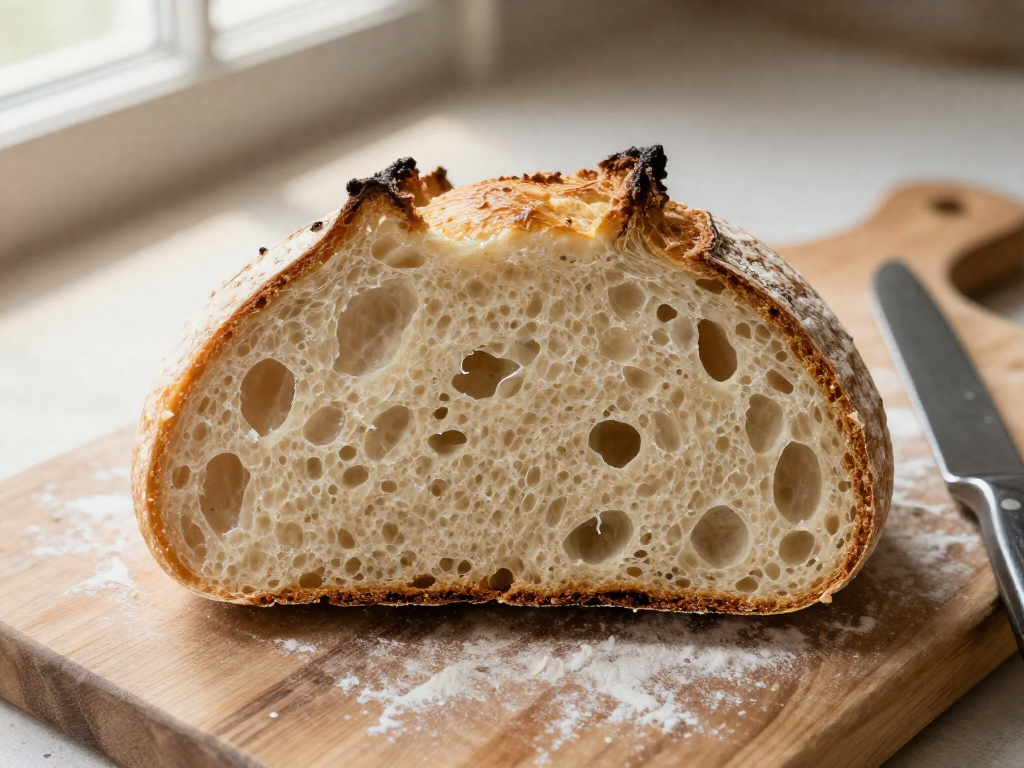
Sourdough Lingo You Don’t Need: Simple Words Instead of ‘Autolyse’ and ‘Crumb’
Why do sourdough bakers use so much jargon, and what simple substitutions can I use?
Jul 20, 2026 · 4 min read