How to Get Steam in Your Oven for a Better Crust
How do I add steam when baking sourdough?
On this page
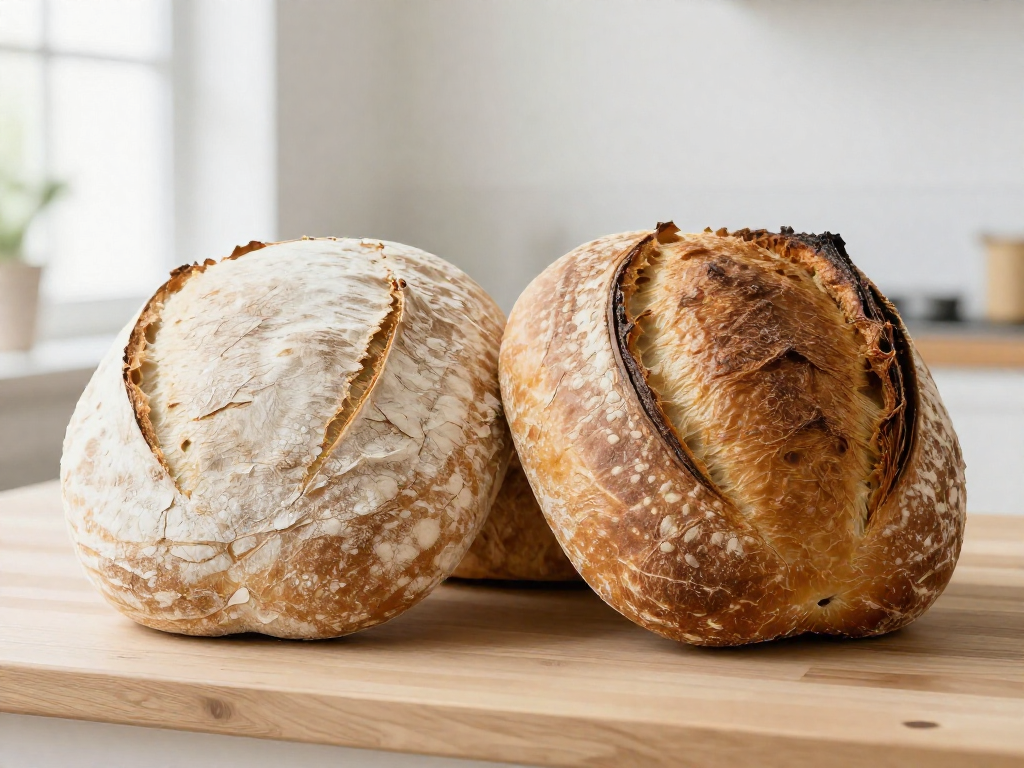
Why Steam Makes a Better Crust
Short answer: steam in the first part of the bake keeps your loaf's surface soft just long enough for it to rise tall and bake up glossy and crackly instead of pale and stiff.
Here's what's actually happening, in plain terms:
- Steam keeps the surface moist so the loaf can expand. When dough hits a hot oven, it puffs up fast — this final burst of rising is called oven spring. A dry oven dries out the surface within minutes, forming a hard shell that traps the dough before it finishes rising. Steam delays that shell so the loaf can grow to its full height.
- A delayed crust means a taller loaf and bigger ears. The ear is the raised, crispy lip that forms where you slashed the dough (that cut is called the score). The longer the surface stays soft, the more the score can open and lift — giving you that dramatic, bakery-style ridge.
- Moisture creates that deep-brown, shiny crust. Steam dissolves and cooks the starches on the dough's surface (a process called gelatinization), which is what produces the glossy sheen and crackle you hear when the loaf cools.
- Steam is only needed at the start. Aim for the first 15–20 minutes of baking. After that, you need to remove the steam (or open the lid) so the crust can dry out, crisp up, and turn golden. Leave steam in too long and the crust stays soft and pale.
Results vary by oven and climate, but skipping steam almost always gives a flatter, duller loaf — which is why it's worth doing right.
The Dutch Oven Method (Easiest for Beginners)
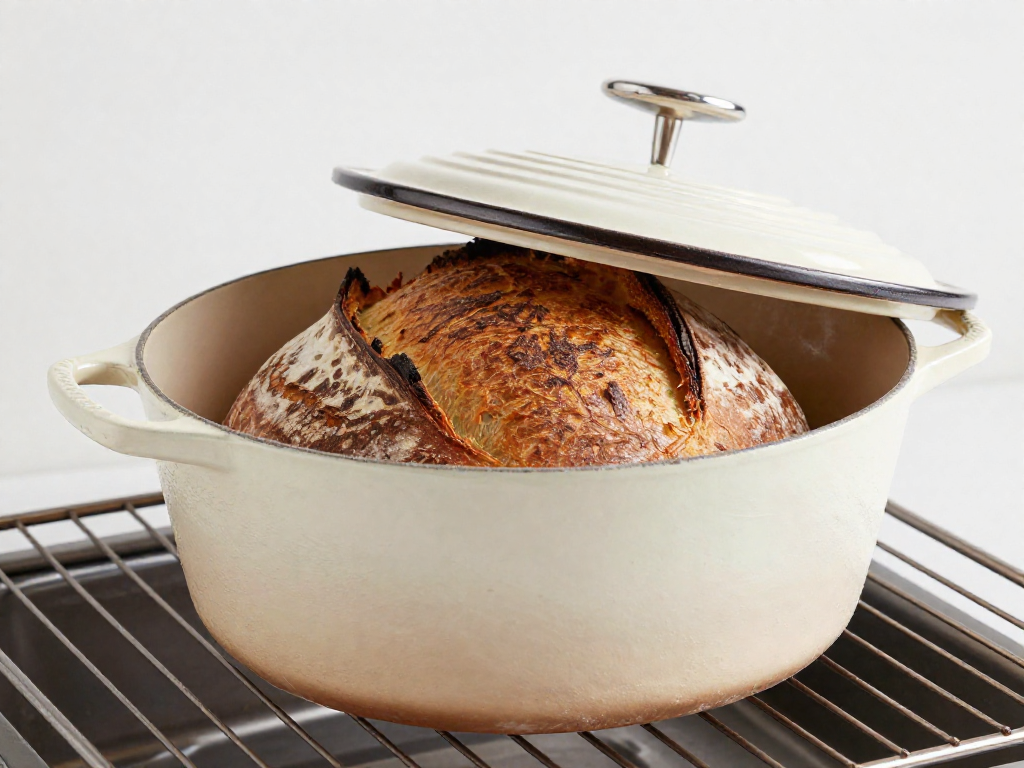
If you only try one method, make it this one. A Dutch oven (a heavy lidded pot) traps the steam that escapes from your dough as it bakes, so you don't need to add any water to the oven at all. The lid holds that moisture against the crust during the first stage of baking, keeping it soft and stretchy so the loaf can rise fully before the crust sets.
Steps
- Preheat the empty pot. Place your covered Dutch oven in the oven and set it to 475°F (245°C). Let it heat for 45–60 minutes so the pot is screaming hot. A hot pot is what kick-starts oven spring (the rapid rise in the first few minutes of baking).
- Load the dough. Lift your scored dough on its parchment paper and lower it into the hot pot. Work quickly and put the lid back on.
- Bake covered for 20 minutes. The trapped steam does its job here. Don't peek—every time you lift the lid you let steam out.
- Remove the lid and finish. Bake uncovered for another 20–25 minutes until the crust is deep golden brown. For a darker, crispier crust, push it to the longer end.
Optional: extra steam
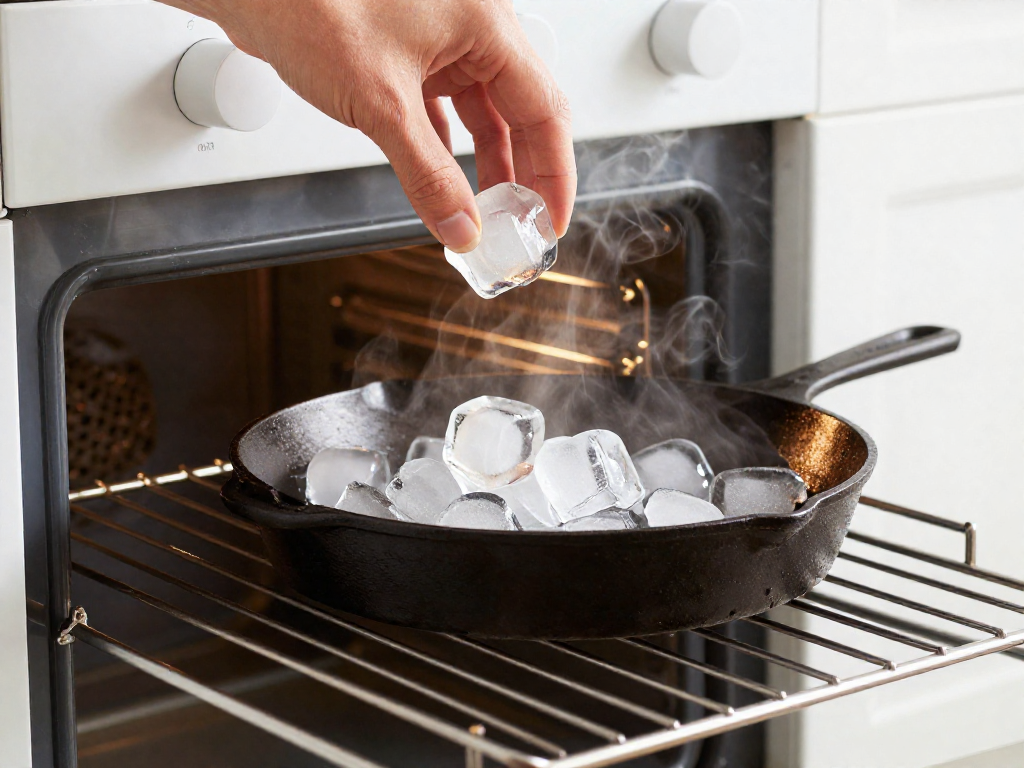
For an even glossier crust, drop 2–3 ice cubes between the parchment and the pot wall (not directly on the dough) right before you put the lid on.
Safety note
You are handling a 475°F pot and lid—hot enough to cause serious burns. Use thick, dry oven mitts (damp ones transfer heat fast), set the lid somewhere heatproof, and keep your forearms clear of the rim when lowering the dough in.
Results vary by oven and climate, so use the color and a hollow tap on the bottom as your real cues rather than the clock alone.
How to Get Steam Without a Dutch Oven
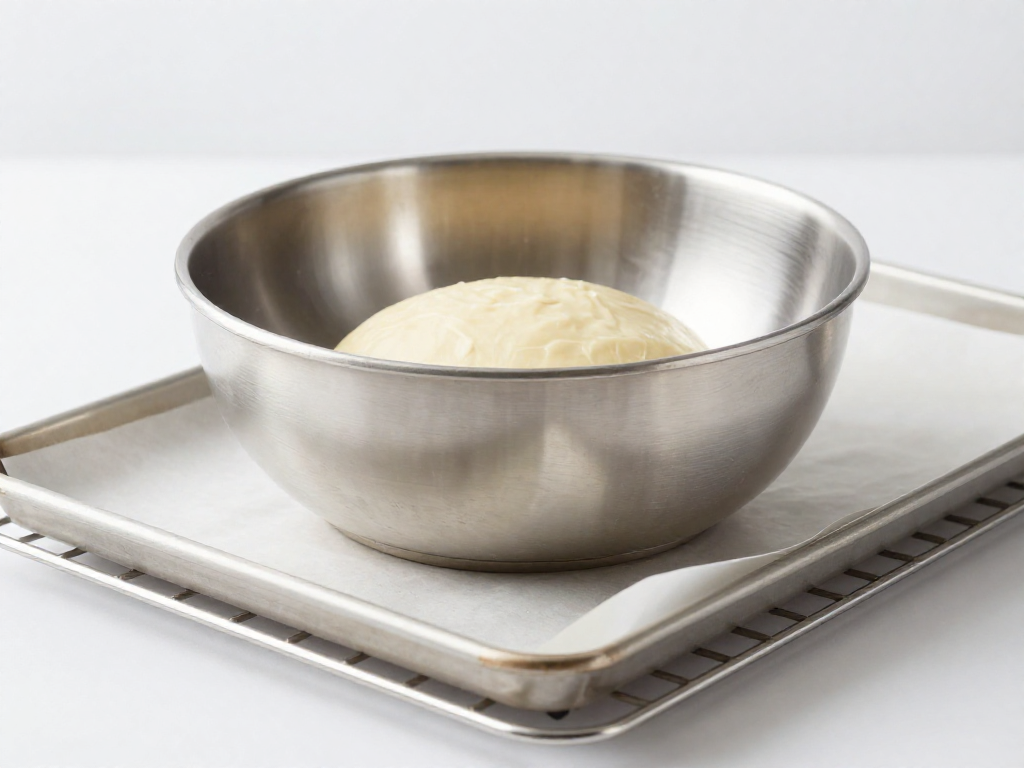
No Dutch oven? No problem. If you're baking on a sheet pan or a baking stone (a thick slab that holds heat for an even bake), you can still trap the steam that gives sourdough a crisp, blistered crust. Pick one of these four methods.
Method 1 — Pan of boiling water (most reliable)
- Put an empty metal pan (cast iron or an old roasting pan) on the bottom rack while the oven preheats. Lava rocks in the pan hold more heat and make more steam, but are optional.
- Boil about 1 cup (240 g) of water.
- Load your loaf, then carefully pour the boiling water into the hot pan and shut the door fast. Wear oven mitts and stand back from the burst of steam.
- Remove the pan after the first 20 minutes so the crust can dry and crisp.
Method 2 — Ice cubes in cast iron Preheat an empty cast iron skillet on the bottom rack. At load time, toss in 5–6 ice cubes and close the door. The slow melt releases steam gradually. Slightly gentler than boiling water, and less risk of a scalding splash.
Method 3 — Mist with a spray bottle Right after loading, quickly spritz the oven walls 3–4 times, then close the door. Use sparingly. Never spray the glass door or the oven light (see below).
Method 4 — Cover with a stainless steel bowl Place your loaf on the hot sheet pan or stone, then invert a large oven-safe stainless steel bowl over it to trap the dough's own moisture, just like a Dutch oven lid. Remove the bowl after 20 minutes to brown the crust. Make sure the bowl is fully metal, with no plastic handles.
Never add water to hot glass or the oven light A sudden splash of cold water on the hot glass door can crack it from thermal shock, and water on the light can shatter the bulb. Aim water only at the metal walls or into a metal pan.
Results vary by oven and climate, so try one method, note your crust, and adjust from there.
When to Add Steam and When to Remove It
Getting the timing right matters as much as the steam itself. Here's the simple sequence:
-
Add steam the moment the loaf goes in — not before. Steam works by keeping the crust soft and stretchy during the early "oven spring" (the rapid rise that happens in the first few minutes of baking). If you steam an empty oven, most of it escapes before your dough arrives. Load the loaf, add your steam, and close the door fast.
-
Vent or remove steam after 15–20 minutes. Once the loaf has fully risen and the surface has set, lingering moisture prevents browning and crisping. If you're using a Dutch oven (a heavy lidded pot that traps steam), take the lid off at this point. If you're steaming with a tray, remove the water tray now.
-
Crack the oven door for 5–10 seconds if steam still lingers. This releases trapped moisture so the crust can dry, darken, and turn crisp.
-
Bake a total of 40–50 minutes. You want a deep golden-brown crust that sounds hollow when you tap the bottom.
Troubleshooting:
- Pale, soft crust? You likely left steam in too long — vent earlier next time.
- Crust too thin, no oven spring? You vented too early; keep steam in for the full 15–20 minutes.
Results vary by oven and climate, so use the visual cues (deep color, hollow tap) over the clock.
Common Steam Mistakes (and Easy Fixes)
Steam helps the crust, but small habits can undo it. Match your symptom below to the fix.
Pale, soft crust. You didn't add enough steam, or you let it escape too early. Keep the lid on (or your steam source in place) for the first 20 minutes, then remove it so the crust can dry and brown for the final 20–25 minutes.
Thick, leathery crust. Too much steam, or you steamed the entire bake. Steam only for the first half. Remove the lid or pan of water partway through so the crust can set and crisp instead of staying damp.
Cracked oven glass. Never spray water onto a hot oven door or window. The sudden temperature change can shatter it. Add steam with a covered pot or a separate metal tray of water on a lower rack instead.
Soggy or dense bottom. Opening the oven over and over lets heat and steam rush out, dropping the temperature. Resist peeking. Open only when it's time to remove your steam source.
Flat loaf. Steam cannot rescue under-proofed or weak dough. Proofing means the final rise before baking. If your loaf spreads sideways instead of rising up, the fix is in the dough and timing, not the steam.
Results vary by oven and climate, so adjust as you learn yours.
FAQ
Do I really need steam to bake sourdough?
For the best results, yes. Steam (water vapor trapped in the oven during the first part of baking) keeps the surface of your dough soft for longer, so the loaf can expand fully before the crust sets. This gives you a bigger rise, better "ear" (the raised lip where you scored the dough), and a glossy, crackly crust. You can bake sourdough without steam, but expect a paler, thicker, duller crust and less oven spring (the sudden rise a loaf gets in the first 10–15 minutes of baking). If you bake in a Dutch oven with the lid on, you don't need to add steam separately, the dough's own moisture is trapped inside.
How long should I leave steam in the oven?
Keep steam in the oven for the first 20 minutes of baking, then remove it and let the loaf finish in dry heat. The early steam lets the loaf expand and develop color; the dry finish crisps and browns the crust. A simple schedule: bake covered or with steam for 20 minutes at 475°F (245°C), then uncover or vent the steam and bake another 20–25 minutes at 450°F (230°C) until the crust is deep golden-brown. If you're using a Dutch oven, just remove the lid at the 20-minute mark.
Can I add steam without a Dutch oven?
Yes. Place a metal baking tray or cast-iron pan on the bottom rack while the oven preheats. When you load your loaf onto a hot baking stone or sheet, pour about 1 cup (240 ml) of boiling water into the hot tray and quickly shut the door to trap the steam. Alternatively, toss a small handful of ice cubes onto the hot tray. Either method creates a burst of vapor for the crucial first 20 minutes. Always use a metal pan you don't mind discoloring, and never use a glass or ceramic dish, which can shatter.
Is it safe to put ice cubes in my oven?
Yes, as long as the ice lands in a preheated metal tray, never directly on the oven floor, the heating element, or the glass door. Dropping ice or water onto cold glass or onto the oven's glass door can crack it due to sudden temperature change. Put a metal or cast-iron tray on the bottom rack during preheating, then drop the ice cubes into that hot tray and close the door right away. Stand to the side as you do it, since the steam burst is hot.
Why is my sourdough crust pale even with steam?
A pale crust usually points to one of these causes. Symptom-to-fix: (1) Steam left in too long, the crust never gets a chance to brown, so vent or uncover after 20 minutes. (2) Oven not hot enough, use an oven thermometer and aim for 450–475°F (230–245°C); many ovens run cooler than the dial says. (3) Baked too short, leave it in until the crust is deep golden, even if that means an extra 5–10 minutes. (4) Under-fermented dough has little residual sugar to brown, so let your bulk ferment (the first rise, where the whole batch of dough proofs) go longer next time. For extra color, you can also brush the loaf lightly before baking, but fixing temperature and bake time usually solves it.
Can spraying water crack my oven glass?
It can. Spraying or pouring water directly onto the hot glass door, the oven light, or the glass viewing window can cause it to crack from the rapid temperature change (thermal shock). To stay safe, aim any water or spray at the walls and the metal steam tray, never the glass. The most reliable approach is to skip spraying the door entirely and instead pour boiling water (or drop ice) into a preheated metal tray on the bottom rack. This makes plenty of steam without risking the glass.
See also
- Beginner sourdough bread recipe (step by step)
- How to score sourdough for better oven spring
- Best Dutch ovens for baking sourdough
- Sourdough troubleshooting: why is my loaf dense or gummy
- How to tell when sourdough is fully proofed
Related articles
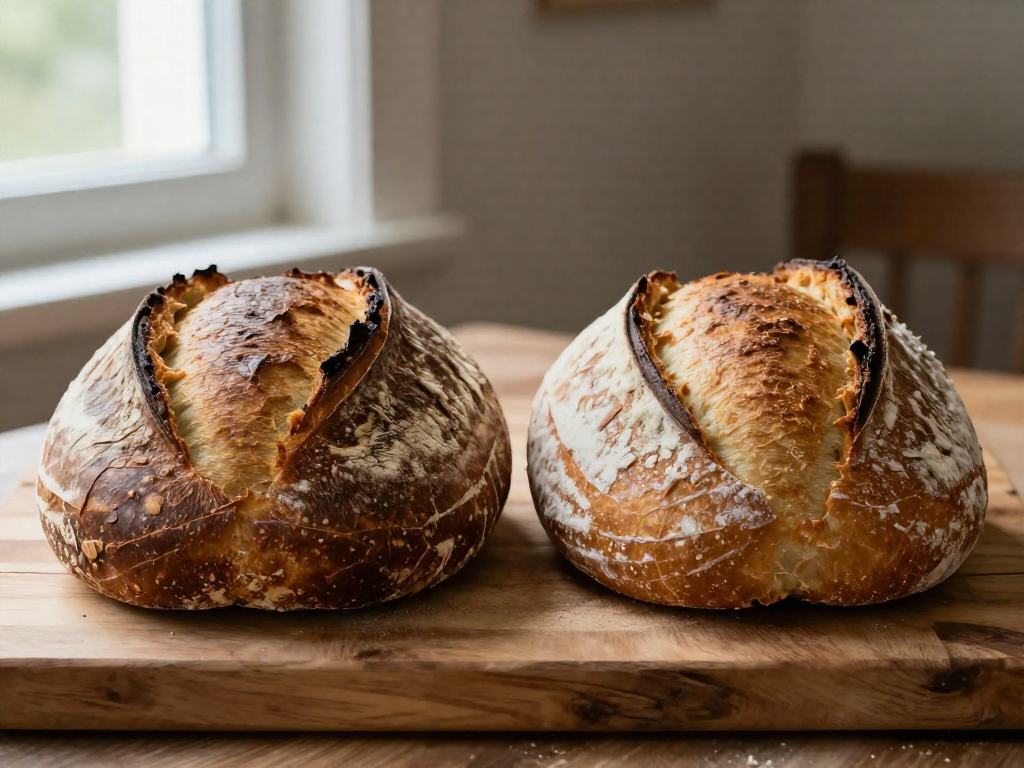
Baking Stone vs. Dutch Oven for Sourdough: A Beginner's Comparison
Can I use a baking stone instead of a Dutch oven for sourdough?
Jul 28, 2026 · 8 min read
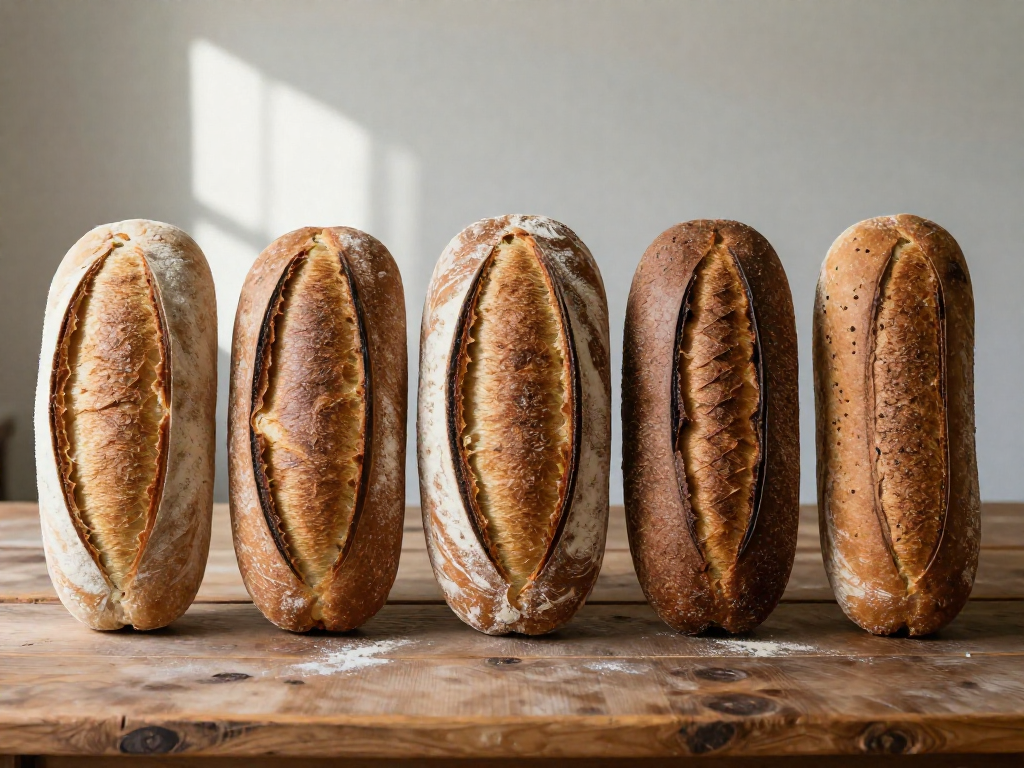
Flour Types for Sourdough: A Visual Guide to Protein Content and Results
How do different flours affect sourdough bread, and what do the results look like side by side?
Jul 20, 2026 · 11 min read
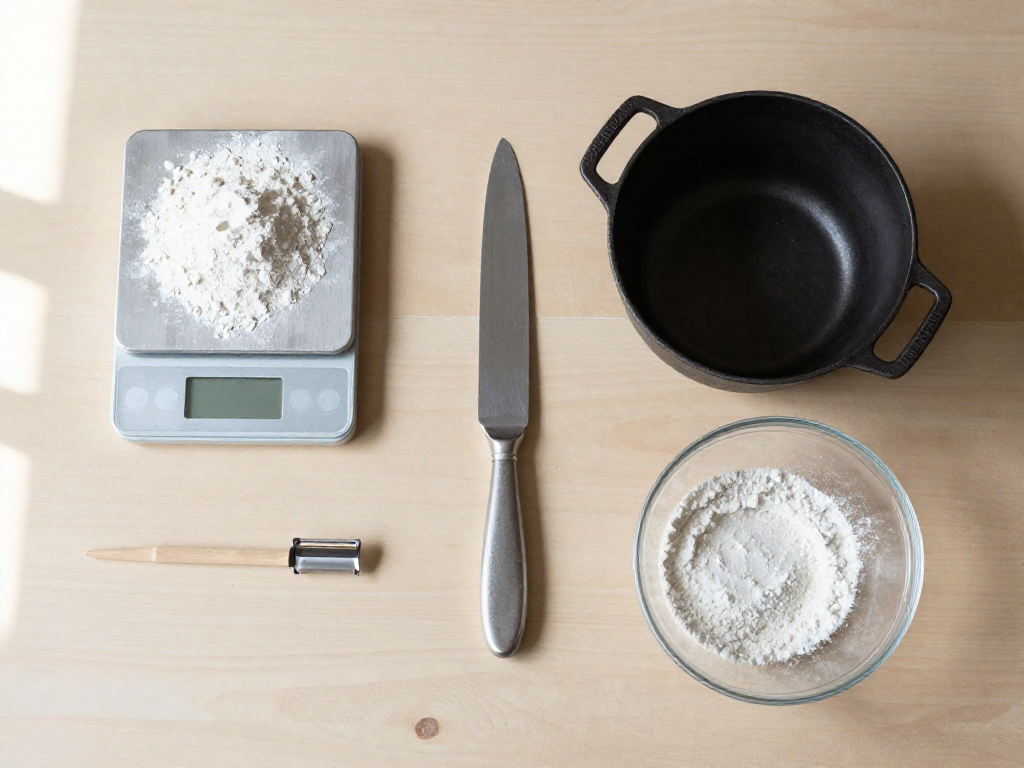
The Only 5 Tools You Really Need for Your First Sourdough Loaf
Start baking sourdough without the clutter and expense. These are the only 5 tools you really need—and the ones you can skip.
Jul 20, 2026 · 3 min read