Best Sourdough Starter Jars and Containers for Beginners
What should I keep my sourdough starter in?
On this page
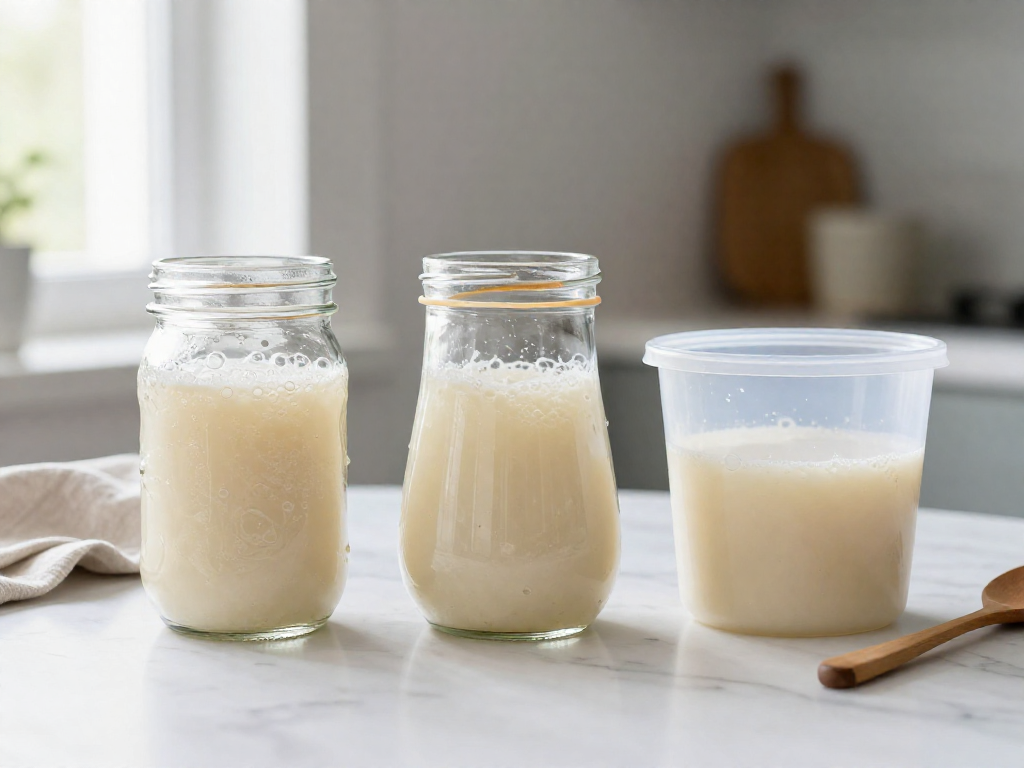
Open by naming the beginner's real worry: you've finally got a bubbly starter going and don't want to kill it with the wrong jar. Reassure them that the vessel is simpler than it looks, then promise a short, no-nonsense list of what to use, what to avoid, and why—so they can stop overthinking and get back to baking.
Does the Jar Really Matter? (Quick Answer)
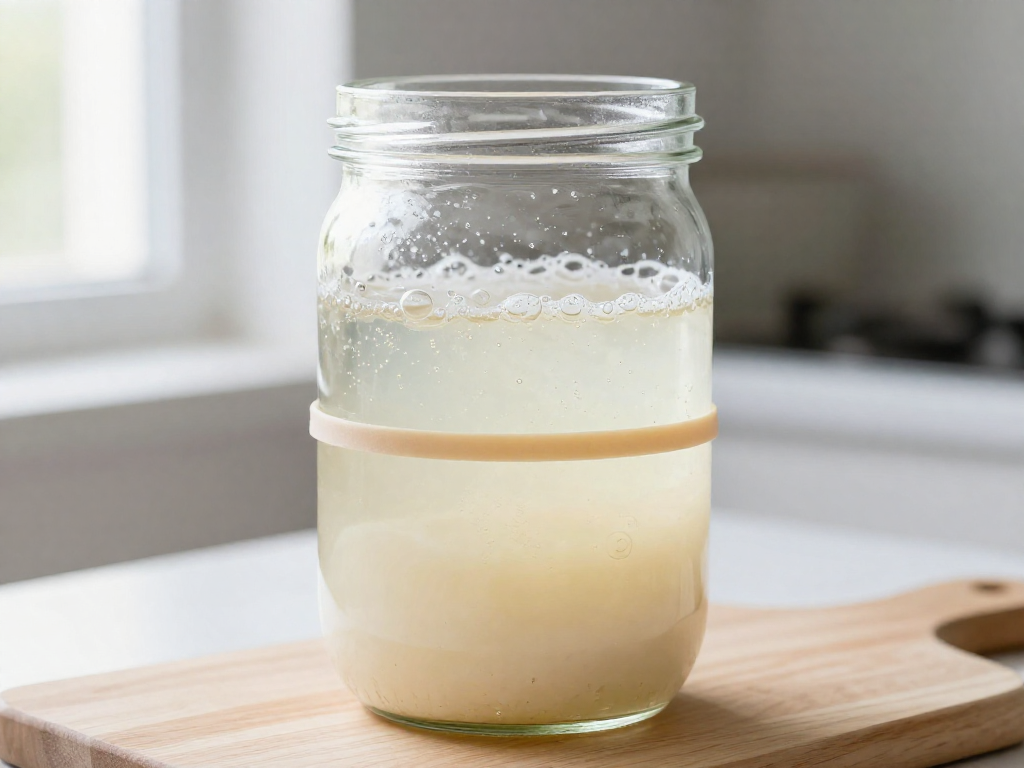
Short answer: not much. Almost any clean, non-reactive container works for your starter—the living mix of flour and water you feed to leaven bread. Non-reactive just means a material that won't corrode or leach with the acids your starter produces (think glass, food-grade plastic, or stainless steel—not bare aluminum or copper). For beginners, a glass jar is easiest because you can see what's happening inside.
People overthink this, but only three things actually matter:
- Size: big enough for your starter to at least double without overflowing (a 16–32 oz / ~500–950 ml jar is ideal).
- Visibility: clear sides so you can spot bubbles and rise.
- A loose-fitting lid: rested on top, not sealed tight, so gas can escape.
Below you'll find good picks to buy—plus a few containers to avoid.
What to Look For in a Sourdough Starter Jar
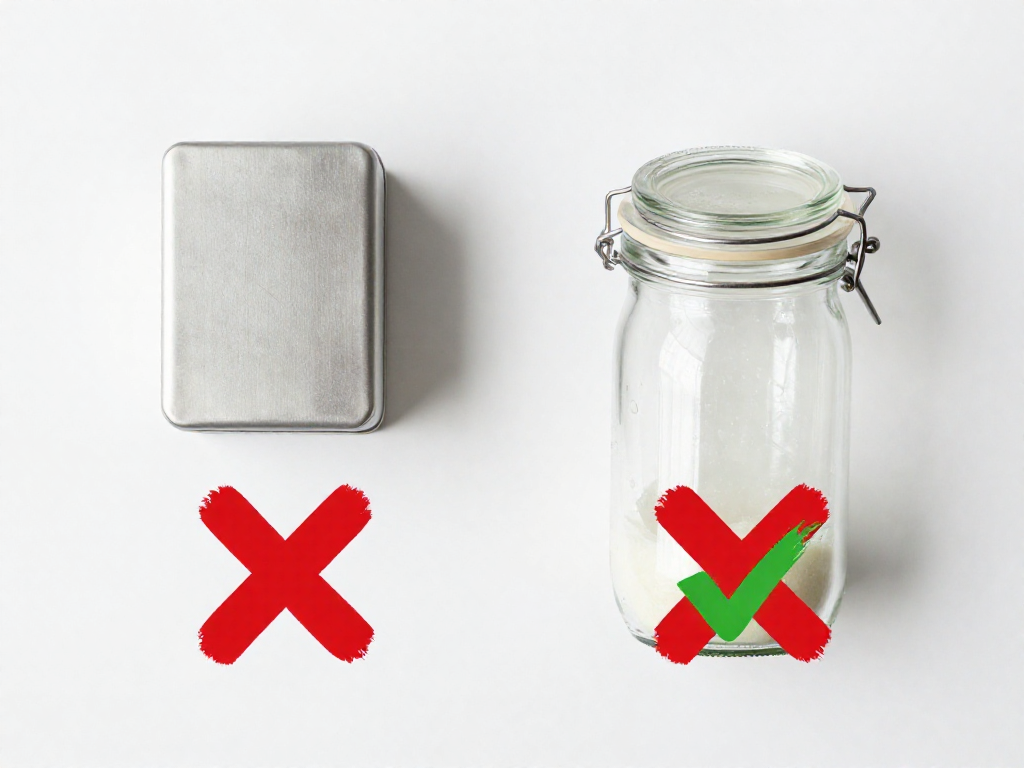
Use these six criteria to judge any jar—whether it's on our list or already in your cupboard.
- Size: at least double your feed volume. Your starter (the living mix of flour and water that leavens your bread) can double or even triple as it ferments. If you feed it to a 200 g total, pick a jar that holds at least 500 g/about 16 oz so it doesn't overflow.
- Material: glass or food-grade plastic. Both are non-reactive, easy to clean, and won't taint your starter. Avoid reactive metals like aluminum and copper—the acids in a healthy starter can corrode them and add off-flavors.
- Wide mouth. A mouth you can fit a spoon and your hand into makes stirring, scraping down the sides, and cleaning far easier. Narrow necks trap dried starter and frustrate beginners.
- A lid that rests on top or vents—never sealed airtight. Fermentation produces gas that needs to escape. A loosely set lid or a vented one prevents pressure buildup. A tightly sealed jar can bulge or, rarely, crack.
- Clear sides. See-through glass lets you watch for the bubbles and rise that tell you the starter is active and ready to bake with.
- Straight or tapered sides plus a way to mark the level. Smooth sides let the starter climb cleanly. A rubber band or dry-erase mark at the starting line shows exactly how much it has risen.
Results vary by kitchen temperature and flour, so treat these as guides, not guarantees.
Best Sourdough Starter Jars and Containers for Beginners
Here are five containers that work for keeping your starter (the flour-and-water mix you ferment to leaven bread). Any of them will do the job—pick based on budget and how easily you want to track your starter's rise.
1. Wide-Mouth Glass Mason Jar (Best Budget Pick) A classic 16 oz (about 475 ml) canning jar. Stir and scrape easily through the wide opening, and watch the rise through clear glass.
- Pros: Cheap, sold everywhere, dishwasher-safe, easy to clean.
- Cons: Straight sides make tall rises hard to read; metal lids can corrode (rest the lid on loosely instead of sealing).
- Best for: Almost everyone starting out.
2. Weck Tulip Jar (Best Looking) A flared glass jar with a glass lid that rests on top without sealing—handy, since a fed starter needs to release gas.
- Pros: Wide mouth, attractive on the counter, no metal to rust.
- Cons: Pricier; the loose lid can slide if bumped.
- Best for: Bakers who keep their starter out and want it to look nice.
3. Tall Straight-Sided Jar with Rise Band (Best for Tracking) Purpose-built starter jars (often sold in kits) include a silicone band you slide to mark the starting level, so you can see exactly how much it grew.
- Pros: Takes the guesswork out of "has it doubled?"; usually comes with a scraper and brush.
- Cons: Costs more than a mason jar; one more thing to buy.
- Best for: Beginners frustrated by not knowing when their starter is ready.
4. A Recycled Glass Jar You Already Own (Best Free Option) A clean pasta-sauce or jam jar works fine.
- Pros: Free, available today, no shopping required.
- Cons: Sizes vary; narrow mouths are awkward to stir.
- Best for: Trying sourdough before spending money.
5. Food-Grade Plastic Deli or Quart Container (Best Unbreakable) A lightweight quart (about 950 ml) container with a snap lid.
- Pros: Won't shatter, stackable, cheap in multipacks.
- Cons: Scratches over time; less clear than glass.
- Best for: Households with kids or clumsy hands.
A clean container and a loose-fitting lid matter more than the exact jar—results still vary with your kitchen's temperature.
Containers and Lids to Avoid
Skip these common culprits behind starter mishaps and frustrating cleanup:
- Tightly sealed airtight jars. A healthy starter produces carbon dioxide gas as it ferments (the bubbling stage where it doubles in size). In a fully sealed jar that gas has nowhere to go, building pressure that can pop the lid or crack glass. Use a loose lid or cover instead.
- Reactive metal containers (aluminum, copper, uncoated cast iron). Sourdough is acidic, and that acid reacts with these metals, leaching a metallic taste and discoloring the starter. Stick to glass, food-grade plastic, or stainless steel.
- Narrow-neck jars. If you can't fit a spatula in to stir and scrape the sides, daily feeding becomes a mess. Choose a wide mouth.
- Jars too small. Starter can double or triple after feeding. Leave room or it overflows.
- Non-food-safe containers or anything with strong residual odors (old pickle or candle jars). These can taint the flavor and aren't safe for food storage.
How to Cover and Store Your Starter
Match the lid to what your starter is doing:
Active starter (on the counter, getting fed daily): Cover loosely so gases can escape and it can breathe. Use any of these:
- A lid set on top but not screwed down tight
- A piece of cloth or paper towel held with a rubber band
- A coffee filter and band
A sealed jar of active, bubbling starter can build up pressure and pop. Loose is safer.
Dormant starter (in the fridge between bakes): An airtight lid is fine here. Cold slows the starter way down, so it produces very little gas. If you want extra peace of mind, leave the lid a quarter-turn loose.
Keeping the jar clean: Starter creeps up the sides and dries into a crust. Once the walls get crusty or the jar smells off beyond the usual pleasant tang, scrape your starter into a clean jar. Most beginners do this every week or two.
Track the rise: After feeding, mark the starter's level with a rubber band around the jar or a dry-erase line on the glass. When it roughly doubles and looks bubbly and domed, it's ready to use. This is your most reliable readiness cue—results vary by kitchen temperature.
Bottom Line: Just Start
Here's the short version: grab a wide-mouth glass jar with a loose-fitting lid and start today. It's easy to see your starter's progress, simple to clean, and gives gases room to escape. Don't let gear-shopping stall you—you can always upgrade later once you know what you actually prefer.
The jar isn't what makes great bread; consistent feeding is. So pour in some flour and water, and head to our feeding guide to keep your starter happy. When it's bubbly and active, our first-loaf guide walks you through baking step by step.
See also
- How to make a sourdough starter from scratch
- How to feed and maintain your sourdough starter
- Sourdough starter troubleshooting: why isn't mine bubbling?
- Beginner sourdough bread recipe (step by step)
- Essential sourdough tools and equipment for beginners
Related articles
Baking Stone vs. Dutch Oven for Sourdough: A Beginner's Comparison
Can I use a baking stone instead of a Dutch oven for sourdough?
Jul 28, 2026 · 8 min read
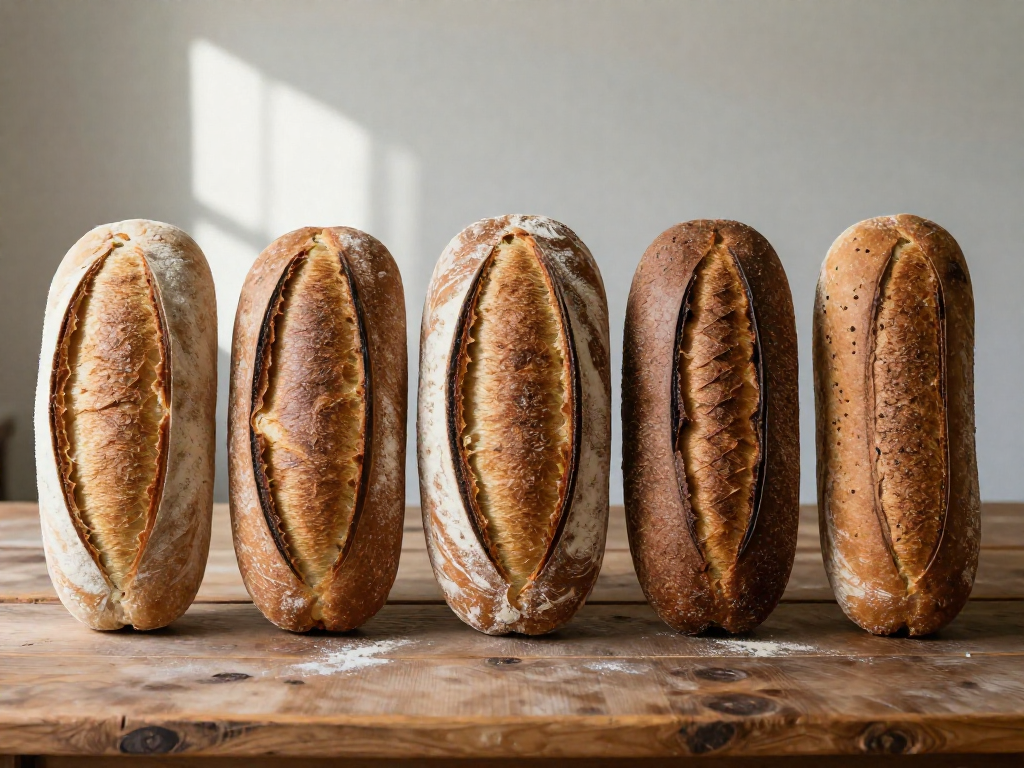
Flour Types for Sourdough: A Visual Guide to Protein Content and Results
How do different flours affect sourdough bread, and what do the results look like side by side?
Jul 20, 2026 · 11 min read
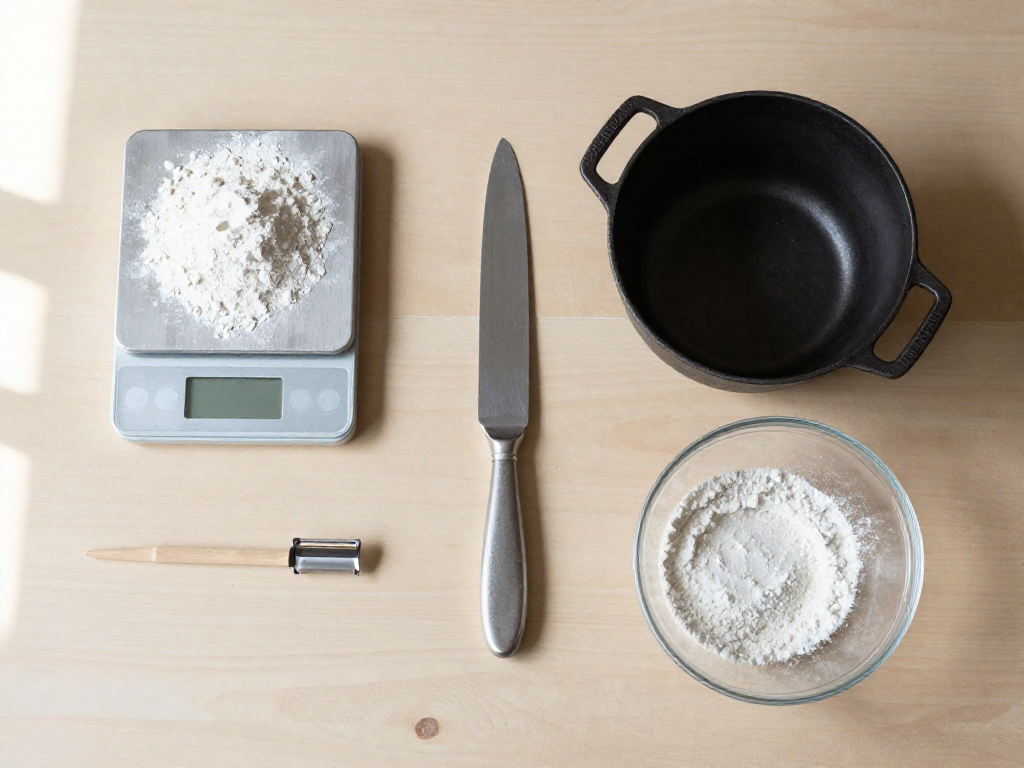
The Only 5 Tools You Really Need for Your First Sourdough Loaf
Start baking sourdough without the clutter and expense. These are the only 5 tools you really need—and the ones you can skip.
Jul 20, 2026 · 3 min read