How to Feed a Sourdough Starter (and How Often You Actually Need To)
How and how often should I feed my sourdough starter?
On this page
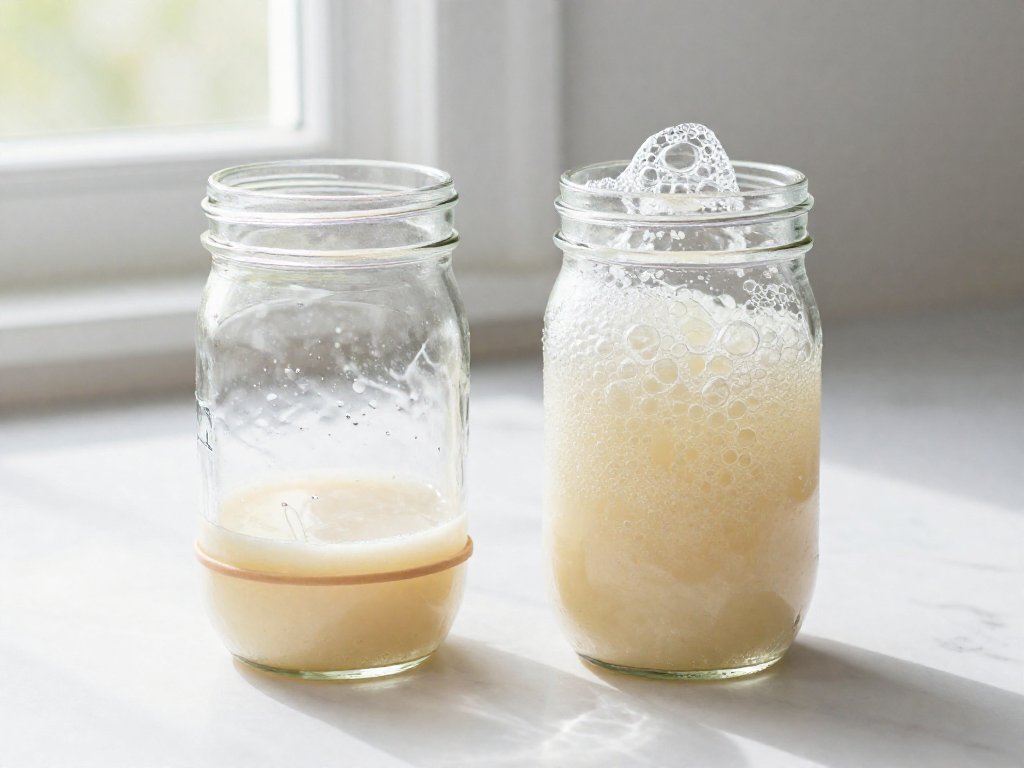
What "Feeding" a Sourdough Starter Actually Means
The short version: Feeding means throwing away most of your starter, then stirring fresh flour and water into what's left. That's it.
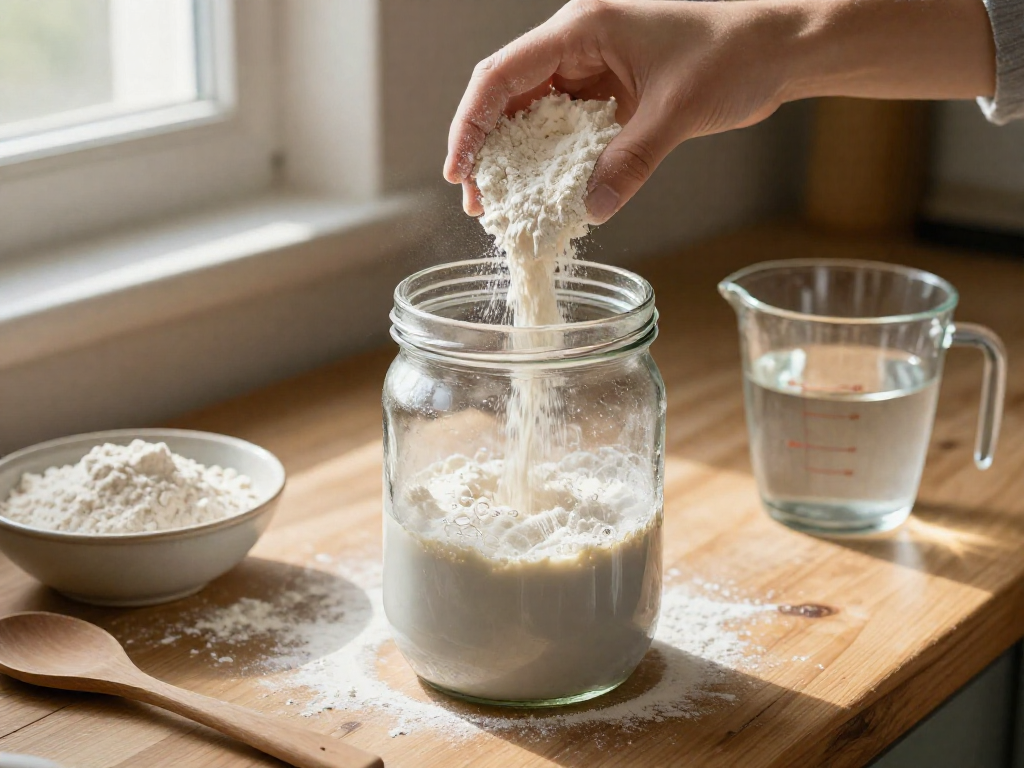
A sourdough starter is just a jar of flour and water that's home to wild yeast and friendly bacteria. Those microbes are alive, and like anything alive, they eat. Their food is the flour. Once they've devoured the available starch and sugars, they run out of fuel and go sluggish. Feeding hands them a fresh meal so they stay strong enough to lift your bread.
Here's a simple feeding by weight (with cups as a backup):
- Keep: 50 g starter (about 1/4 cup)
- Add: 50 g flour (about 1/3 cup) + 50 g water (about 3 tablespoons)
This is called a 1:1:1 feed (equal parts starter, flour, water by weight). We discard most of the old starter so the new flour isn't overwhelmed by hungry microbes and acidic waste.
What a healthy, well-fed starter looks and smells like:
- Rises and roughly doubles in 4–8 hours (depends on your kitchen's warmth)
- Bubbly throughout, with a domed or slightly puffy top
- Smells pleasantly tangy or yeasty — like yogurt or ripe fruit, never like nail polish or rot
Myth-bust: You can't easily "kill" a healthy starter by being a day — or even a week — late. A neglected starter usually just goes flat, separates, or grows a layer of grayish liquid on top (called hooch). Stir it back in, resume feeding, and it almost always bounces back. Results vary by flour, water, and climate, so watch your starter, not the clock.
What You Need: Flour, Water, and the Right Ratio
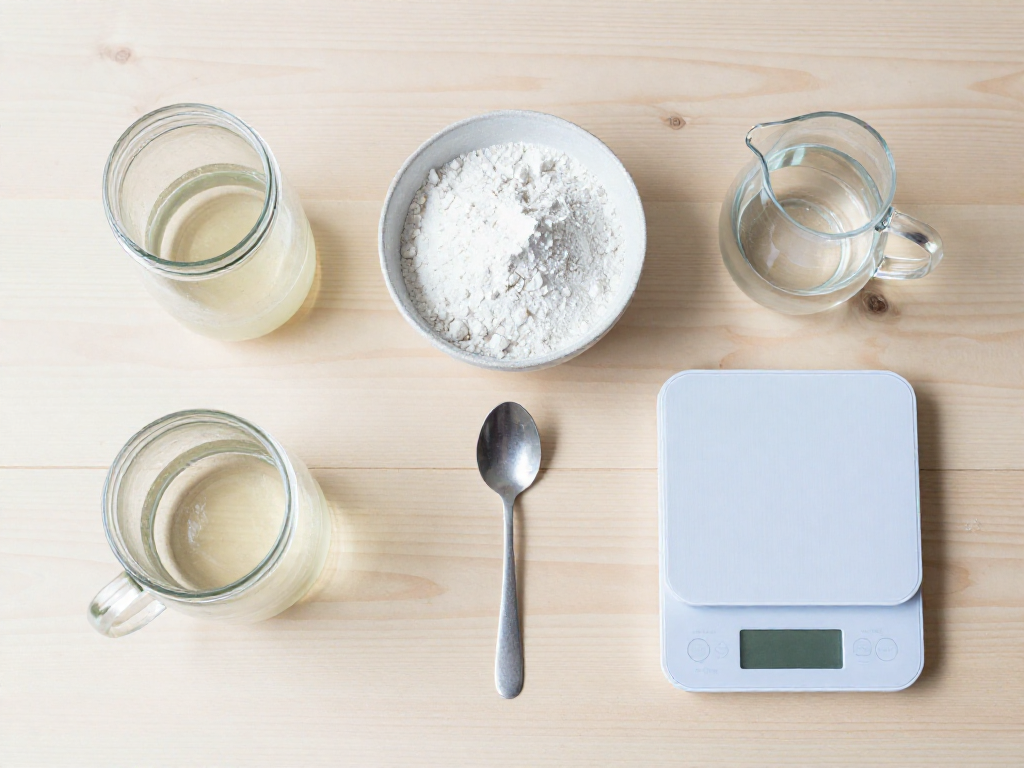
To feed a starter you only need two things: flour and water. Here's exactly what to grab.
Flour
- All-purpose flour — totally fine to start. Reliable and cheap.
- Bread flour — slightly more protein, gives a stronger, more active starter.
- Whole wheat or rye — these ferment fastest because they carry more wild yeast and nutrients. Even adding a spoonful to your usual flour gives the starter a noticeable boost.
Pick one and stay consistent for a couple of weeks so you can read your starter's behavior. A 50/50 mix of all-purpose and whole wheat is a great beginner default.
Water
- Use room-temperature filtered or tap water (about 21–24°C / 70–75°F).
- If your tap water is heavily chlorinated, leave it in an open jar overnight or use filtered water — chlorine can slow the wild yeast.
- What doesn't matter: fancy bottled water, exact mineral content, or being precise to the degree.
Feeding Ratios, In Plain Language
A ratio is just starter : flour : water by weight. So "1:1:1" means equal parts of all three.
- 1:1:1 (e.g. 50g starter + 50g flour + 50g water) — lots of old starter, little fresh food. Peaks fast, falls fast. Good when you bake often.
- 1:2:2 (e.g. 25g starter + 50g flour + 50g water) — less old starter, more fresh food. Peaks slower, stays strong longer. A great everyday ratio.
- 1:5:5 (e.g. 20g starter + 100g flour + 100g water) — very little old starter. Peaks slowest; useful for overnight feeds or warm kitchens.
Rule of thumb: the more flour and water relative to old starter, the longer it takes to peak (rise and look bubbly and domed).
Do you need a scale?
No — you can start by eyeballing roughly equal spoonfuls. But a cheap kitchen scale (under $15) makes feedings consistent and removes guesswork, which matters more as you start baking actual loaves.
How to Feed a Sourdough Starter: Step by Step
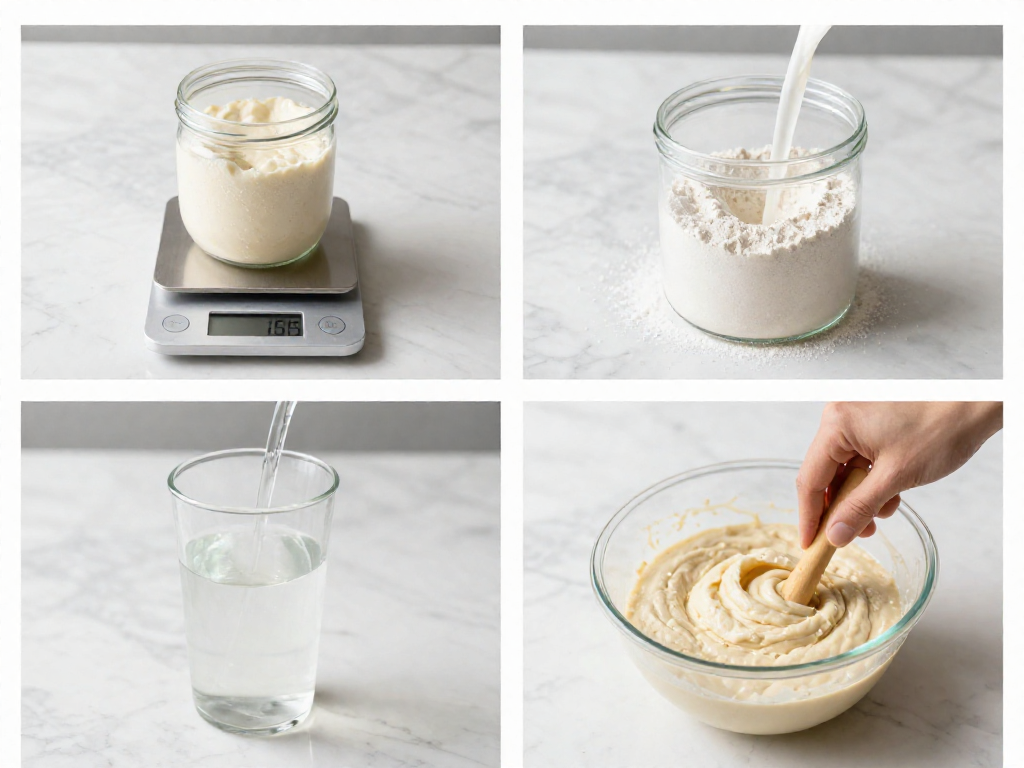
Here's the exact routine. This uses a 1:1:1 ratio (equal weights of starter, flour, and water), which is the easiest place to start.
Step 1: Discard down to a small amount
Stir your starter, then scoop out and throw away (or save for discard recipes) all but 50 g of it. Discarding keeps the jar manageable and removes built-up acids that slow your starter down. You should be left with a small blob clinging to the bottom.
Step 2: Add flour and water at your chosen ratio
To your 50 g of starter, add:
- 50 g flour (about 1/3 cup + 1 tbsp)
- 50 g water (about 3 tbsp + 1 tsp), at room temperature (around 75–78°F / 24–26°C)
A kitchen scale matters here. Cup measures vary a lot with how packed the flour is, and the wrong ratio is a top cause of a sluggish starter.
Step 3: Stir, scrape down, and mark the level
Mix until no dry flour remains and the texture is like thick pancake batter. Scrape down the sides of the jar so leftover bits don't dry out and crust. Then wrap a rubber band around the jar at the top of the starter (or mark it with tape). This is how you'll measure how much it rises.
Step 4: Cover loosely and let it rise
Set the lid on top without sealing it tight, or use a cloth and band. The starter needs to breathe and release gas. Leave it on the counter, away from drafts and direct sun.
How to tell when it has peaked
Your starter is at its peak—the moment it's strongest and ready to use—when it has:
- Roughly doubled in volume (the rubber band shows you)
- A surface full of bubbles, domed and just starting to look slightly deflated at the very center
- A pleasant tangy, yeasty smell
At a warm room temperature this often happens in 4–8 hours, but your kitchen's temperature changes everything—warmer is faster, cooler is slower. Watch the rise, not the clock. Once it deflates and falls back down, it's past peak but still safe to feed again.
How Often to Feed: Two Schedules That Fit Your Life
How often you feed depends on one thing: how often you bake. Pick the schedule that matches your life.
Schedule 1: The Daily Baker (Counter Storage)
If you bake several times a week, keep your starter at room temperature (around 21–24°C / 70–75°F) and feed it once or twice a day.
- Feed once a day if your kitchen is cool and the starter peaks slowly.
- Feed twice a day (roughly every 12 hours) if it's warm and your starter rises and falls quickly.
A simple feeding ratio is 1:1:1 by weight: 50g starter + 50g flour + 50g water. Discard the rest before feeding. (Discard is the portion you remove so you're not feeding an ever-growing jar.) Your starter is ready to bake with when it has roughly doubled and looks domed and bubbly, usually 4–8 hours after feeding.
Schedule 2: The Once-a-Week Baker (Fridge Storage)
If you bake weekly or less, store the starter in the fridge and feed it once a week. Cold slows the microbes down, so they eat far less often.
- Feed the starter (50g + 50g + 50g) and let it sit at room temperature for 1–2 hours until it just starts bubbling.
- Cover loosely and move it to the fridge.
Switching Between Counter and Fridge
- Counter → fridge: feed, wait 1–2 hours, then refrigerate.
- Fridge → counter: take it out, feed it, and leave it at room temperature.
Reviving a Fridge Starter Before Baking
A cold starter is sleepy, not dead. Two days before baking:
- Take it out and feed it (1:1:1). Leave at room temperature.
- After it peaks, feed again. Repeat once or twice until it doubles within 4–6 hours and smells pleasantly tangy. Now it's strong enough to leaven bread.
Too Much or Too Little? Quick Troubleshooting
| Sign | Likely cause | Fix |
|---|---|---|
| Liquid layer on top (called hooch) | Underfed / hungry | Feed more often or pour off the hooch and feed |
| Sour, sharp, nail-polish smell | Overdue for a feed | Feed and shorten the interval |
| Never rises, watery | Too cold or too weak | Move somewhere warmer; feed daily for a few days |
| Rises and falls before you use it | Fed too rarely for a warm room | Add a second daily feed |
Results vary by kitchen temperature and flour, so watch your starter's cues rather than the clock.
What to Do With Sourdough Discard
Short answer: you don't have to throw it away. "Discard" is simply the portion of starter you remove before feeding so the remaining starter has enough fresh flour to eat. It's perfectly usable.
Easy ways to use it:
- Pancakes or waffles — stir 1 cup (240g) discard into your favorite batter for a tangy flavor.
- Crackers — mix discard with a little flour, oil, and salt, roll thin, and bake at 350°F (175°C) until crisp.
Store it for later. Keep discard in a sealed jar in the fridge for up to 1 week. Add to it as you feed, and use when you have enough for a recipe. It may develop a thin gray liquid on top (called hooch) — just stir it back in.
Make less discard. Keep a smaller starter (say 20g flour + 20g water per feeding) so you remove less each time. Results vary by kitchen, so adjust amounts to match how often you bake.
Troubleshooting: Common Feeding Problems
Most feeding problems are normal and fixable. Find your symptom below.
Starter won't rise after feeding. This is the most common worry, and it's usually about strength or temperature, not failure. A young starter (under 2 weeks old) often needs daily feedings for a week or two before it rises reliably. If your starter is older, feed it at a 1:1:1 ratio (equal weights of starter, flour, and water—for example 50g each) and keep it somewhere warm, around 75–80°F (24–27°C). Expect bubbles and some doming within 6–12 hours.
Liquid on top (called "hooch"). That thin gray or brown layer is just alcohol and water released by hungry yeast. It's a hunger signal, not spoilage. Pour it off or stir it in (stirring in makes a tangier loaf), then feed as usual.
Smells like nail polish or very sour. A sharp, acetone-like smell means your starter is overdue for food. Discard all but about 50g and feed it. Do this once or twice and the smell mellows to pleasant and yeasty.
Mold vs. normal discoloration. Hooch and slight gray tones are fine. Fuzzy spots—pink, orange, green, or black—are mold. When in doubt, throw it out and start fresh; never scrape and reuse.
Sluggish in a cold kitchen. Below 68°F (20°C), yeast slows dramatically. Move the jar somewhere warmer (an oven with just the light on works) and give it more time before judging it.
Results vary by kitchen and climate, so use these cues, not the clock, as your guide.
FAQ
How often do I need to feed my sourdough starter?
It depends on where you store it. At room temperature (about 70–75°F/21–24°C), feed once or twice a day, because warmth speeds up fermentation (the process where wild yeast and bacteria digest flour and produce gas). In the fridge, feed about once a week. The simple rule: feed it whenever you're about to bake, and otherwise feed it enough to keep it alive. If you bake often, keep it on the counter; if you bake occasionally, keep it in the fridge.
Can I feed my sourdough starter once a week?
Yes, as long as you keep it in the fridge. Cold slows fermentation dramatically, so a weekly feeding is enough to keep a refrigerated starter healthy. Feed it, let it sit at room temperature for 1–2 hours, then return it to the fridge. Before baking, take it out and give it 1–3 daily feedings at room temperature until it's bubbly and active again. A counter-stored starter, by contrast, needs feeding every day.
What is the best ratio for feeding a sourdough starter?
A reliable beginner ratio is 1:1:1 by weight — equal parts starter, flour, and water. For example: 50g starter + 50g flour + 50g water. This is a 100% hydration starter, meaning the weight of water equals the weight of flour. If your starter rises and falls too fast, or you want to feed less often, use a higher ratio like 1:2:2 (25g starter + 50g flour + 50g water), which gives it more food to work through before peaking. Always weigh ingredients with a kitchen scale for consistency; cup measurements vary too much for dependable results.
Do I have to discard before feeding?
Yes, for regular maintenance. Discarding (removing and setting aside part of your starter before adding fresh flour and water) keeps the jar from overflowing and keeps the ratio of fresh food high enough for the yeast to thrive. If you never discard, the starter grows huge and becomes sluggish and acidic. You don't have to throw the discard away — refrigerate it in a sealed jar and use it in pancakes, crackers, or waffles. The one time you can skip discarding is when you're intentionally building up a larger amount for a recipe.
How long after feeding can I use my starter?
Use it when it's at its peak — typically 4–12 hours after feeding at room temperature, depending on your kitchen's warmth and your starter's strength. Visual cues to watch for: it has roughly doubled in size, the surface is domed and full of bubbles, and it smells tangy but pleasant. A quick test is the float test: drop a small spoonful into a glass of water; if it floats, it's full of gas and ready to bake with. If it sinks, give it more time. Results vary by climate, so rely on the cues, not the clock.
Can I leave my starter unfed for a few days?
Yes. In the fridge, a starter can safely go 1–2 weeks (sometimes longer) without feeding, though it gets sluggish and may need a couple of feedings to revive. On the counter, a few unfed days will leave it hungry and possibly covered in a layer of dark liquid called hooch — a harmless sign it needs feeding. Just stir the hooch back in or pour it off, then resume feeding. If you'll be away longer, refrigerate it before you leave. As long as you don't see fuzzy mold or pink/orange streaks, an unfed starter is almost always recoverable.
Why isn't my starter rising after I feed it?
This is the most common beginner worry, and it's usually fixable. Common causes and fixes: 1) It's too cold — move it somewhere warmer (75–80°F/24–27°C), like inside an oven with just the light on. 2) It's young — new starters can take 1–2 weeks of daily feedings to gain strength, so keep feeding. 3) Not enough fresh food — try a 1:2:2 ratio and feed consistently at the same time each day. 4) Weak flour — switch to or add some whole wheat or rye flour, which ferments faster. 5) You missed the peak — it may be rising and falling between checks, so watch it over a few hours. Give it 5–7 days of consistent daily feeding before concluding something is wrong; results vary by kitchen and climate.
See also
- How to Make a Sourdough Starter From Scratch
- Sourdough Starter Not Rising: Troubleshooting Guide
- Easy Sourdough Discard Pancakes Recipe
- Beginner Sourdough Bread Recipe (Step by Step)
- Understanding Sourdough Hydration for Beginners
Related articles
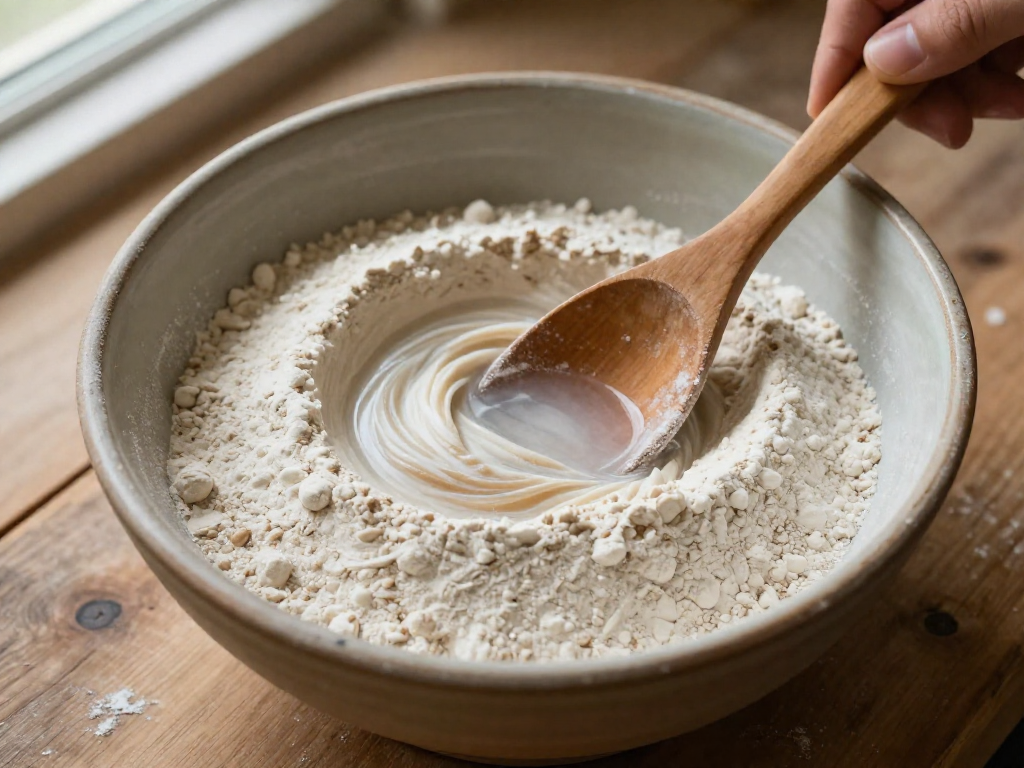
Why a Rye Starter Might Be Your Best Beginner Sourdough Hack
Is a rye sourdough starter easier for beginners? Yes! Learn why rye flour ferments faster, is more forgiving, and how to create your own 100% rye starter with step-by-step instructions, plus tips for using it in any recipe.
Jul 28, 2026 · 8 min read
The Emotional Side of Sourdough: Dealing with Starter Anxiety and Failure
How do I cope with the stress and disappointment when my sourdough starter fails or seems to die?
Jul 20, 2026 · 7 min read
Sourdough Starter Fasting: What to Do When You Go on Vacation
How do I prepare my sourdough starter for a multi-week absence and revive it smoothly?
Jul 20, 2026 · 9 min read