Can You Make a Sourdough Starter Without Discarding Flour?
Is there a low-waste way to build a starter?
On this page
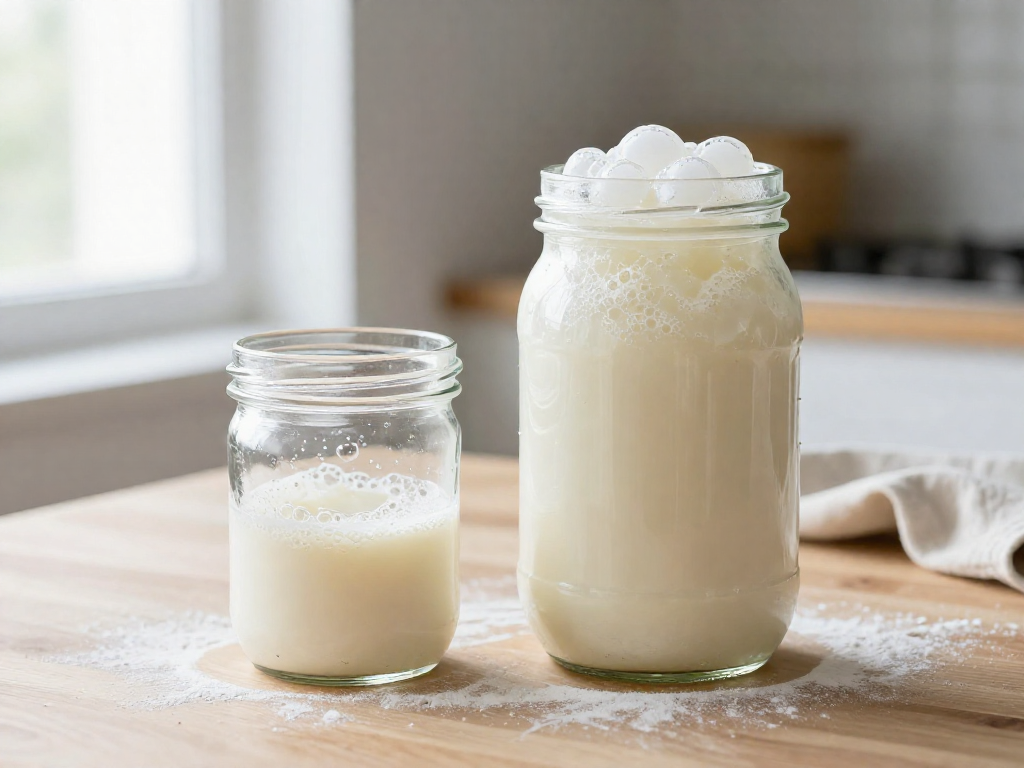
The Short Answer: Yes, But With a Catch
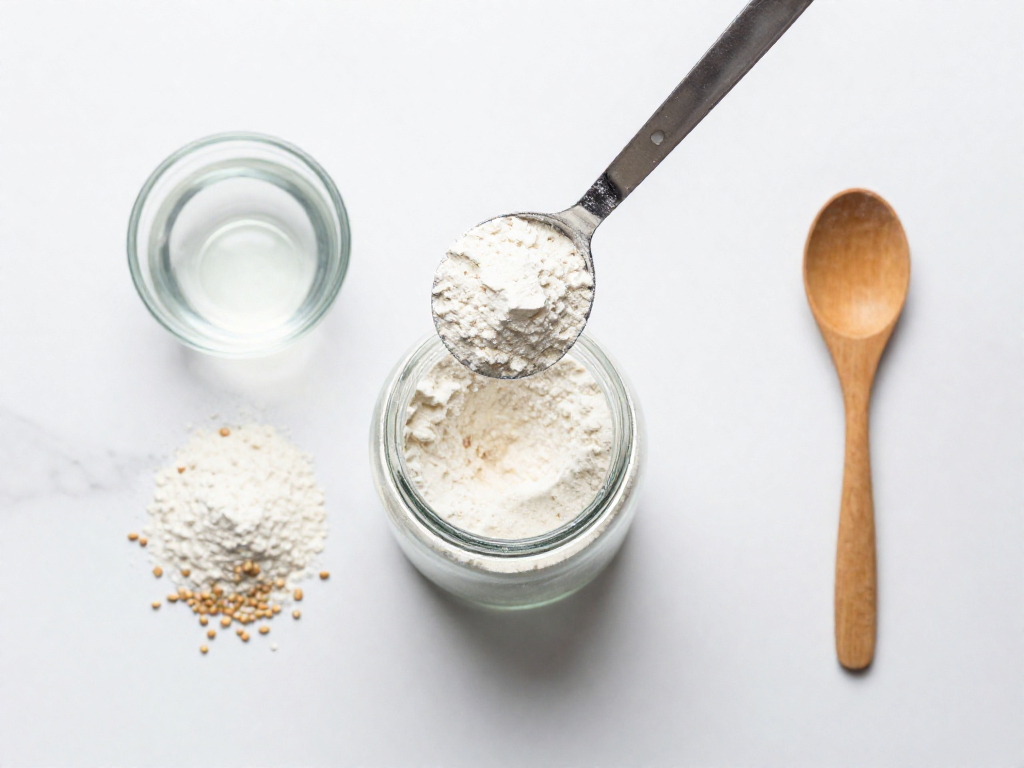
Yes—you can make a sourdough starter (a living mix of flour and water that ferments to leaven your bread) with little or no flour thrown away. The trick is to start small and feed by ratio instead of by the heaping spoonfuls most recipes call for.
Here's how it works in practice:
- Scale way down. Begin with just 20g flour + 20g water instead of 50g or more. Less starter means less to remove later.
- Feed by ratio, not by dumping. Keep a tiny amount (say 10g) and feed it equal weights of flour and water (a 1:1:1 ratio). Nothing has to go in the bin.
- The catch: a small starter is more delicate. It needs a little more attention and patience in the first week while the wild yeast wakes up.
Results vary by kitchen temperature and flour, so watch your starter, not just the clock.
Why Discard Exists in the First Place
Before you fight the discard, it helps to know why it's there. Discard is simply the portion of starter you remove and set aside (or throw out) before each feeding.
Here's the practical reason it exists:
- It keeps your starter from outgrowing the jar. If you fed your starter without removing any, you'd double its size every single day. Within a week you'd have a bucket of it.
- It keeps the food supply fresh. A starter is a living mix of wild yeast and bacteria that eats the sugars in flour. Removing most of it before feeding means the small amount that's left gets a big, fresh meal of flour and water—the ratio those microbes need to stay strong and active.
- It powers a better rise. Well-fed, uncrowded microbes produce more gas, which is what makes your dough puff up.
So discard isn't waste for waste's sake—it's the tradeoff that keeps a small starter healthy. Understanding this matters, because any low-waste method has to respect that same feeding ratio to work.
The Small-Batch No-Discard Method (Step by Step)
The trick to skipping discard is simple: start tiny and double the amount each day instead of throwing half away. Because you begin with just a teaspoon or two, the starter grows slowly enough that you keep every gram until you're ready to bake.
You'll only need a clean jar, a kitchen scale, all-purpose or whole wheat flour, and room-temperature water (around 75–80°F / 24–27°C).
Day-by-Day Feeding Schedule
Each day, add equal weights of flour and water to everything already in the jar. Stir well, scrape down the sides, and loosely cover.
| Day | Add Flour | Add Water | Jar Total |
|---|---|---|---|
| 1 | 8 g (1 Tbsp) | 8 g (1 Tbsp) | ~16 g |
| 2 | 16 g (2 Tbsp) | 16 g (2 Tbsp) | ~48 g |
| 3 | 24 g (3 Tbsp) | 24 g (3 Tbsp) | ~96 g |
| 4 | 32 g (~¼ cup) | 32 g (2½ Tbsp) | ~160 g |
| 5 | 40 g (5 Tbsp) | 40 g (~3 Tbsp) | ~240 g |
Equal weights of flour and water gives you 100% hydration — meaning the water weighs the same as the flour. This is the standard, easy-to-track ratio for a beginner starter.
Scale Up Only When Ready to Bake (Days 5–7)
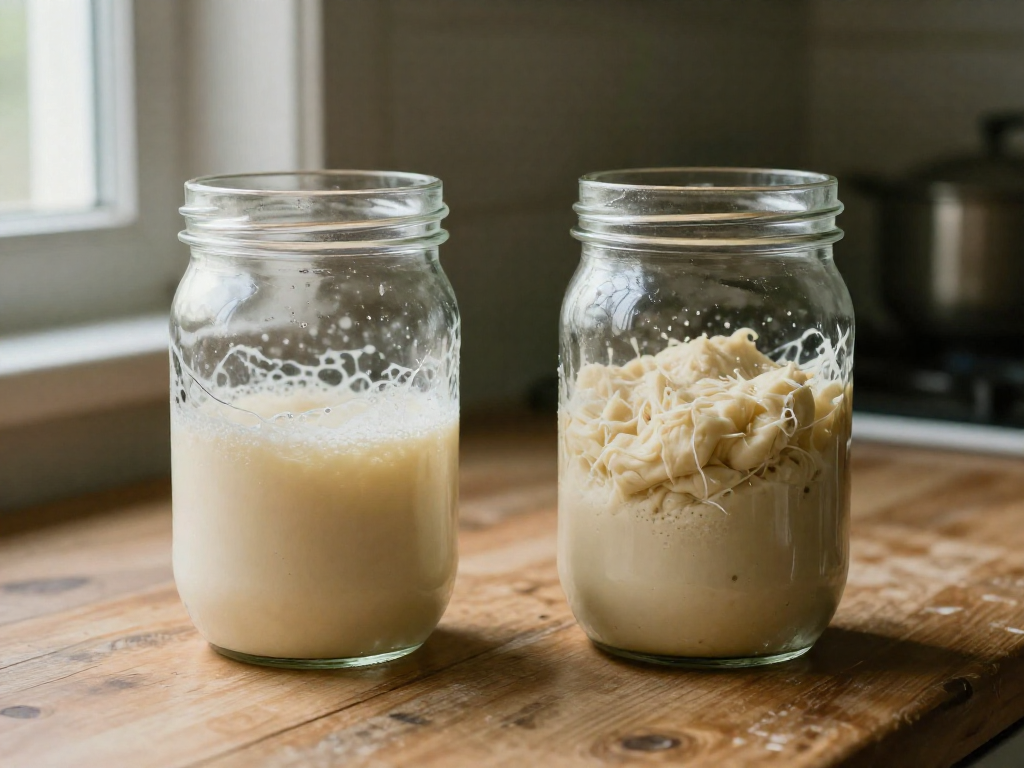
By days 5 to 7 you should see doubling in size within 4–8 hours, a domed bubbly top, and a tangy, yogurt-like smell. Those are your cues it's active. Now just keep feeding to reach the amount your recipe calls for.
Climate matters: in a cold kitchen this can take longer, so judge by bubbles and smell, not the calendar.
Not bubbling by day 5? Move the jar somewhere warmer (the oven with just the light on works) and switch to whole wheat flour, which ferments faster. Watery and sharp-smelling? It's hungry — feed it sooner.
Smart Ways to Use Discard Instead of Tossing It
If you can't fully avoid discard (the portion of starter you remove before each feeding), don't throw it away—it's still real food, not garbage. It's simply flour and water with a little wild yeast, perfect for everyday baking.
Here's the easiest system:
- Keep a "discard jar" in the fridge. Each time you feed your starter, stir the leftover discard into a clean jar with a lid. It keeps for up to 1 week.
- Use it in quick recipes where rise isn't critical: pancakes, waffles, and crackers are the most forgiving for beginners.
- Stir it into batters you already make, like muffins, banana bread, or pizza dough. Start by replacing about 100g (½ cup) of flour and 100g (½ cup) of liquid with 200g (1 cup) of discard.
When the jar fills up or smells sharp and boozy, bake with it that day.
Common Mistakes With Low-Waste Starters
Low-waste starters fail in predictable ways. Here's what to avoid and how to fix it fast.
-
Keeping too much starter. With a tiny low-waste starter you only need about 20 g (roughly 1 heaping tablespoon) to carry forward. Keep more and you'll have to feed it more flour to keep it healthy, which defeats the purpose. Fix: before each feed, scoop out and use all but ~20 g.
-
Not feeding often enough. A small starter eats through its flour quickly. Skip feedings and it turns sluggish, smells sharply of acetone or nail polish, and stops rising. Fix: at room temperature (about 21–24°C / 70–75°F), feed once every 12–24 hours. Refrigerate it if you need a break.
-
Using a jar that's too big. A tiny starter in a large jar dries out faster and makes the rise hard to see. Fix: use a small jar (250–500 ml) and mark the starting level with a rubber band.
-
Expecting a tablespoon to rise like a full jar. Less starter means a smaller, sometimes slower rise. That's normal. Fix: judge readiness by doubling in size and a domed, bubbly top, not by a fixed number of hours.
See also
- How to Make a Sourdough Starter From Scratch
- Why Is My Sourdough Starter Not Rising?
- Easy Sourdough Discard Pancakes Recipe
- Sourdough Starter Feeding Schedule for Beginners
Related articles
Why a Rye Starter Might Be Your Best Beginner Sourdough Hack
Is a rye sourdough starter easier for beginners? Yes! Learn why rye flour ferments faster, is more forgiving, and how to create your own 100% rye starter with step-by-step instructions, plus tips for using it in any recipe.
Jul 28, 2026 · 8 min read
The Emotional Side of Sourdough: Dealing with Starter Anxiety and Failure
How do I cope with the stress and disappointment when my sourdough starter fails or seems to die?
Jul 20, 2026 · 7 min read
Sourdough Starter Fasting: What to Do When You Go on Vacation
How do I prepare my sourdough starter for a multi-week absence and revive it smoothly?
Jul 20, 2026 · 9 min read