Why Won't My Dough Come Together or Stay Together?
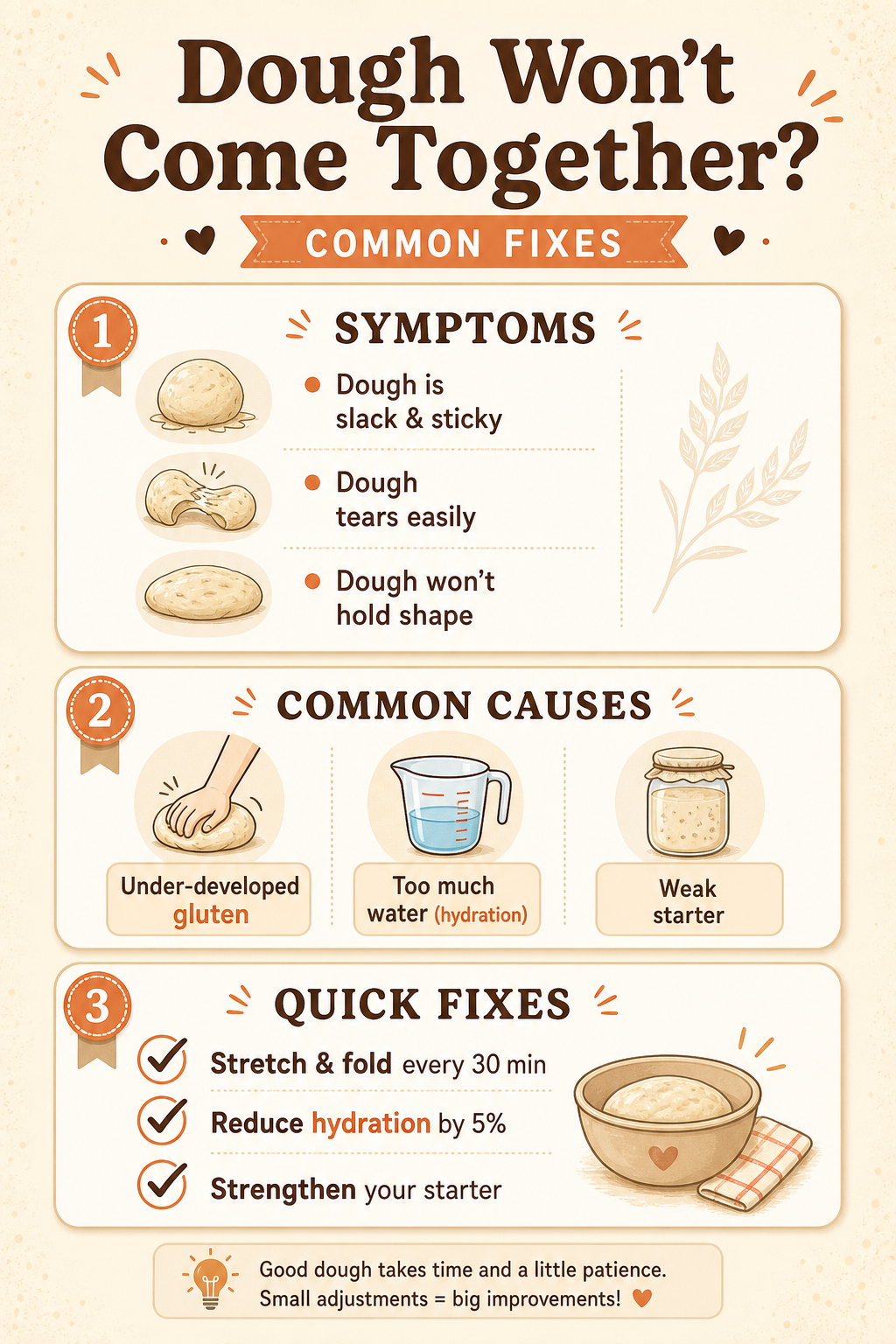
Why is my sourdough dough slack, sticky, or tearing?
On this page
Quick Diagnosis: Which Dough Problem Do You Have?
Before you fix anything, name the problem. Find your symptom below, then jump to that fix later in the article. Most beginner mixing issues come down to hydration (the amount of water in your dough, written as a percentage of the flour weight) or gluten development (the stretchy protein network that holds the dough together).
Match your dough to a symptom:
- Slack and soupy, spreads into a flat puddle → too much water, or the gluten hasn't been developed yet (no stretch-and-folds, not enough rest).
- Sticky and clinging to your hands → often normal in the first hour. Genuinely over-hydrated dough stays wet and won't firm up even after resting and folding.
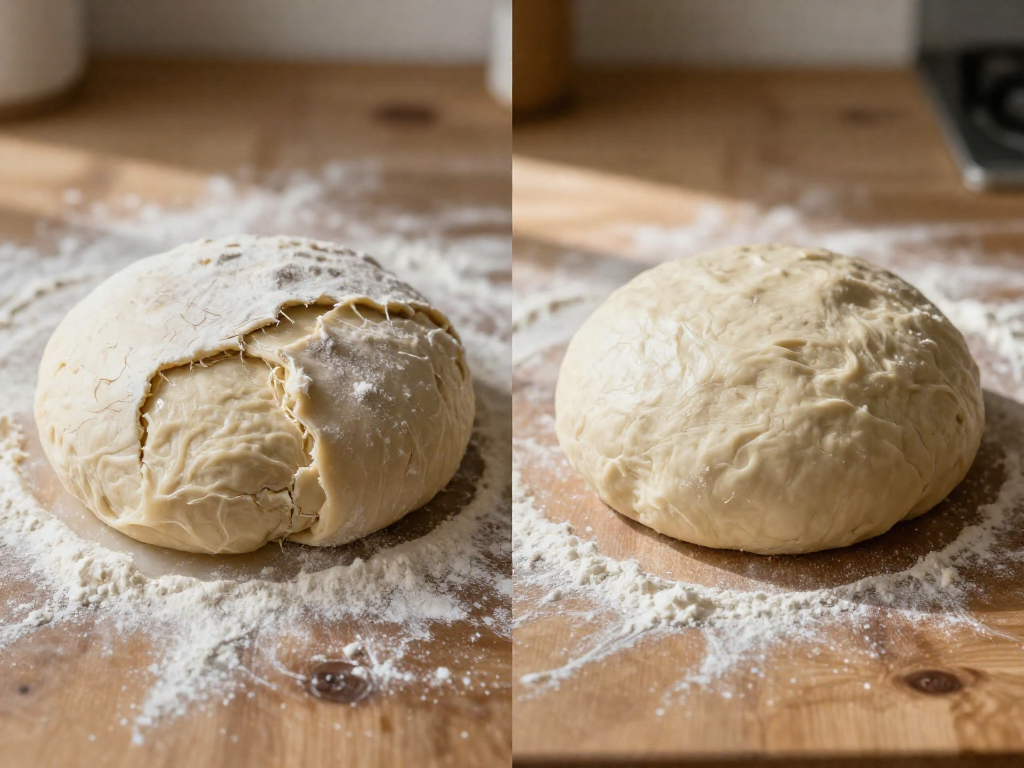
- Tearing or ripping when you stretch it → gluten isn't developed yet (give it time and folds) or, less often, it's been over-mixed.
- Crumbly and won't bind into a ball → too little water, or too much extra flour was added while mixing or shaping.
Symptom-to-cause table (for skimmers):
| What you see | Most likely cause | Where to go |
|---|---|---|
| Soupy, spreads flat | Too much water / weak gluten | Slack dough fix |
| Sticks to hands | Normal early stage vs. over-hydrated | Sticky dough fix |
| Tears when stretched | Underdeveloped (or over-mixed) gluten | Tearing fix |
| Crumbly, won't bind | Too little water / too much flour | Crumbly dough fix |
Results vary by flour, kitchen temperature, and humidity, so treat these as starting points—not guarantees.
Cause 1: Your Hydration Is Off (And How to Know)
The quick answer: If your dough is a sticky puddle or a dry, crumbly mess, your hydration is almost always the reason. Adjust the water and most mixing problems disappear.
What "hydration" means (no math required): Hydration is simply how much water is in your dough compared to flour. That's it. A "70% hydration" dough has 70 grams of water for every 100 grams of flour. Higher number = wetter, stickier, harder to handle. Lower number = stiffer, drier, easier for a beginner.
Your target range: 65–70%. Start here. Many recipes online run 75–85%, which gives that gorgeous open crumb you see on Instagram, but at that level the dough feels like wet glue and is genuinely hard to shape. There's no shame in starting drier. Get a confident loaf first, then chase higher hydration later.
Why your dough acts differently than the recipe says
- Cups lie. Measuring flour by volume is the #1 hidden hydration killer. One person's "1 cup" of flour can weigh 120g; another's packed cup is 155g. That swing alone can shift your hydration by 10% or more. Use a kitchen scale and weigh in grams. This single change fixes more beginner loaves than anything else.
- Your kitchen matters. Flour absorbs moisture from the air. In a humid kitchen, the same recipe drinks less water and feels wetter; in a dry, heated kitchen it feels stiff. Hold back 15–20g of water at first, then add it only if the dough is too dry.
The 10-second hold test
After mixing, scoop the dough into a loose ball:
- Holds a soft, rounded shape → hydration is good. Keep going.
- Spreads flat and puddles → too wet. Next time reduce water by 20g, or add 1–2 tablespoons of flour now.
- Cracks and won't come together → too dry. Add water 1 tablespoon at a time until it just holds.
Results vary by flour brand and climate, so treat these numbers as a starting point and trust what the dough tells you.
Cause 2: Gluten Hasn't Developed Yet
If your dough tears when you pull it, feels rough and sticky, or just won't form a smooth ball, the most likely answer is simple: it needs more time, not more flour. Freshly mixed dough has no structure yet. Give it that structure and the stickiness mostly fixes itself.
Gluten is the stretchy protein network that holds dough together and traps gas so your loaf rises. The moment you combine flour and water, the gluten is barely there. That's why fresh dough always feels like a shaggy, tacky mess. This is normal.
Do this first
- Autolyse (a 30–60 minute rest). Autolyse just means mixing your flour and water and letting it sit before adding anything else. While it rests, the flour fully absorbs the water and gluten starts forming on its own, with zero effort from you. Cover the bowl so it doesn't dry out.
- Add salt and starter, then mix. The dough will already feel less sticky and more cohesive than before.
- Stretch and fold instead of kneading. Wet your hand, grab one side of the dough, stretch it up, and fold it over the center. Turn the bowl and repeat 4 times. Do one set every 30 minutes for 2–3 sets. This builds strength gently—no aggressive kneading needed.
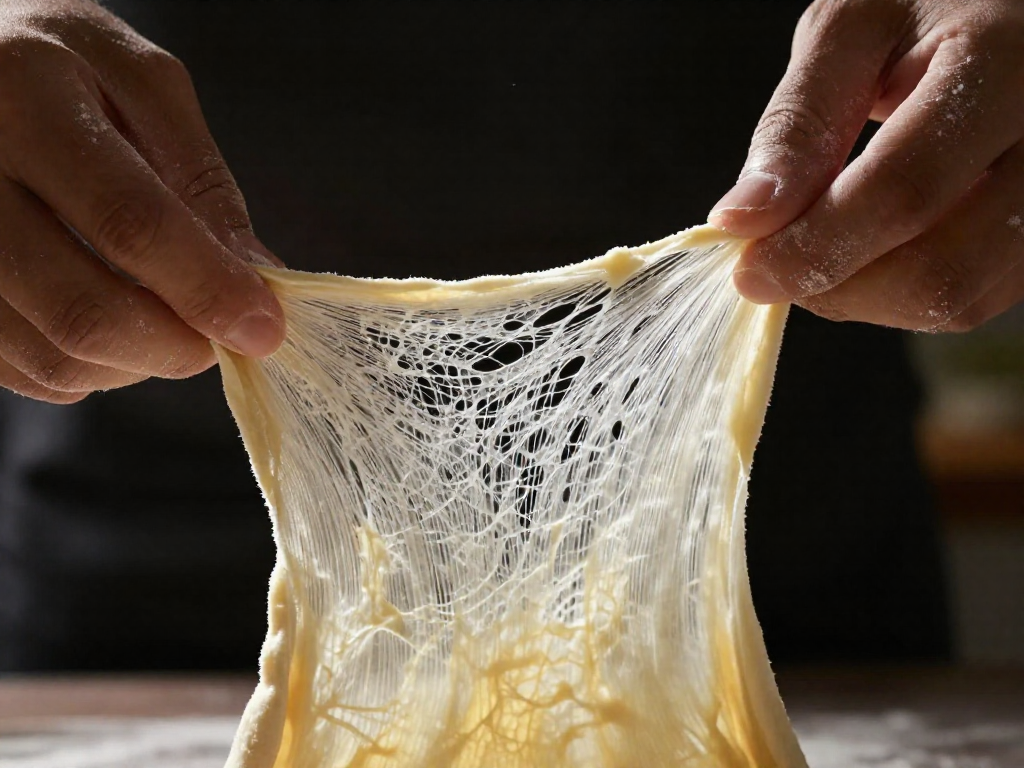
How to know it's ready: the windowpane test
Pinch off a small piece and slowly stretch it between your fingers. If it thins into a translucent "window" without ripping, gluten is developed. If it tears quickly, give it another rest and one more fold.
Why adding flour backfires
It's tempting to dust on flour to stop the stickiness—but this lowers your hydration (the water-to-flour ratio) and usually leads to a dense, dry, gummy loaf. Resist it. Wet hands and patience handle stickiness far better than extra flour.
Note: Timing varies with your kitchen's temperature. A warm room develops gluten faster; a cold one needs longer rests.
Cause 3: Flour Type and Quality
The fix first: If your dough won't strengthen no matter how much you knead or fold, switch to bread flour before blaming your technique.
Flour is the skeleton of your loaf. The thing that builds structure is protein, which forms gluten (the stretchy network that traps gas and holds your dough together) when mixed with water.
- Bread flour vs. all-purpose: Bread flour has more protein (about 12–14%) than all-purpose (around 9–11%). More protein means stronger gluten and a dough that holds its shape. All-purpose can work, but for a beginner it makes a slacker, harder-to-handle dough.
- Whole wheat and rye: These soak up more water and feel stickier and stiffer at the same hydration (the ratio of water to flour). If your dough feels dry, they may need a little extra water.
- Old or cheap flour: Stale flour has weaker gluten and won't strengthen well. Use fresh flour and store it sealed and cool.
- Mixing flours: Adding whole wheat or rye to white flour boosts flavor but absorbs more water, so add a splash more to keep the same feel.
Results vary by flour brand and your kitchen, so adjust by feel.
Cause 4: Over-Mixing and Over-Handling
Quick answer: If your dough started smooth but turned soupy, slack (loose and floppy), and stubbornly sticky, you've likely over-worked it. Stop mixing and chill the dough for 20–30 minutes before shaping.
How to spot over-mixed dough:
- It goes shiny, then sticky again and won't hold a shape
- It spreads into a puddle instead of mounding up
- It tears easily and feels lifeless rather than stretchy
Why it happens:
- Machine mixing on high speed generates friction heat. Warm dough relaxes faster, and a stand mixer can race past "developed" into "broken" in under a minute.
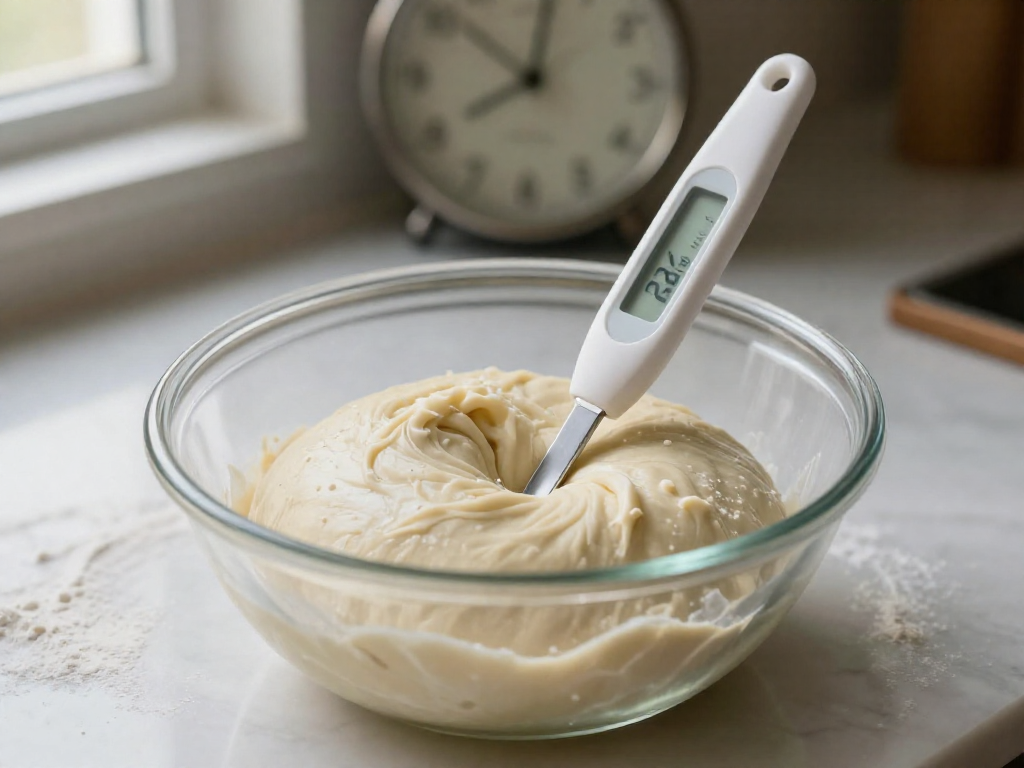
- Warm kitchens speed this up. Aim to keep dough around 24–26°C (75–78°F); above 28°C (82°F) it slackens quickly.
The hard truth: Once gluten (the protein network that gives bread its structure) is badly broken down, there is no fixing it. You can only avoid it next time.
Prevention:
- Mix by hand or on low speed only
- Stop the moment the dough is smooth and stretchy
- Use cool water on hot days to keep temperature in check
Results vary by flour, mixer, and climate—watch the dough, not the clock.
The Step-by-Step Fix for Dough That Won't Come Together
Shaggy, sticky, or tearing dough is almost always under-rested or under-developed gluten—not a lost cause. Run this sequence before you add more flour.
Step 1 — Stop and rest 20–30 minutes. Walk away. This is a rescue autolyse (just letting flour and water sit so the flour fully absorbs water and gluten starts forming on its own). Cover the bowl so the top doesn't dry out. Most "won't come together" dough fixes itself here.
Step 2 — One set of stretch-and-folds with wet hands. Dip your hands in water (never flour—flour changes your hydration, the ratio of water to flour by weight). Grab one edge of the dough, stretch it up, and fold it over the center. Rotate the bowl a quarter turn and repeat 3 more times. Cue: it goes from torn and lumpy to a rough, cohesive blob.
Step 3 — Rest 30 minutes, then repeat Step 2. Do 3–4 total sets over ~2 hours. Cue to stop: the dough stretches thin without immediately tearing and feels smooth and slightly tacky, not soupy.
Step 4 — Know when to accept it. If after 4 sets it's still a puddle, your water was likely too high. Bake it as-is (expect a flatter loaf), and drop water by 25g next batch.
Log every change. Keep a note: flour brand, grams of water and flour, room temp, number of folds, and how the crumb turned out. One variable per batch—that's how each loaf beats the last.
Results vary by flour, kitchen temperature, and humidity.
Prevent It Next Time: A Reliable Beginner Mixing Routine
Follow this same routine every bake and most "won't come together" problems disappear before they start.
-
Weigh everything on a digital scale. Cups pack differently every time; grams don't. A cheap kitchen scale is the single biggest upgrade for consistent dough.
-
Start at 68% hydration with bread flour. Hydration is the weight of water as a percentage of flour. For 500g bread flour, use 340g water (500 × 0.68 = 340). Bread flour holds water better than all-purpose, so the dough feels manageable while you learn.
-
Build in an autolyse and timed folds. Autolyse means mixing just flour and water, then resting 30–60 minutes before adding starter and salt. This jump-starts gluten so you handle the dough less. Then do 3–4 sets of stretch-and-folds, 30 minutes apart.
-
Track dough and room temperature. Aim for dough around 24–26°C (75–78°F). Warmer rooms ferment faster; cooler rooms slower.
Results vary by kitchen and climate, so log what you do each time and adjust one variable per bake.
FAQ
Why is my sourdough dough so sticky and wet?
Sticky, wet dough is normal for sourdough early in mixing, and it usually firms up on its own as the flour fully absorbs the water. First, resist adding flour. Give the dough a 30-60 minute rest (called autolyse, simply letting flour and water sit together so the flour can hydrate), then do a set of stretch-and-folds. The dough will become smoother and less tacky. If it stays soupy and won't hold any shape after resting, your hydration (the ratio of water weight to flour weight) may be too high for your flour, or your flour may be low in protein. For a beginner loaf, aim for about 70% hydration: 500g (4 cups) bread flour to 350g (1.5 cups) water. Sensory cue: well-developed dough should feel tacky like a sticky note, not wet like batter, and should pull away from your fingers cleanly.
Should I add more flour if my dough won't come together?
Usually no. Adding flour is the most common beginner mistake and it leads to dense, dry loaves. Sourdough simply needs time and gentle handling to come together, not more flour. Instead, do this: let the dough rest 30-60 minutes (autolyse) so the flour absorbs the water, then perform stretch-and-folds (lift one edge, stretch it up, and fold it over the center; rotate and repeat 4 times). Over 2-3 sets spaced 30 minutes apart, the dough will transform from shaggy to smooth and cohesive. Only add flour if you genuinely over-measured your water; even then, add just 1 tablespoon at a time. Note: results vary by flour type and kitchen humidity, so judge by feel, not by the recipe alone.
How long should I let sourdough dough rest before kneading?
Let it rest 30 to 60 minutes before working it. This rest is called autolyse: you mix only the flour and water, cover the bowl, and walk away. During this time the flour fully absorbs the water and gluten begins forming on its own, so you barely need to knead afterward. After the rest, add your salt and starter, then begin stretch-and-folds instead of traditional kneading. Sensory cue: before resting the dough looks rough and shaggy; after resting it looks more relaxed, slightly smoother, and stretches more easily. A 30-minute rest is enough for a beginner loaf; up to 60 minutes gives even better extensibility (how far the dough stretches without tearing). Don't exceed about 2 hours, or the dough can start to slacken.
Can I save dough that has been over-mixed?
Often yes, though over-mixing is rare when you hand-mix and much more common with a stand mixer. Signs of over-mixed dough: it looks shiny and almost soupy, tears easily, and won't hold its shape. To save it, stop all mixing immediately and let the dough rest, covered, for 20-30 minutes. The gluten will relax and the dough usually regains some structure. Then give it gentle, minimal handling for the rest of bulk fermentation (the first long rise where the dough roughly doubles and gets airy). Skip extra stretch-and-folds. If the gluten is badly broken down and the dough never firms up, it may still bake into an edible but flatter, denser loaf. To avoid this next time, mix by hand and stop as soon as the dough is smooth and cohesive. Results vary by flour strength and how far the mixing went.
What hydration should a beginner use for sourdough?
Start at 70% hydration. Hydration simply means the weight of water as a percentage of the weight of flour, so 70% means 70g of water for every 100g of flour. Higher hydration makes an open, airy crumb but produces sticky, hard-to-handle dough; lower hydration is easier to shape but denser. 70% is the sweet spot that gives a good rise while still being manageable. A reliable beginner formula: 500g (about 4 cups) bread flour, 350g (about 1.5 cups) water, 100g (about 1/2 cup) active starter, and 10g (about 2 tsp) salt. Once you can consistently handle this dough and like your results, you can nudge hydration up by 5% at a time. Note: flour brands absorb water differently, so the same percentage may feel wetter or drier in your kitchen.
Why does my dough tear instead of stretch?
Tearing means the gluten isn't developed enough or the dough is too cold, tight, or dry. Quick fix: stop and let it rest, covered, for 20-30 minutes, then try again; relaxed gluten stretches instead of ripping. The most common causes are (1) not enough rest or stretch-and-folds, so the gluten network is still weak; (2) dough that's too cold, which makes it stiff; and (3) too little water (hydration too low), making it dry and brittle. To build strength gradually, do 3-4 sets of stretch-and-folds spaced 30 minutes apart during bulk fermentation rather than forcing the dough early. Sensory cue: properly developed dough should pass the windowpane test, stretching thin enough to see light through it without tearing. If it tears no matter what, your flour may be low in protein; switch to bread flour (around 12-13% protein) for more strength.
See also
- How to Tell If Your Sourdough Starter Is Ready
- The Beginner's Guide to Sourdough Hydration
- Stretch and Fold vs Kneading: What Beginners Should Do
- Why Is My Sourdough Loaf Dense and Gummy?
- Best Flour for Beginner Sourdough Bread
Related articles
Help! My Sourdough Collapsed When I Turned It Out of the Banneton
Why does my dough deflate when I flip it out of the proofing basket? Quick troubleshooting guide covering over-proofing, weak gluten, and poor shaping, with immediate fixes.
Jul 28, 2026 · 6 min read
Why Your Sourdough Timeline Is Always Off (and How to Fix It)
Why does my sourdough take longer than recipes say it should?
Jul 28, 2026 · 9 min read
The Float Test Lie: Why Your Starter Might Be Ready Even If It Sinks
Is the float test a reliable way to tell if my sourdough starter is ready to use? Learn why this common test lies—and what to check instead for perfect bread every time.
Jul 20, 2026 · 8 min read