Why Is My Sourdough Gummy or Doughy Inside?
Why is the inside of my sourdough wet and gummy?
On this page
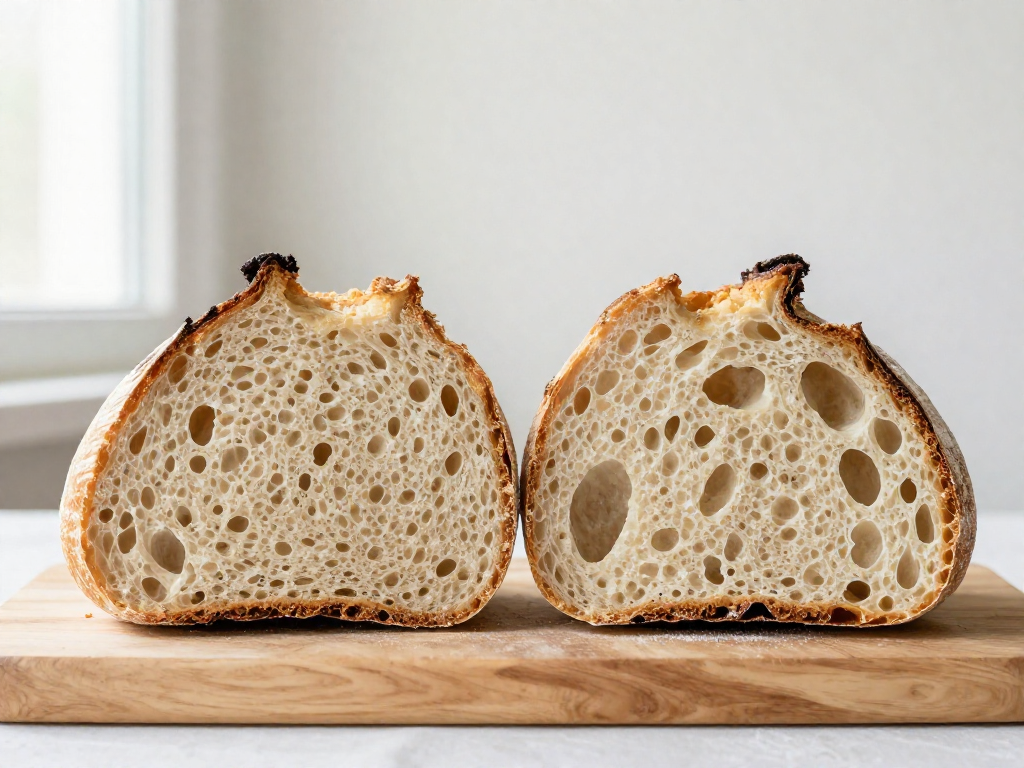
What "Gummy" Actually Means (and What It Doesn't)
Before you fix gummy sourdough, make sure that's actually what you have. "Gummy" describes a specific texture: pasty, sticky, or claggy crumb that smears and gums up on the knife as you slice, sometimes showing wet, shiny streaks. If your slices stick to the blade and ball up into a doughy paste, that's true gumminess.
Here's how to tell it apart from problems that look similar but have different causes:
- Gummy vs. dense: A dense loaf has a tight, heavy crumb with few holes, but it's fully baked and dry to the touch. It feels compact, not wet. Gummy is about moisture and stickiness; dense is about a lack of rise.
- Gummy vs. gluey base: A thin, gluey, almost rubbery layer right above the bottom crust is gelatinization—starches that set into a paste, often from underbaking or too much steam late in the bake. It's a near-relative of gumminess but usually fixable with baking tweaks alone.
- Custardy can be normal: In high-hydration bread (loaves made with a lot of water relative to flour, e.g. 80%+), a slightly moist, soft, custard-like crumb is expected and desirable. Soft and tender is fine; sticky and pasting onto the knife is not.
The most common false alarm: slicing while warm. Sourdough keeps cooking and setting as it cools. Cut into a warm loaf and the still-gelatinized starches will smear and look gummy even in a perfectly baked bread. Let it cool completely—at least 2 hours, ideally 4—before judging the crumb. Often the "gumminess" vanishes entirely.
The Two Root Causes: Underbaking vs. Under-Fermentation
Almost every gummy loaf traces back to one of two problems. Figure out which one you have, and the fix becomes obvious.
1. Underbaking — The dough was fine, but it didn't get enough time or heat to fully set the crumb (the soft interior of the bread) and drive off excess moisture. The structure is there; it's just wet and undercooked in the middle, like a cake pulled from the oven too early.
2. Under-fermentation — The dough never developed enough before baking. Fermentation is the stage where your starter's wild yeast and bacteria eat the flour, produce gas, and build the stretchy gluten network that traps that gas. The main fermentation stage is called the bulk ferment (the long rise after mixing, before shaping). If the bulk ferment is cut short, the dough stays weak and dense, and no amount of extra baking will fix it — the structure collapses around the moisture.
Here's the catch: both can look identical when you slice into the loaf. A wet, sticky, compressed streak near the bottom shows up either way. That's why guessing leads to the wrong fix — people bake an under-fermented loaf longer and just end up with a dry crust over a still-gummy center.
Quick Symptom Contrast
| Clue | Underbaking | Under-Fermentation |
|---|---|---|
| Crumb (air holes) | Open, but wet/sticky | Tight, small, even holes |
| Loaf height | Decent rise, good dome | Flat, dense, didn't spring up |
| Gummy zone | A thin band, often center | Thick, dense, throughout |
| Crust color | Pale or light | Can be normal or dark |
| Internal temp | Below 205°F / 96°C | Often fine, but crumb still dense |
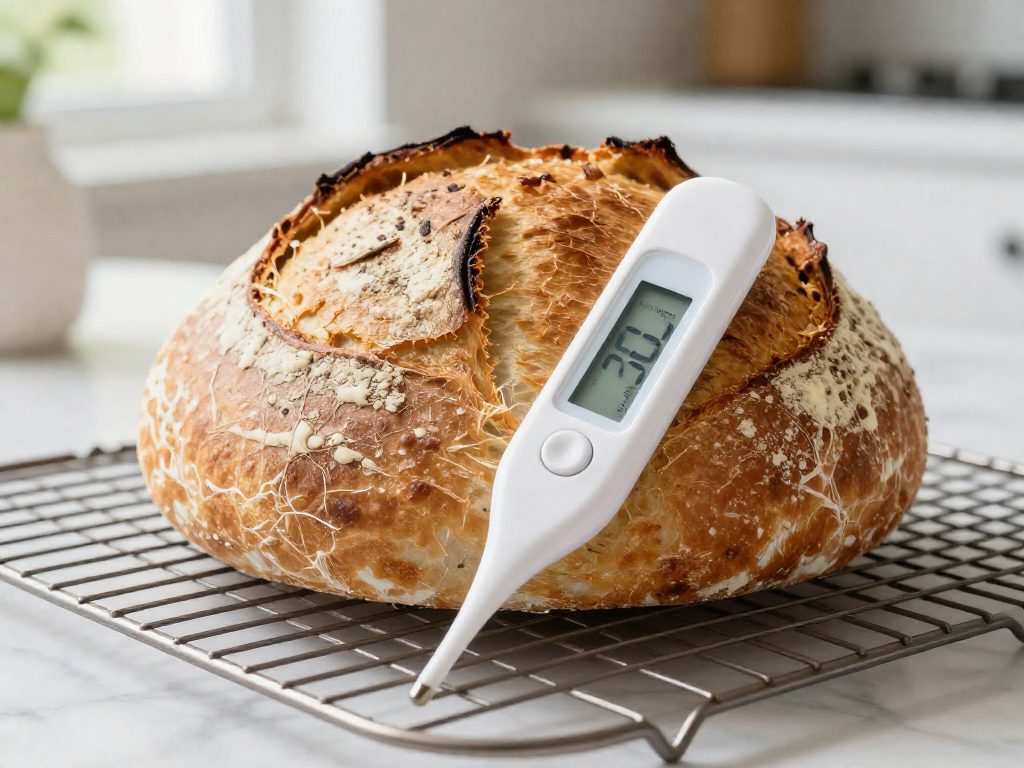
The single most reliable test is internal temperature: a fully baked sourdough reads 205–210°F (96–99°C) in the center. If yours is below that and the crumb is wet, it's underbaking. If the temperature is right but the loaf is squat and tight, you're looking at under-fermentation. The next two sections walk through fixing each.
How to Tell Which One You Have: A Quick Diagnostic
Before you change a single thing in your recipe, run these four checks. They'll tell you whether your gummy loaf is underbaked (it needed more time in the oven) or under-fermented (the dough didn't rise enough before baking, a stage called bulk fermentation—the long rise after mixing where the starter eats the flour and produces gas). Fixing the wrong one wastes flour.
1. Check the internal temperature
Stick an instant-read thermometer into the center of the cooled-but-still-warm loaf.
- Target: 205–210°F (96–99°C).
- Below 205°F → the loaf was pulled too early. This is underbaking, the easiest fix.
- At 205°F or above but still gummy → temperature isn't your problem. Move on to fermentation.
2. Look at the crumb (the inside texture)
Slice the loaf and study the holes:
- Open, airy holes but a gummy, paste-like feel → usually underbaking or slicing too soon (cut warm bread and the inside smears).
- Tight, dense, doughy crumb with few holes → usually under-fermentation. The dough never trapped enough gas.
3. Assess oven spring and the ear
Oven spring is the sudden rise a loaf gets in the first 10–15 minutes of baking. The ear is the raised, crisp lip along your scoring cut.
- Tall rise + a clean ear → fermentation was likely fine; look at bake time and temp.
- Flat, squat loaf with little spring and no ear → points to under-fermentation or weak shaping.
4. Recall your timeline
Be honest about your last bake:
- How many hours did bulk fermentation actually run?
- What was your kitchen temperature? Cold rooms (below 70°F / 21°C) slow fermentation dramatically, so a 4-hour rise that works in summer can leave a winter loaf under-fermented.
Quick read: Low internal temp = bake longer. Correct temp but dense and flat = ferment longer. Results vary by kitchen and climate, so use these as starting points, not guarantees—the next sections walk through each fix in detail.
Fixing Underbaking
If your loaf passed the diagnostic as underbaked (wet, sticky crumb that pastes onto the knife), the fix happens at the oven. Here's exactly what to do.
1. Bake to internal temperature, not just time or color. A dark crust can fool you while the center is still raw. Slide an instant-read thermometer into the middle of the loaf through the bottom or side. Aim for an internal temperature of 205–210°F (96–99°C) for a fully baked sourdough. Pull it too early and the starchy interior never sets, which reads as "gummy."
2. Extend the bake 5–10 minutes with the lid off. If you bake in a Dutch oven (a heavy lidded pot that traps steam), the first half builds rise and the second half builds crust. When the center is under temperature, keep baking uncovered for another 5–10 minutes. This drives off moisture and deepens the crust at the same time.
3. Lower the rack and verify your oven temperature. Home ovens routinely run 25–50°F off their dial. Set your loaf on the lower-middle rack so the bottom gets enough heat, and hang a separate oven thermometer inside to check the real temperature. If it reads low, raise the dial to compensate.
4. Cool completely before slicing. This is the step most beginners skip. The crumb keeps cooking and setting as it cools. Transfer the loaf to a wire rack (so air circulates underneath) and wait at least 1–2 hours. Cutting a warm loaf releases steam and compresses the interior into a dense, gummy band.
Results vary by oven and climate, so use temperature and cooling as your anchors rather than the clock.
Fixing Under-Fermentation
If your crumb is gummy but the loaf is fully baked, the dough almost certainly went into the oven under-fermented. Bulk fermentation (the first long rise, before shaping) is where the wild yeast and bacteria in your starter eat the flour's sugars, build gas, and develop structure. Cut it short and the inside stays dense and wet. Here's how to fix it.
1. Start with a starter that's actually awake
Use a starter (the live mix of flour and water that leavens your bread) that was fed 4–8 hours ago and has roughly doubled. Confirm it with the float test: drop a teaspoon into a glass of water—if it floats, it's full of gas and ready to use. If it sinks, feed it again and wait.
2. Judge the rise, not the clock
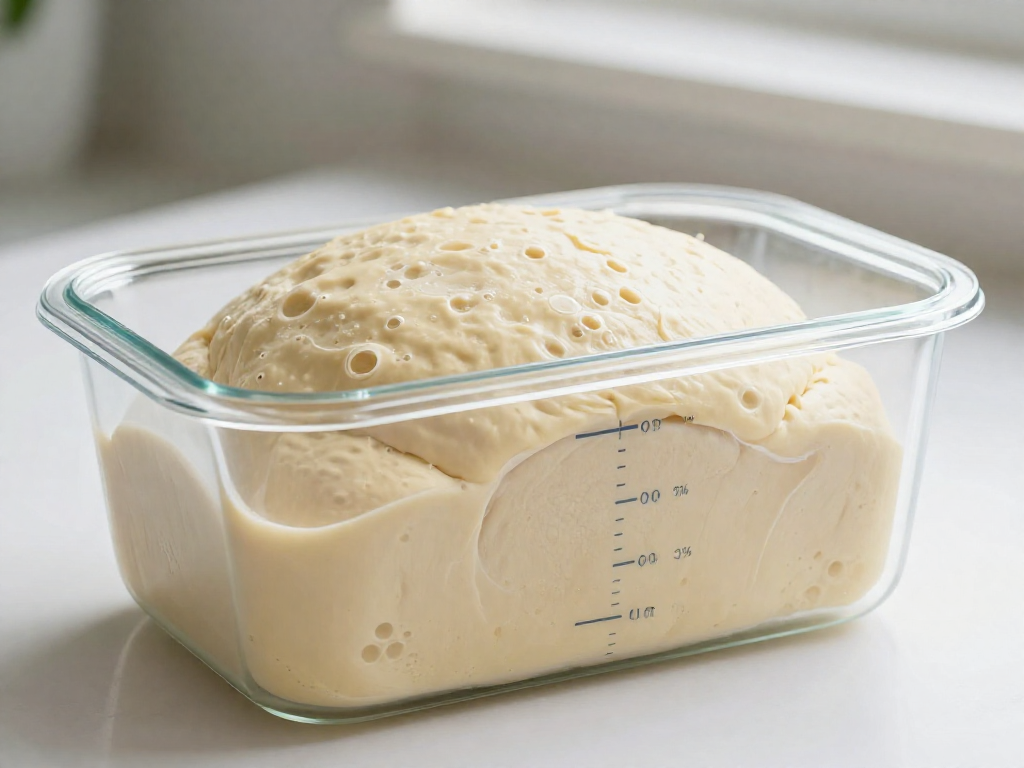
Most beginner recipes say "bulk ferment 4 hours," but that number assumes a warm kitchen. Instead, watch how much the dough grows. Aim for a 50–75% rise in volume.
- Use a straight-sided container and mark the starting level with a rubber band or tape.
- 50% rise = dough is halfway up to doubled. This is your target for most home kitchens.
- The dough should feel alive: puffy, slightly jiggly, and softer than when you started.
3. Account for your kitchen temperature
Temperature changes everything. A few rough guides (results vary by flour and starter strength):
| Dough temp | Approx. bulk time |
|---|---|
| 78°F / 26°C | 4–6 hours |
| 70°F / 21°C | 7–10 hours |
| 65°F / 18°C | 10–14 hours |
A cold room doesn't mean your dough is broken—it just needs much longer. When in doubt, give it more time.
4. Know the "it's ready" signals
Look for all of these together:
- A domed, rounded top rather than a flat surface
- Bubbles visible on the surface and along the sides of the container
- A gentle jiggle when you shake the bowl, like a panna cotta
- Slightly sticky-but-not-soupy feel when you poke it
When you see these, shape and bake. Catching the rise—not the clock—is the single biggest fix for a gummy crumb.
Other Sneaky Causes of a Gummy Crumb
Ruled out underbaking and under-fermentation? One of these smaller culprits is probably to blame.
You sliced it too soon. This is the most common one. A loaf keeps cooking and "setting" as it cools. Cut into a warm loaf and the crumb (the soft inside) can smear and feel gummy even when it's perfectly baked. Fix: wait at least 2 hours after the bake, until the loaf is completely cool to the touch, before slicing.
Your hydration is too high. Hydration is the amount of water in the dough compared to flour, written as a percentage (e.g., 75% means 75g water per 100g flour). High hydration makes an open, airy crumb but is harder to bake through and easy to leave gummy. Fix: as a beginner, drop to 65–70% hydration until your loaves come out reliably.
Your steam timing is off. Steam early helps the loaf rise; steam late keeps the crust soft and the inside damp. Fix: bake covered (lid on your Dutch oven) for the first 20 minutes, then uncover for the rest so moisture escapes.
Weak gluten or loose shaping. Gluten is the stretchy protein network that traps gas. If it's underdeveloped or the loaf is shaped too loosely, the structure collapses and traps moisture. Fix: add a few stretch-and-folds during bulk fermentation (the first rise) and shape the dough tighter so it holds a taut, round surface.
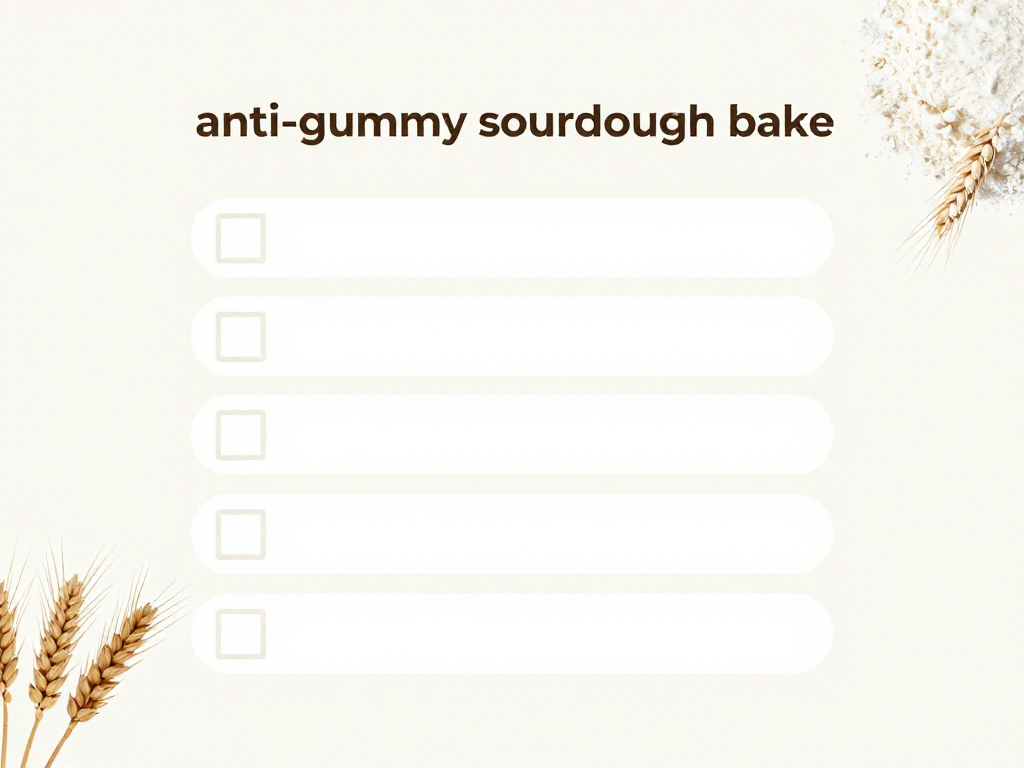
Your Anti-Gummy Checklist for the Next Bake
Print this, pin it to your fridge, and run through it before and during your next bake. Each line is one job to nail.
- Use an active starter. It should double in 4–6 hours and float in water. A sluggish starter means weak rise and a gummy crumb.
- Let bulk fermentation finish. Bulk fermentation is the first long rise after mixing. Wait until the dough grows about 50–75% and looks puffy with a few bubbles—not just the clock running out.
- Bake until the inside hits 205–210°F (96–99°C). Check with an instant-read thermometer pushed into the center. Color alone lies; temperature doesn't.
- Cool completely before slicing—at least 2 hours. The crumb keeps setting as it cools. Cutting early traps steam and feels gummy even when the loaf is perfect.
Change one thing at a time. If you adjust the starter, the bulk rise, the bake temperature, and the cooling all at once, you won't know what actually fixed it. Tweak a single variable per bake, note the result, and you'll quickly learn what your kitchen needs. Results vary by flour, climate, and oven, so treat each loaf as a data point, not a pass-or-fail test.
FAQ
Is it safe to eat gummy sourdough?
Usually yes, but it's best not to. A gummy crumb is typically just underbaked or sliced too soon, not unsafe. The bigger problem is texture and digestibility: dense, sticky, undercooked starch can feel heavy and unpleasant. If the loaf is fully cooled and still gummy, you can re-bake it (see below). However, if you see signs of spoilage — fuzzy mold, pink or orange streaks, or an off, sour-chemical smell — throw it out. A clean but gummy loaf is safe to eat; a moldy one is not.
What internal temperature should sourdough be when done?
Aim for an internal temperature of 205–210°F (96–99°C) for a standard lean sourdough loaf. Check it by inserting an instant-read thermometer into the center of the loaf, ideally from the bottom or side so you don't mar the top. If it reads below about 205°F (96°C), the center is still setting and will likely be gummy — keep baking and re-check every 5 minutes. Enriched doughs (with butter, eggs, or milk) are done a touch lower, around 190–200°F (88–93°C). Temperature is far more reliable than the classic 'tap the bottom and listen for a hollow sound' test.
Why is my sourdough gummy even though I baked it long enough?
Long bake time alone doesn't guarantee a set crumb. The most common cause is slicing too soon — the inside is still finishing cooking as steam escapes during cooling, so cutting warm bread leaves a gummy, claggy texture. Other likely causes: the internal temperature never reached 205–210°F (96–99°C) even if the crust looked dark; under-fermentation, meaning the dough didn't rise and develop enough during bulk ferment (the first long rise after mixing); or a starter that wasn't active and bubbly when you used it. Fixes: confirm doneness with a thermometer, let the loaf cool completely (see below), and make sure your starter doubles within 4–6 hours before mixing. If the crumb is dense as well as gummy, your dough was likely under-fermented.
Can I re-bake gummy sourdough to fix it?
Yes, and it often works for a slightly underbaked loaf. Re-baking is only effective before you've sliced into it. Steps: 1) Preheat your oven to 350°F (175°C). 2) Place the whole, un-sliced loaf directly on the oven rack. 3) Bake for 10–20 minutes, checking the internal temperature until it reaches 205–210°F (96–99°C). 4) Cool completely again before slicing. If you've already cut the loaf, re-baking won't fully save the texture, but you can toast or griddle the slices for a much better result. Re-baking fixes underbaking; it cannot fix gumminess caused by under-fermentation.
How long should I wait before slicing sourdough?
Wait until the loaf is completely cool — plan on at least 2 hours, and ideally 3–4 hours for a standard medium loaf. The inside keeps cooking and setting as it cools; cutting early releases steam and leaves a gummy, gluey crumb. Cool the loaf on a wire rack (not on a plate or board, which traps moisture and softens the bottom crust). If the center still feels warm to the touch, give it more time. This single habit fixes more 'gummy sourdough' complaints than any change to the recipe itself.
Does high hydration cause gummy sourdough?
It can contribute, but it's rarely the real culprit for beginners. Hydration is the amount of water in the dough relative to flour, written as a percentage — for example, 500g water to 1000g flour is 50% hydration; 750g water to 1000g flour is 75%. Higher-hydration doughs (around 75–85%) hold more water and need a longer, hotter, or more thorough bake to fully set the crumb, so they're less forgiving if you underbake or slice early. If you're getting gummy loaves, lower your hydration to around 65–70% (e.g., 650–700g water per 1000g flour) for easier handling, and focus first on full fermentation, a verified 205–210°F (96–99°C) internal temperature, and complete cooling. Results vary by your flour, oven, and kitchen climate, so adjust gradually.
See also
- How to tell when bulk fermentation is done
- The float test: is your sourdough starter ready?
- Beginner sourdough bread recipe (step-by-step)
- Why is my sourdough dense and flat?
- Sourdough hydration explained for beginners
- How to score sourdough for better oven spring
Related articles
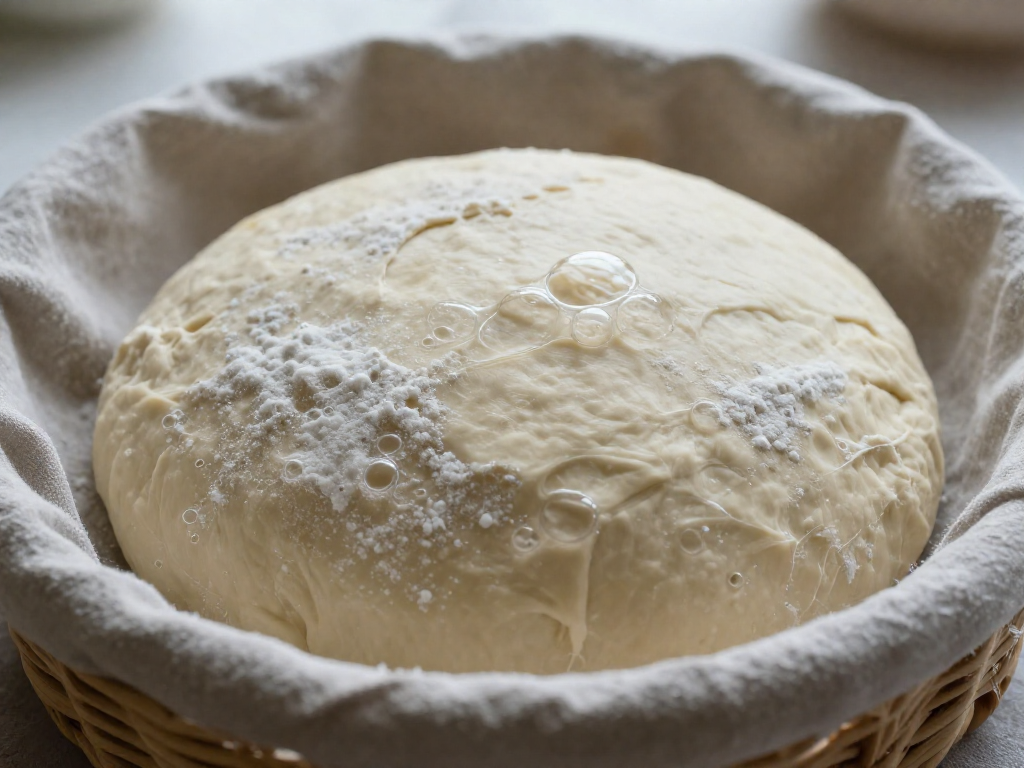
Help! My Sourdough Collapsed When I Turned It Out of the Banneton
Why does my dough deflate when I flip it out of the proofing basket? Quick troubleshooting guide covering over-proofing, weak gluten, and poor shaping, with immediate fixes.
Jul 28, 2026 · 6 min read
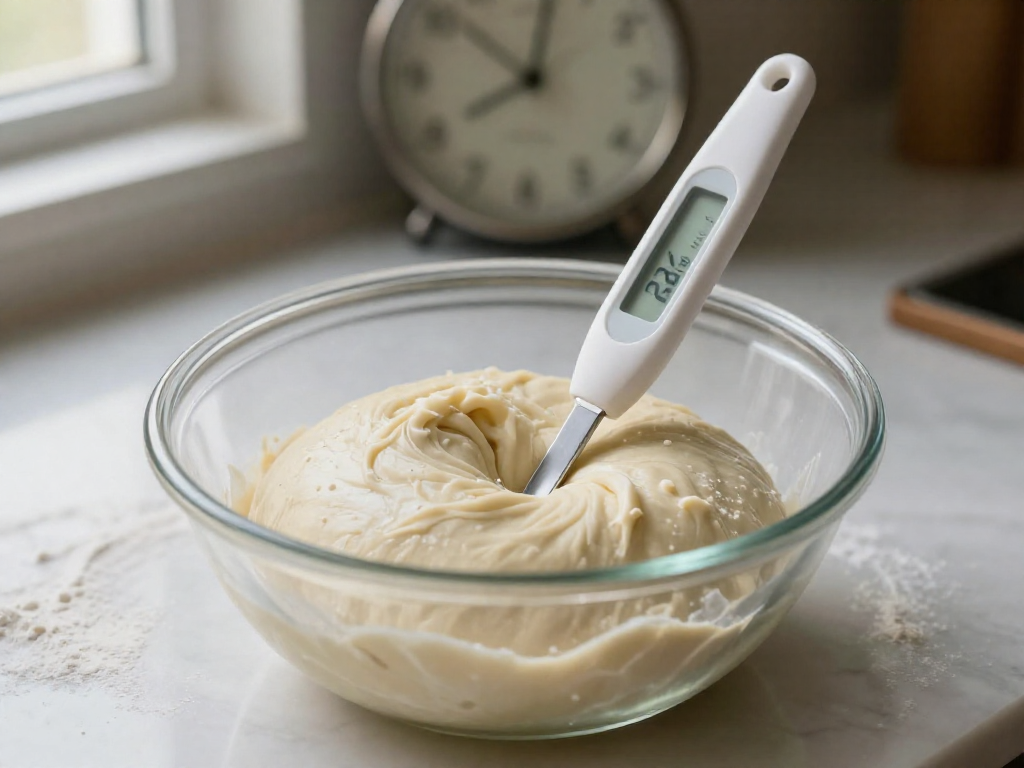
Why Your Sourdough Timeline Is Always Off (and How to Fix It)
Why does my sourdough take longer than recipes say it should?
Jul 28, 2026 · 9 min read
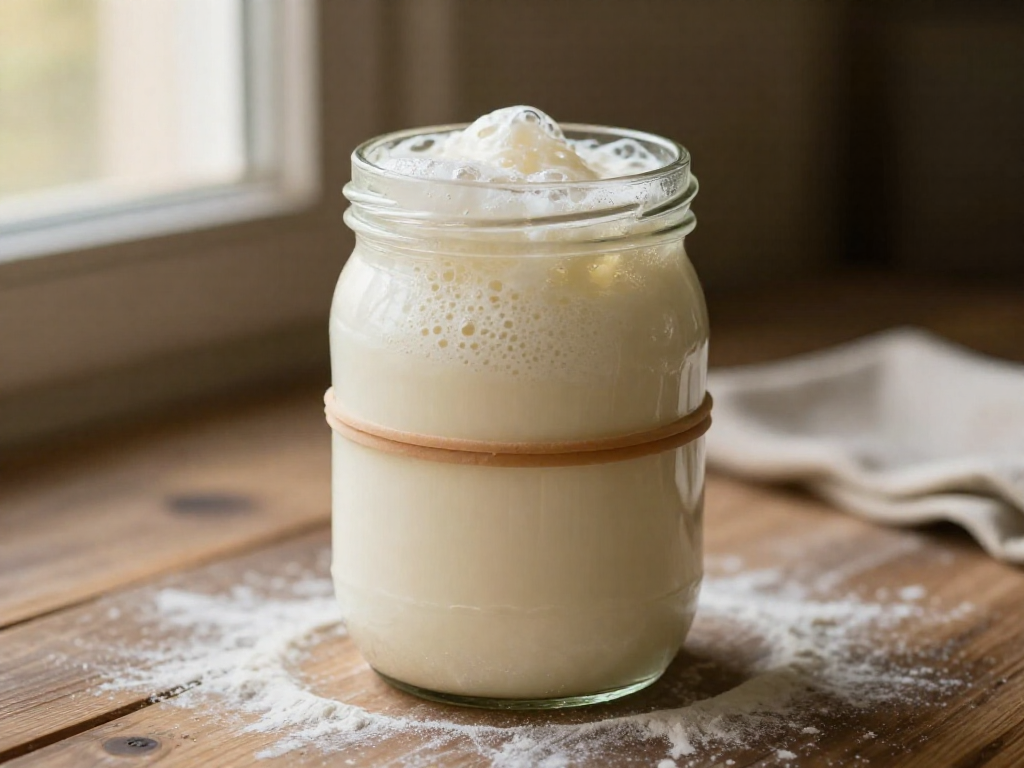
The Float Test Lie: Why Your Starter Might Be Ready Even If It Sinks
Is the float test a reliable way to tell if my sourdough starter is ready to use? Learn why this common test lies—and what to check instead for perfect bread every time.
Jul 20, 2026 · 8 min read