Why Is My Sourdough Crust Too Hard or Too Pale?
Why is my crust rock-hard or not browning?
On this page
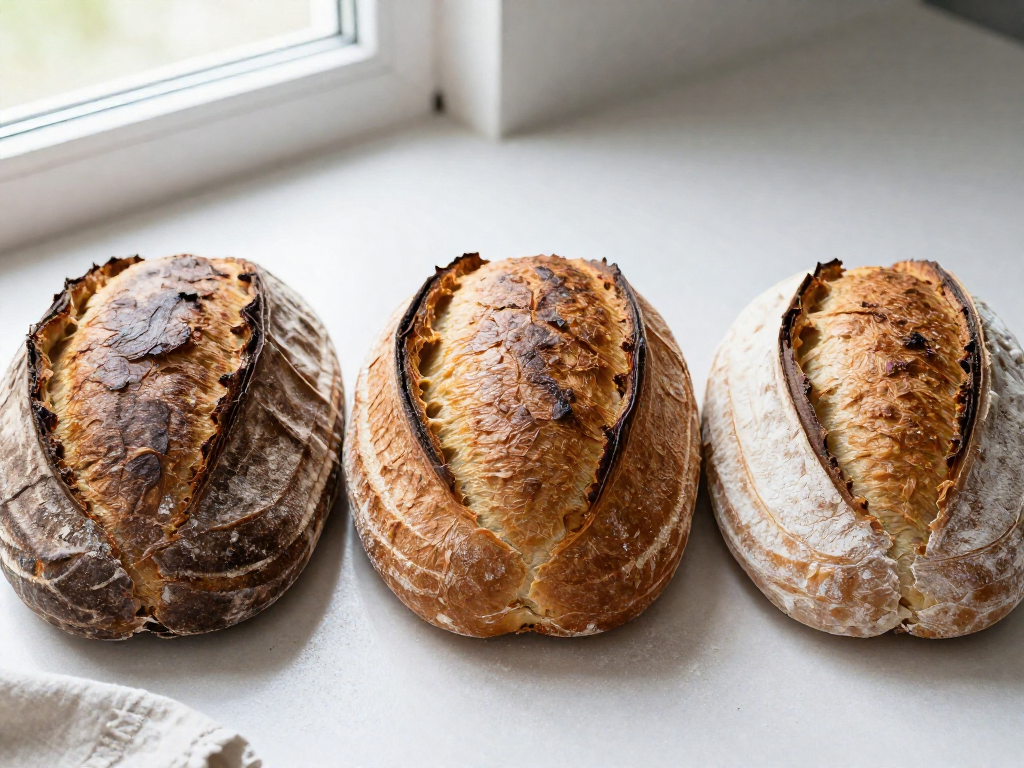
Open by naming the two opposite frustrations new bakers face—tooth-cracking hard crust vs. sad pale crust—and reassure them both come down to three controllable levers: steam, oven temperature, and bake time. Promise a quick diagnosis plus simple fixes without fancy equipment.
Quick Diagnosis: Hard vs. Pale Crust at a Glance
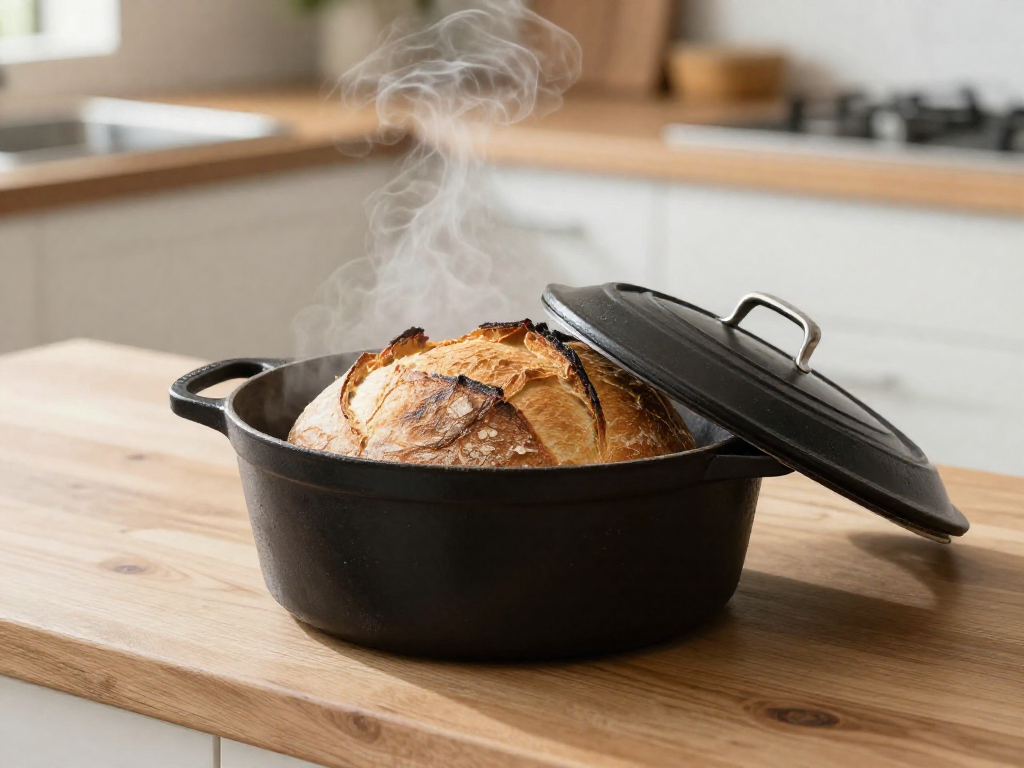
Find your symptom below, then jump straight to that fix later in the guide.
| If your crust is... | Most likely causes |
|---|---|
| Hard or thick (hard to slice, tooth-cracking) | Too much dry heat for too long; over-baking (left in past deep brown); not enough steam in the first 20 minutes. Steam is just trapped moisture in your oven that keeps the crust soft long enough to rise. |
| Pale or soft (blonde, no color, bendy) | Steam released too late or never let out; oven temperature too low; under-proofed dough (dough that hasn't fermented long enough, so it lacks the natural sugars that brown the crust). |
Quick self-check: Tap the bottom of the cooled loaf. A hard crust often sounds sharp and feels rigid all over; a pale crust looks light blonde and dents under gentle pressure.
Good news: crust is the easiest sourdough variable to control. Unlike a stubborn starter or tricky timing, crust comes down to heat, steam, and timing in the oven — all things you can adjust on your very next bake. Results still vary by oven and climate, so treat the fixes ahead as starting points to dial in.
The 3 Levers That Control Your Crust
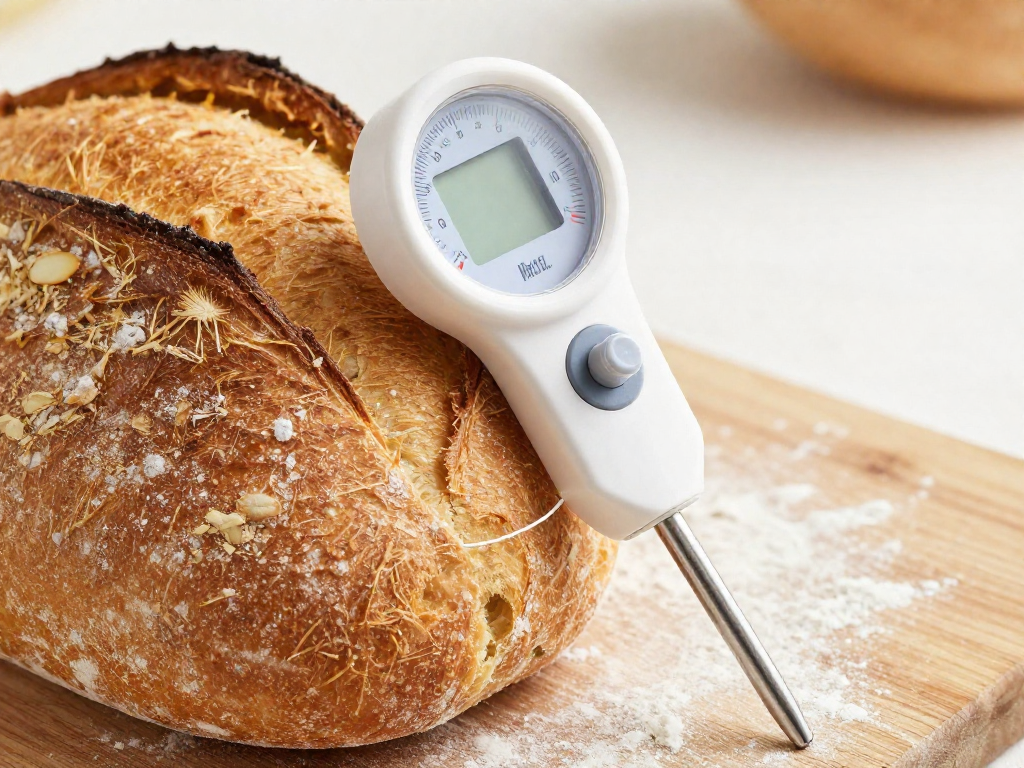
Almost every crust problem comes down to three things you can adjust: steam, temperature, and time. Get these in balance and a hard or pale crust usually fixes itself.
1. Steam (the first 20 minutes). Steam is just water vapor trapped in your oven, usually by baking in a covered Dutch oven (a heavy lidded pot). It keeps the crust soft long enough for the loaf to expand—this rise is called oven spring. Steam also helps the surface brown into a thin, crisp shell. Too little steam and the crust sets early, going thick and hard before the bread finishes rising.
2. Temperature (how fast it browns). Heat drives browning through the Maillard reaction (proteins and sugars browning) and caramelization (sugars turning golden). Higher heat browns faster and deeper; too low and the crust stays pale and leathery no matter how long you bake.
3. Time (and the covered-vs-uncovered split). Most beginner bakes run about 45 minutes: roughly the first 20 covered (with steam) and the last 25 uncovered (to brown and crisp). Longer uncovered time = darker, thicker crust.
How they work together: these levers aren't separate. Plenty of steam plus high heat and enough uncovered time gives a crisp, golden crust. Skip the steam and bake too cool, and you get the worst case—hard, pale, and disappointing. Adjust one at a time so you can see what each change does.
Why Your Crust Is Too Hard or Too Thick
If your crust is so hard you need a serrated knife and real effort to cut through it, the fix is usually about steam, temperature, and how long the loaf bakes uncovered. Here are the most common causes and exactly what to change.
Quick fixes (try these first)
- Shorten the uncovered phase. Most beginner bakes go covered (in a Dutch oven, a heavy lidded pot that traps steam) for the first part, then uncovered to brown. Baking uncovered too long dries out the crust and makes it thick. Cut your uncovered time by 5 minutes and check the color.
- Drop the oven temperature 15–25°F (about 10–15°C). If your crust hardens before the inside finishes, you're baking too hot. Lower the temp and add a few minutes if needed.
- Cool on a wire rack, not the hot pan. Leaving the loaf on a hot tray or inside the warm oven keeps cooking the crust long after you think you're done. Move it to a wire cooling rack right away so air circulates all around it.
What's actually happening
- Too little steam at the start. Steam keeps the crust soft and stretchy early so the bread can expand, then sets into a thin, crisp shell. A lidded pot traps the loaf's own moisture and solves this for most beginners.
- Too much steam for the whole bake (rare). If you never let the crust dry, it can turn thick and leathery. Remove the lid for the final third of the bake.
- Overbaking overall. A longer-than-needed bake at any temperature thickens the crust.
Results vary by oven and climate, so change one thing at a time and note what happened.
Why Your Crust Is Too Pale or Won't Brown
A pale, blond crust almost always comes down to one of four things. Work through them in order—the first two are the most common quick fixes.
1. You're steaming for too long. Most beginners bake the whole time with the lid on (in a Dutch oven) or with steam in the oven. Steam keeps the surface soft so the loaf can expand, but it also prevents browning. Fix: Bake covered for the first 20 minutes, then remove the lid (or vent the steam) and bake uncovered for the final 20–25 minutes so the crust can dry out and color.
2. Your oven runs cooler than the dial. Home oven dials are often off by 25–50°F (15–30°C). Fix: Buy a cheap oven thermometer, set the rack in the middle, and preheat fully for at least 45 minutes. If the crust is still pale, bump the temperature to 475°F (245°C) for the uncovered portion.
3. The dough is under-fermented. Fermentation is the stage where your starter eats the flour's sugars and produces gas. If you stop the bulk ferment (the first long rise after mixing) too early, leftover sugars are low—but you actually need some residual sugar for the crust to brown (this is called caramelization). A flat, dense loaf that's also pale is the classic sign. Fix: Let the dough rise until it's puffy and jiggly and has grown about 50%, not just by the clock.
4. You pulled it too early. Hitting an internal temp of 205–210°F (96–99°C) means it's cooked, but color develops in the last few minutes. Fix: Bake to color, not just to time or temperature. Aim for a deep golden-brown.
Results vary by oven and kitchen, so adjust one lever at a time.
How to Use Steam the Right Way (Dutch Oven & Open Oven)
Steam is your biggest crust lever. In the first half of baking, steam keeps the loaf's surface soft and moist so it can puff up and "spring" without setting too early. Then you remove the steam, letting the dry heat crisp and brown the crust. Too much steam the whole time = pale, leathery crust. No steam at all = hard, dull crust that sets before the loaf expands.
Dutch oven method (easiest for beginners)
- Preheat the Dutch oven (a heavy lidded pot) inside the oven at 245°C (475°F) for 45 minutes.
- Lower in your loaf, cover with the lid, and bake 20 minutes. The trapped moisture from the dough creates its own steam—no extras needed.
- Remove the lid and bake 20–25 minutes more until deep golden brown.
Open-oven method (baking on a stone or tray)
- Place an empty metal pan on the bottom rack while preheating.
- Load your loaf, then pour about 1 cup (240 g) of hot water—or 5–6 ice cubes—into the hot pan and shut the door fast.
- After 20 minutes, vent the steam: carefully remove the pan (or crack the door for 5 seconds) and finish baking dry until browned.
Critical timing cue: remove steam at the 20-minute mark. The crust should look set and matte but still pale—the dry finish is what turns it amber. Bake times vary by oven, so judge by color, not the clock alone.
Temperature & Timing Cheat Sheet
Save this for your next bake. It covers a standard 900g boule (round loaf) baked in a Dutch oven.
Default schedule (most home ovens):
| Stage | Temp | Time |
|---|---|---|
| Preheat (Dutch oven inside) | 475°F (245°C) | 45–60 min |
| Bake covered (lid on, traps steam) | 475°F (245°C) | 20 min |
| Bake uncovered (lid off, builds color) | 450°F (230°C) | 20–25 min |
Two doneness checks — use both:
- Internal temp: 205–210°F (96–99°C) on an instant-read thermometer pushed into the center.
- Color: deep golden brown, not pale tan. Pale = underbaked crust, even if the inside is hot enough.
Adjust for your oven:
- Convection (fan): drop temps by ~25°F and check 5 minutes early; the fan browns faster.
- Dark or thin pans: they run hotter, so watch color and reduce time slightly.
- Cooler or weak ovens: add 5–10 minutes uncovered and rely on color, not the clock.
Every oven runs a little differently, so treat these as starting points and adjust to what you see.
Get the Crust You Want: A Simple Recap
Your crust comes down to three levers, each with a one-line fix:
- Steam (moisture in the oven's first 20 minutes): Crust too hard or thick? Add more steam, or keep the Dutch oven lid on longer.
- Heat (oven temperature and bake time): Crust too pale? Bake hotter or longer, and uncover for the final 10–15 minutes to brown.
- Sugars (how far your dough fermented): Won't brown even when hot? Let bulk fermentation—the first long rise after mixing—go a little further next time.
Change only one variable per bake so you can see what actually worked. When you're ready for fuller control, check our fermentation and scoring guides to dial in rise and that bold, even browning.
FAQ
Why is my sourdough crust so hard I can barely cut it?
An overly hard crust usually comes from baking too long, baking too hot, or leaving the loaf uncovered for the entire bake so it dries out. Quick fixes: reduce your total bake time by 5 minutes, drop the oven temperature by 10–15°C (about 25°F), and bake the first 20 minutes covered (in a Dutch oven or under a lid) to trap steam, then uncover only for the final 15–20 minutes. Also let the loaf cool fully on a wire rack for at least 1 hour before slicing—cutting hot bread tears the structure and can make the crust feel tougher. If your crust is still rock-hard, your oven may run hot, so check it with an oven thermometer.
How do I get a golden brown crust on sourdough?
Color comes from sugars and steam, so do three things. First, bake hot: 230–245°C (450–475°F). Second, keep the first 20 minutes covered with steam (Dutch oven lid on) so the surface stays moist and can brown evenly, then uncover for the last 15–20 minutes to let it color. Third, give the dough enough time to ferment—under-fermented dough has fewer available sugars and bakes pale. If you still want more color, leave it in 3–5 extra minutes once uncovered and watch closely, or brush the top very lightly with water before the covered stage. Results vary by oven and flour, so use color as your guide rather than time alone.
Should I bake sourdough covered or uncovered?
Both—in that order. Bake covered for the first ~20 minutes, then uncovered for the final ~15–20 minutes. Covering (with a Dutch oven lid or similar) traps the steam released by the dough, which keeps the surface soft so the loaf can fully expand (this rapid early rise is called 'oven spring'). Uncovering at the end lets the crust dry, crisp, and brown. If you bake uncovered the whole time, the crust sets too early and stays pale and dense; if you bake covered the whole time, it never browns or crisps.
What temperature should I bake sourdough bread at?
Bake most beginner sourdough loaves at 230–245°C (450–475°F). A good default: preheat your oven and Dutch oven for 45–60 minutes at 245°C (475°F), bake covered for 20 minutes, then reduce to 230°C (450°F) and bake uncovered for 15–20 minutes until deeply golden. The bread is done when the internal temperature reaches about 96–99°C (205–210°F) on an instant-read thermometer and the bottom sounds hollow when tapped. Ovens vary, so check with an oven thermometer—a cool oven is a common cause of a pale, soft crust.
Does steam really make a difference to the crust?
Yes—steam is the single biggest factor in a good crust. In the first 20 minutes, steam keeps the dough surface moist so it can rise fully before setting, which gives you a higher loaf and a thin, crisp, glossy crust. Without steam, the surface dries and hardens too soon, leading to a pale, thick, or dull crust and less rise. The easiest way to create steam at home is to bake inside a preheated Dutch oven with the lid on for the first part of the bake; the dough's own moisture does the work. Then remove the lid so the crust can dry and brown.
Why is my crust pale even though the bread is fully baked?
A fully baked but pale loaf is almost always a browning problem, not a doneness problem. The most common causes: the oven temperature is too low (verify with an oven thermometer), you uncovered the loaf too late or never let it bake uncovered, or the dough was under-fermented and had few sugars left to brown. Fixes: bake the final stage uncovered at 230–245°C (450–475°F), give it 3–5 extra uncovered minutes watching for color, and make sure your bulk ferment (the first rise after mixing, where the dough develops flavor and gas) goes long enough that the dough is visibly puffy and jiggly. Color can vary with flour type and kitchen climate, so judge by appearance rather than expecting an identical result every time.
See also
- How to Tell If Your Sourdough Is Properly Proofed
- Why Is My Sourdough Gummy or Dense?
- Beginner's Guide to Scoring Sourdough
- Dutch Oven vs. Baking Steel for Sourdough
- Simple Beginner Sourdough Bread Recipe
Related articles
Help! My Sourdough Collapsed When I Turned It Out of the Banneton
Why does my dough deflate when I flip it out of the proofing basket? Quick troubleshooting guide covering over-proofing, weak gluten, and poor shaping, with immediate fixes.
Jul 28, 2026 · 6 min read
Why Your Sourdough Timeline Is Always Off (and How to Fix It)
Why does my sourdough take longer than recipes say it should?
Jul 28, 2026 · 9 min read
The Float Test Lie: Why Your Starter Might Be Ready Even If It Sinks
Is the float test a reliable way to tell if my sourdough starter is ready to use? Learn why this common test lies—and what to check instead for perfect bread every time.
Jul 20, 2026 · 8 min read