Beginner's Guide to Controlling Sourdough Tang: How to Make It Milder or More Sour
How can I control the sourness level of my sourdough bread?
On this page
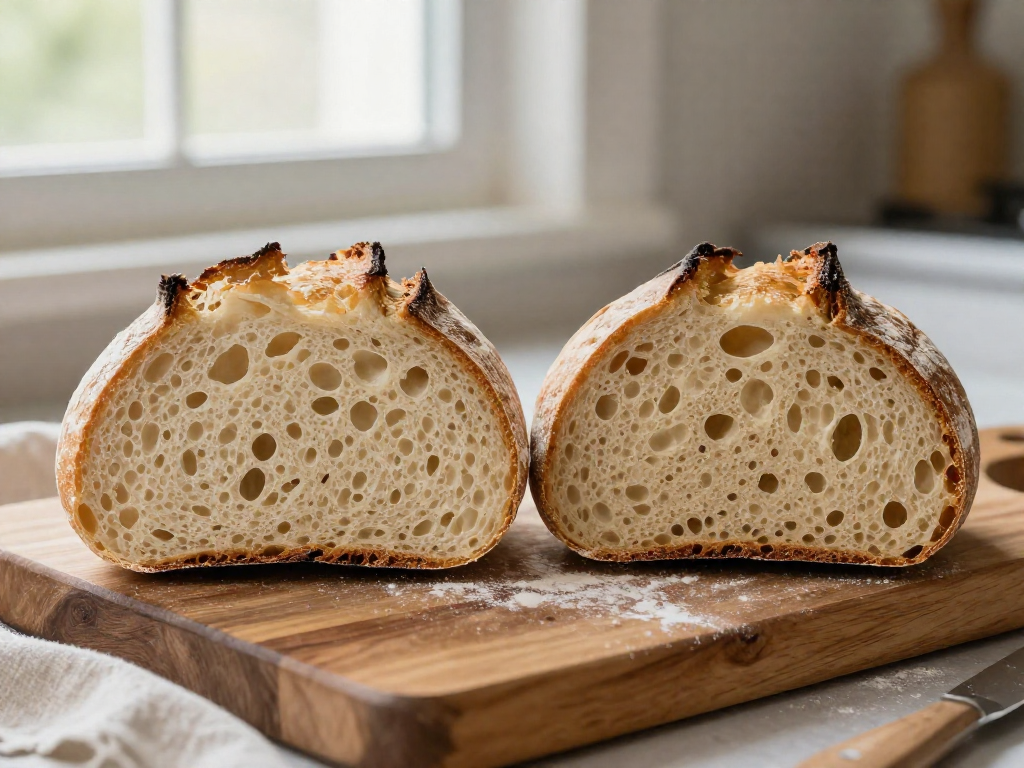
The Two Acids Behind Every Sourdough Flavor
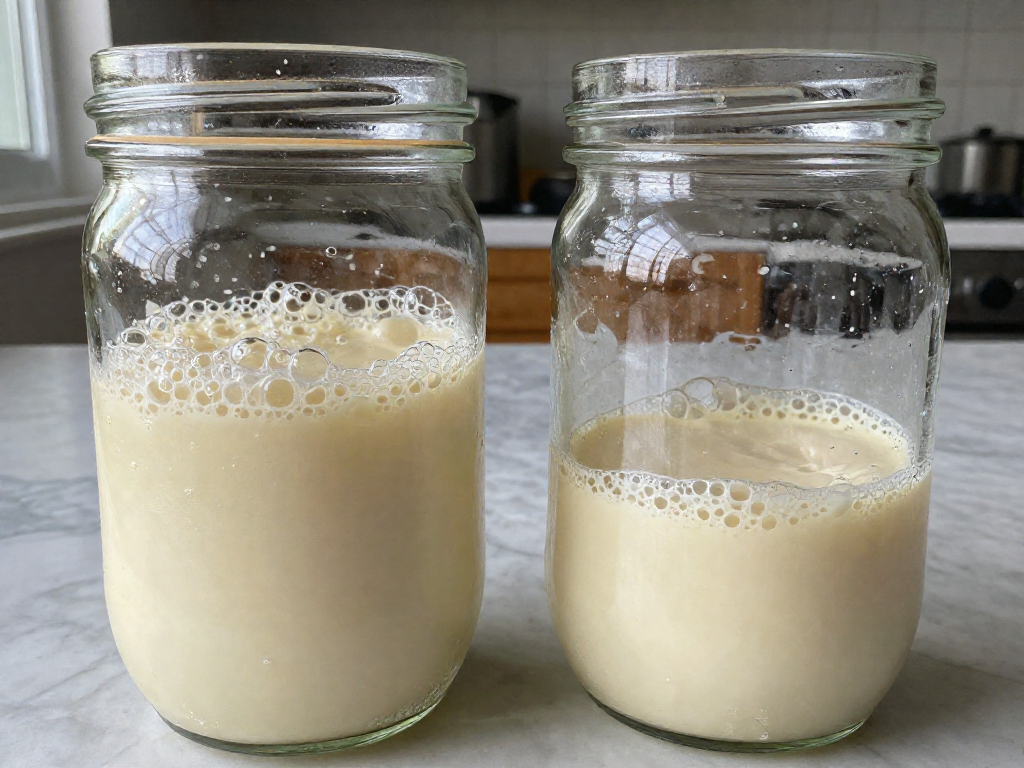
Every bit of sourness in your bread comes down to two acids that your starter produces as it ferments:
- Lactic acid tastes mild, smooth, and yogurt-like — think of the gentle tang in plain yogurt or buttermilk.
- Acetic acid tastes sharp, vinegary, and puckering — the same acid that gives vinegar its bite.
Here's the key thing to understand: both acids are always present in every starter and every dough. You can't remove one or the other. All you're ever doing when you make a loaf "milder" or "more sour" is shifting the balance between them.
And that balance follows a simple rule:
- Warmer, wetter conditions favor lactic acid → a milder, creamier tang. Around 78–82°F (25–28°C), both the yeast and the acid-making bacteria stay busy and lean lactic.
- Cooler, drier conditions favor acetic acid → a sharper, more vinegary tang. This is why a cold overnight rest in the fridge deepens sourness.
The best news for beginners: you don't need a pH meter or any lab equipment. You control the acid ratio — and therefore your flavor — with three levers you already have: time, temperature, and how you feed your starter. The rest of this guide walks through exactly how to pull each lever, whether you want a loaf that's soft and mellow or one that really bites back.
Lever 1: Fermentation Temperature (Your Biggest Dial)
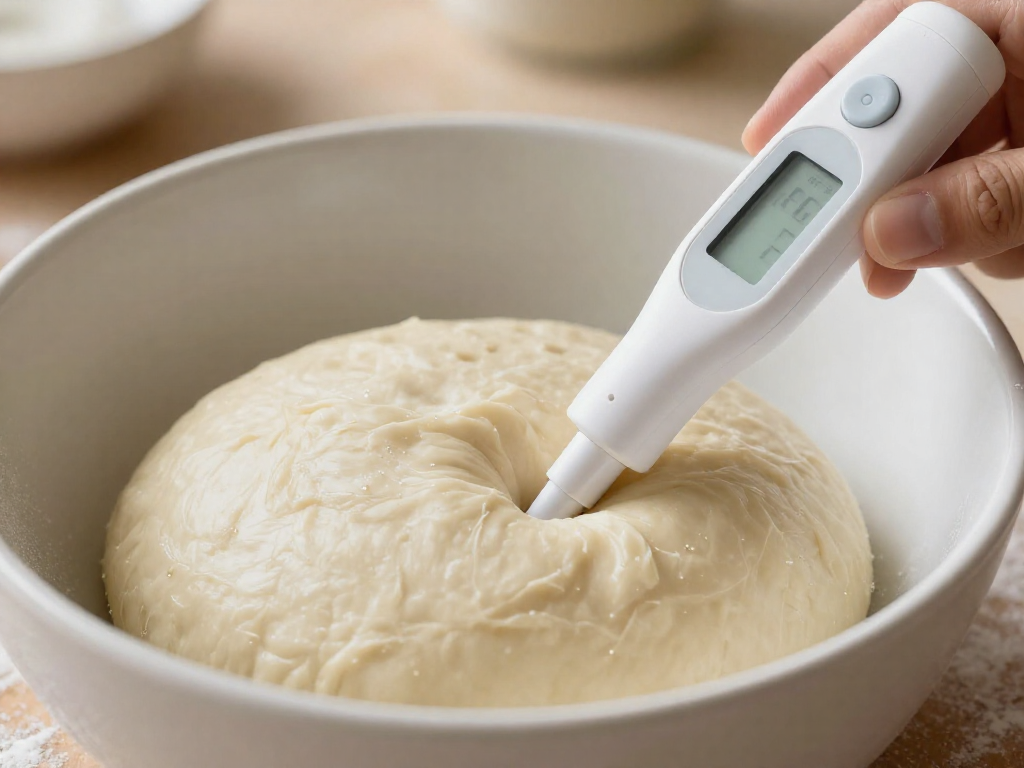
If you only change one thing, change this. Fermentation temperature — how warm your dough is while it rises (this rising stage is called the bulk ferment) — is the single most powerful control you have over sourness.
Here's the quick answer:
- Want it milder? Ferment warm: 78–82°F (25–28°C).
- Want it tangier? Ferment cool: below ~75°F (24°C).
Why it works: Your dough always makes two acids at once — mild, yogurt-like lactic acid and sharp, vinegary acetic acid. Warm dough keeps both the yeast and the acid-making bacteria busy, and they lean toward that smooth, creamy, lactic flavor. Cooler dough slows the bacteria more than the yeast, tipping the balance toward the sharper acetic tang.
The sweet spot: Around 77°F (25°C) many bakers get a loaf that's sour but still fruity, with pleasant yogurt-like notes. Avoid going over ~86°F (30°C) — too hot and you get harsh, vinegary flavors plus over-fermentation (the dough ferments too long, the gluten breaks down, and the loaf turns slack and sticky).
How to hit your target temperature at home:
- For a milder loaf: Proof in your oven with just the light on, or on top of the fridge — anywhere that stays warm and draft-free.
- For a tangier loaf: Use a cool kitchen counter, a basement, or a garage to slow things down.
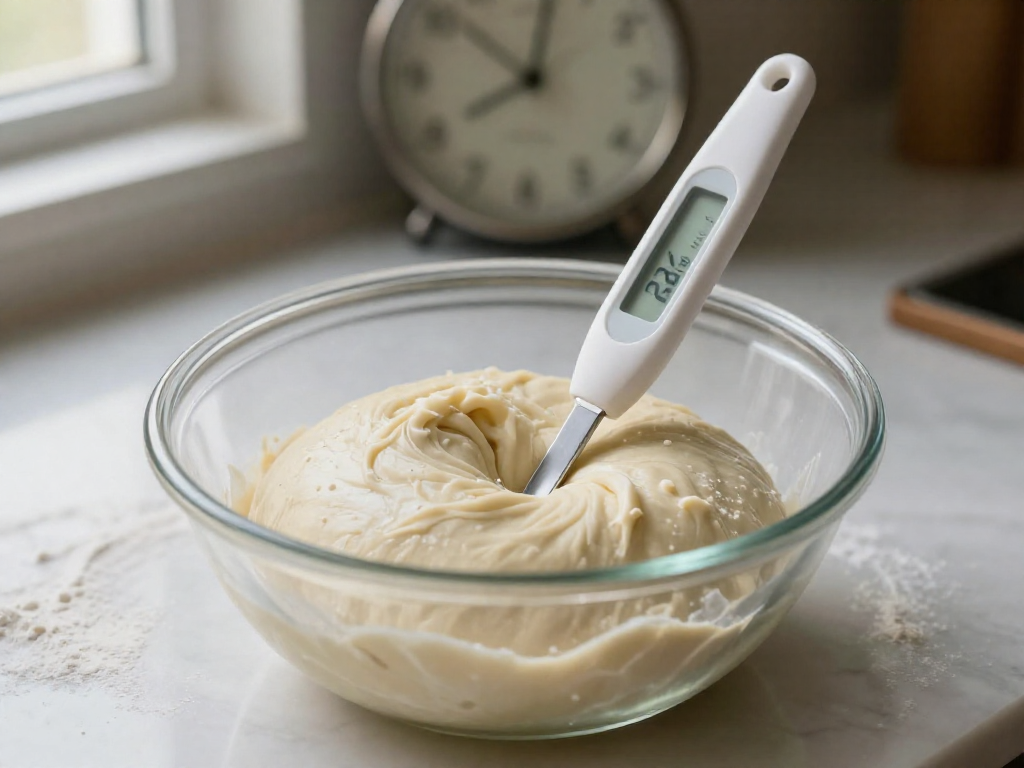
A cheap probe thermometer takes the guessing out of it — stick it in a glass of water sitting next to your dough. Kitchens vary wildly by season and climate, so check your actual temperature rather than trusting the thermostat on the wall.
Lever 2: The Cold Retard (Fridge Proofing)
If you want more tang without changing your recipe, this is the easiest lever to pull. A cold retard (also called cold proofing) simply means putting your shaped loaf in the fridge overnight instead of baking it right away. During that slow, cold rest the balance of acids shifts toward more acetic acid—the sharp, vinegary note—giving your loaf deeper sourness (King Arthur Baking).
Do this for a more sour loaf:
- Finish your warm bulk ferment (the first rise, at room temperature) as usual.
- Shape the loaf and place it in a floured banneton or bowl.
- Cover and refrigerate 12–24 hours.
- Bake straight from the fridge—no need to warm it up first.
A real A/B test: One baker made two identical loaves. The first fermented ~18 hours warm and tasted mild and creamy, almost yogurt-like. The second had a warm bulk ferment plus a 22-hour cold proof at 39°F—it came out tangy and sharp up front (The Fresh Loaf). Your kitchen and starter will vary, so treat these as a guide, not a guarantee.
Want it milder? Skip the fridge entirely. Bake after a short room-temperature rise (about 2 hours) for a gentler, less acidic crumb.
Bonus: Cold dough is firmer, so it scores more cleanly, tends to spring taller in the oven, and lets you bake on your schedule instead of the starter's.
Lever 3: Fermentation Time
Quick answer: The longer your dough ferments, the more sour it gets — regardless of temperature. Time is where acidity actually accumulates.
Here's the rule of thumb tested by bakers:
- Under ~8 hours of bulk fermentation (the first rise, after mixing and before shaping): tasty bread, but mild — not much tang.
- 12–20 hours: noticeably sour. The lactic acid bacteria (the microbes that produce sourdough's acids) simply have more time to make acid.
So if your loaf isn't sour enough, extend the bulk ferment. If it's too sour, shorten it.
Watch the visual cues, not just the clock. Your dough is ready to shape when it has risen roughly 50–75%, looks domed and jiggly, and shows a few bubbles on the surface and sides. Push past that too far and you'll hit over-fermentation: the gluten (the protein network that gives structure) breaks down into a sticky, slack, soupy mess, and the flavor turns harshly vinegary instead of pleasantly tangy.
Best approach for beginners: pair time with temperature. A long, cool ferment — for example, several hours at room temperature followed by an overnight rest in the fridge — builds deep, controlled sourness while giving you a wide, forgiving window to work with. Results vary by kitchen and climate, so treat these times as starting points and watch your dough.
Lever 4: Your Starter — Feeding, Amount, and Stiffness
Your starter (the living mix of flour and water that raises the bread) is a flavor dial most beginners ignore. Here are four adjustments you can make before the dough is even mixed.
1. Use less starter for a milder loaf. Add a small amount of starter — roughly 2–20% of your flour weight — and let the dough ferment slowly. One baker who uses just 20% reports the bread is never sour, and a Fresh Loaf test hit a mild, creamy loaf with only 2% of total flour in the levain (the portion of starter you build up to leaven a specific dough). Less starter = slower acid buildup = milder tang.
2. Match starter stiffness to the tang you want. Hydration means how much water a starter holds relative to flour. A stiff (low-hydration) starter favors sharp, vinegary acetic acid; a wetter starter favors mild, yogurt-like lactic acid. Want it milder? Keep your starter on the wetter side.
3. Use your starter at peak. "Peak" is when the starter has roughly doubled and looks domed and bubbly, just before it starts to sink. Using it at peak gives milder bread; using it past peak (after it's fallen) feeds the more sour bacteria and sharpens the tang.
4. Adjust the feeding ratio to time your peak. A feeding ratio is the weight of old starter to new flour to new water. At warm room temperature (about 78°F/26°C), a healthy starter fed 1:1:1 (equal parts) usually peaks in about 4–6 hours. Feed it 1:4:4 (more fresh flour and water) and it rises slower, giving you a longer window to catch it at peak.
Quick tip: For your mildest loaf, combine a small amount of a wetter starter, used right at peak, with a cool, slow ferment. Results vary by kitchen and climate, so treat these as dials to test, not guarantees.
Quick-Reference Cheat Sheet: Milder vs. More Sour
Save this and pull it up next time you bake. Bulk ferment just means the first big rise before you shape the dough; cold retard means resting the shaped loaf in the fridge.
Want a MILDER, yogurt-like loaf?
- Ferment warm (~78°F / 25–26°C) — this favors mild lactic acid
- Skip the fridge; proof at room temp and bake the same day
- Use less starter (as low as 2% of your flour weight) for a slow, gentle rise
- Feed a wetter (higher-hydration) starter and use it right at peak, when it's domed but not yet sinking
Want a MORE SOUR, tangy loaf?
- Ferment cooler (under 77°F / 25°C) — this builds sharp acetic acid
- Stretch out the bulk ferment (12–20 hours)
- Cold-retard the shaped loaf overnight in the fridge (~39°F)
- Use a stiff (low-water) starter, slightly past peak
- Add whole wheat or rye, which fuel more acid
One rule for both: change a single variable at a time so you can taste exactly what it does. Results vary by kitchen and season, so treat these as starting points, not guarantees.
Common Mistakes When Adjusting Tang
Before you start experimenting, avoid these beginner traps. They're the reason most "why won't my tang change?" frustration happens.
- Changing several things at once. If you drop the temperature and add a cold retard (an overnight rise in the fridge) and switch flours in the same bake, you'll never know which change did what. Adjust one lever at a time and take notes.
- Letting a hot kitchen run wild. Above 86°F (30°C) the dough over-ferments fast, tipping flavor toward harsh vinegar and turning the crumb (the inside of the loaf) gummy and slack. In a warm kitchen, cool the dough 5–10°C using a cool box with an ice pack.
- Assuming more time is always better. Long fermentation builds flavor, but past a point it breaks down the gluten (the protein network that gives bread structure), leaving you with a flat, sticky loaf.
- Trying to remove sourness entirely. Both acids are always present—you can dial tang down, not off. Aim for milder, not zero.
Results vary by kitchen and climate, so treat each bake as one data point.
Sources
- The Importance of Dough Temperature in Baking — theperfectloaf.com
- Acetic Acid: Tangy Sourdough Flavor and Its Health Benefits - The Sourdough School — sourdough.co.uk
- Acetic vs. Lactic Flavor | The Fresh Loaf — thefreshloaf.com
- Acetic acid or Lactic acid in a starter - Breadtopia Forum — forum.breadtopia.com
- How to make your sourdough bread more (or less) sour: part 3 | King Arthur Baking — kingarthurbaking.com
- How to Develop Sour Flavor in Sourdough | The Fresh Loaf — thefreshloaf.com
- The Science of Sourdough Starters — seriouseats.com
- Baking trials: Testing different sourdough feeding ratios | King Arthur Baking — kingarthurbaking.com
- Avoid Failure: How to Bake Sourdough in Hot & Humid Climates — culinaryexploration.eu
- Sourdough Bread Quality: Facts and Factors - PMC — pmc.ncbi.nlm.nih.gov
- Making Homemade sourdough bread: times and temps — blog.thermoworks.com
- Optimizing Lactic Acid Bacteria Proportions in Sourdough to Enhance Antifungal Activity and Quality of Partially and Fully Baked Bread - PMC — pmc.ncbi.nlm.nih.gov
FAQ
Why is my sourdough too sour?
Too-sour sourdough usually comes down to too much acid building up, mostly from cool, slow fermentation and long fermentation times. A few common culprits: fermenting or cold-proofing your dough in the fridge for a long stretch (cool temperatures below about 77°F/25°C shift the balance toward sharp, vinegary acetic acid), letting bulk fermentation run very long (acidity keeps developing the longer bacteria work—12–20 hours produces noticeably sour bread), using a stiff (low-hydration) starter, or letting your kitchen run hot (over 86°F/30°C can over-ferment the dough into harsh, vinegary flavors). Note: 'bulk fermentation' is the first long rise of the whole dough before you shape it. To dial the sourness back, ferment warmer (around 78–82°F/25–28°C), shorten the ferment, use a fresh starter at its peak, and skip or shorten the cold proof. Results vary by kitchen and climate, so change one thing at a time and taste.
How do I make my sourdough less sour and more mild?
For a milder, more yogurt-like loaf, favor lactic acid over sharp acetic acid by fermenting warm and fast: 1. Ferment warm: keep dough around 78–82°F (25–28°C). At these temperatures both yeast and bacteria stay active and produce a smooth, mild sourness. 2. Use less starter: a small amount of starter (as little as 2% of your flour weight, up to ~20%) with a warm ferment keeps things gentle. 3. Use your starter at peak: feed it and use it when it's fully risen and domed but not yet collapsing—past-peak starter favors more acid. 4. Keep the ferment shorter: under about 8 hours of fermentation gives tasty, non-sour bread. 5. Skip the cold proof: bake after a room-temperature rise instead of refrigerating the shaped loaf overnight. In one tested comparison, a warm-only ferment (about 18 hr at 77°F) tasted mild and creamy, while adding a 22-hr fridge proof made the same recipe tangy and sharp. 6. Try a higher-hydration dough (wetter dough favors mild lactic acid). Change one variable at a time so you can taste the difference. Results depend on your kitchen temperature, so use a thermometer on your dough rather than guessing.
Does refrigerating sourdough dough make it more sour?
Yes—refrigerating (also called cold-proofing or 'retarding') generally makes sourdough more sour and more complex. In the cold, yeast slows down a lot but the bacteria keep producing acid, and cool temperatures push the balance toward sharp, vinegary acetic acid. A home baker's side-by-side test showed that taking a dough that had bulk-fermented warm and then cold-proofing it 22 hours in the fridge produced a distinctly tangy, sharp loaf, while the same dough kept warm the whole time stayed mild and creamy. The cold also develops richer overall flavor because slow, 'inefficient' fermentation creates tasty byproducts. So if you want more tang, add a long fridge proof of the shaped loaves; if you want it milder, bake after a warm room-temperature rise instead. Cold proofing has a bonus for beginners: it makes timing flexible and the chilled dough easier to score and shape.
What temperature makes sourdough more tangy?
Cooler fermentation temperatures make sourdough tangier. Below about 77°F (25°C), yeast stays fairly active while the lactic acid bacteria slow down, shifting the acid balance toward sharp, vinegar-like acetic acid—the source of that bold tang. The bacteria that create sharper, more vinegary flavors thrive around 59–72°F (15–22°C), while the ones that make mild, creamy, yogurt-like flavors prefer warmth (roughly 86–95°F/30–35°C). A practical approach for more tang: keep your dough temperature cool (a dough temperature around 73–74°F is one tested target for controlled flavor), extend the bulk fermentation, and finish with a cold proof in the fridge. But don't overdo heat in the other direction—if your kitchen climbs above 86°F (30°C), the dough can over-ferment into a harsh, unpleasant vinegary taste and turn into a sloppy, sticky mess as the gluten breaks down. Use a thermometer to read your actual dough temperature, since kitchen air temperature can be misleading.
Can I control sourdough sourness without a pH meter?
Absolutely—you don't need a pH meter to control sourness. The most reliable home tools are a simple thermometer and a clock, because temperature and time drive the flavor. To make bread milder: ferment warm (around 78–82°F/25–28°C), use a small amount of starter at its peak, keep the ferment shorter, and skip the fridge. To make it tangier: ferment cooler, use a stiffer starter, extend the bulk ferment, and add a long cold proof in the refrigerator. Use your senses as your guide: a starter is at peak when it's doubled, domed, and bubbly (mild) versus sunken and sharp-smelling (more sour); dough is ready to shape when it's puffy, jiggly, and has grown by about 50–75% with visible bubbles. Track your changes one at a time and taste each loaf so you learn how your own kitchen behaves. A thermometer for your dough is the single best inexpensive upgrade for controlling tang.
Does whole wheat flour make sourdough more sour?
Whole wheat flour tends to push sourdough toward more sour, more developed flavor. Whole-grain flours like whole wheat and rye have a higher 'ash content' (the mineral-rich parts of the grain) and more buffering capacity, which lets the acid-producing bacteria keep working longer before the dough gets too acidic to continue—so more total acid can build up. Whole wheat also ferments faster and more actively because it feeds the bacteria more, which deepens the sour, complex flavor. If you want a milder loaf, use a higher proportion of white bread flour and keep whole wheat to a smaller percentage of the total. If you want more tang and depth, increase the share of whole wheat or rye. Keep in mind that whole wheat absorbs more water and ferments quicker, so for beginners it can be easy to over-ferment—watch your dough's rise closely and adjust timing rather than following the clock exactly, since results vary by flour brand and kitchen temperature.
See also
- Beginner's guide to creating and maintaining a sourdough starter
- How to tell when bulk fermentation is done
- Fixing dense, gummy sourdough loaves
- Understanding sourdough hydration for beginners
- Best flours for beginner sourdough baking
Related articles
Help! My Sourdough Collapsed When I Turned It Out of the Banneton
Why does my dough deflate when I flip it out of the proofing basket? Quick troubleshooting guide covering over-proofing, weak gluten, and poor shaping, with immediate fixes.
Jul 28, 2026 · 6 min read
Why Your Sourdough Timeline Is Always Off (and How to Fix It)
Why does my sourdough take longer than recipes say it should?
Jul 28, 2026 · 9 min read
The Float Test Lie: Why Your Starter Might Be Ready Even If It Sinks
Is the float test a reliable way to tell if my sourdough starter is ready to use? Learn why this common test lies—and what to check instead for perfect bread every time.
Jul 20, 2026 · 8 min read