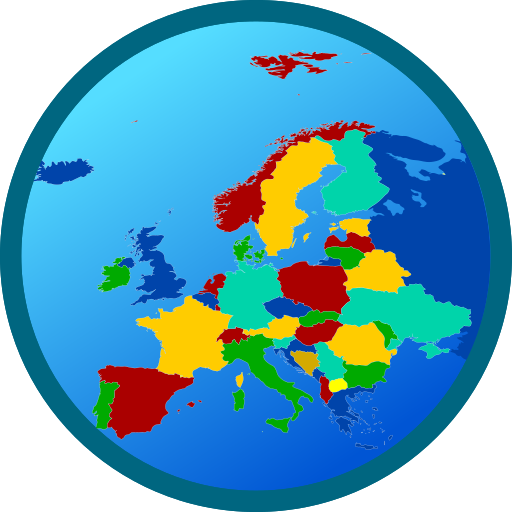
Europe map
Click to download now, finish the installation quickly, and directly unlock the "all-round experience"
About This App
🏆 Expert Verdict & Overview
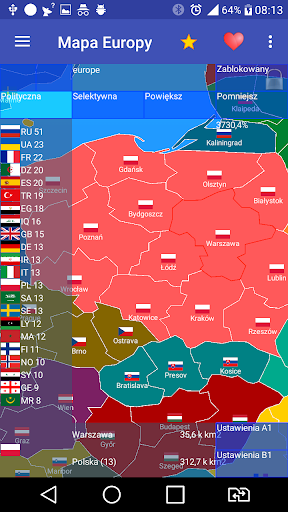
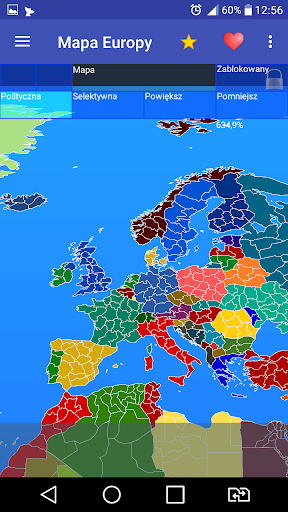
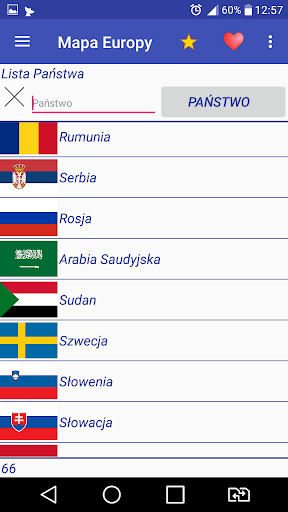
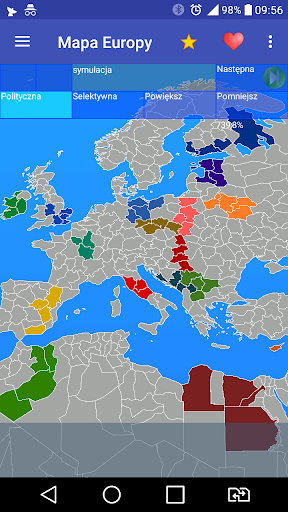
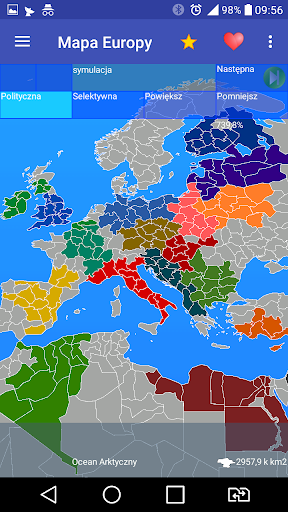
The **App Name:** "Europe map" carves its niche within the broader **Educational** category by providing a detailed, interactive geopolitical sandbox. This is not just a static atlas; it's a tool that allows users to visualize and manipulate over 800 provinces across three continents, blending geography education with the strategic elements of a simulation. As a Senior App Analyst, I recognize its potential as a modern alternative to traditional study methods. By giving users direct agency over the map, it elevates memorization to active learning. The inclusion of flags for 60 nations, from Europe to parts of Africa and Asia, further enriches its educational foundation, making it a compelling proposition for students, educators, and history enthusiasts. The app's core value is transforming passive geography into an engaging, hands-on experience.
🔍 Key Features Breakdown
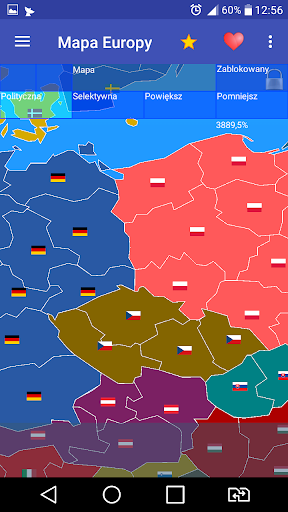
- Over 800 Provinces Across 60 Countries: This granular detail moves beyond basic country outlines, allowing users to explore sub-national divisions. It solves the problem of oversimplified maps, providing a resource for those needing deeper geopolitical understanding, such as history students or avid travelers.
- Three Distinct Map Modes: This versatility solves different user needs. The Real Map mode is for factual learning and reference. The Clean Map provides a distraction-free canvas for study or custom map creation. The Expansion Simulation mode introduces a dynamic, game-like element that makes learning about historical or hypothetical geopolitical changes engaging.
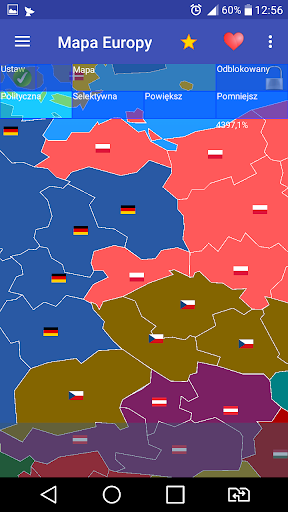
- Modify Country Affiliations: This interactive feature is the app's key innovation. It solves the problem of static learning by allowing users to create "what-if" scenarios, redraw historical borders, or consolidate regions for personal study projects, transforming theory into practice.
- National Flags: This visual element aids in quick recognition and memorization, linking country names with their visual symbols—a core element of geography education.
🎨 User Experience & Design
For the **Educational** category, clarity, accessibility, and intuitive navigation are paramount. The app describes its UI as "Convenient and easy to use and navigate," which aligns with user expectations for learning tools that should not create barriers to the content. A well-designed educational app must present complex data (like hundreds of provinces) in a way that doesn't overwhelm. Effective UX here would involve a clean visual hierarchy, responsive touch controls for selecting and modifying regions, and clear separation between the three modes. The transition between viewing a "real" map and actively editing it should be seamless, ensuring the user's focus remains on the educational content, not the app's mechanics.
⚖️ Pros & Cons Analysis
- ✅ The Good: Exceptional depth and detail in its geographical data, providing a resource beyond standard map apps.
- ✅ The Good: Innovative, multi-mode design that caters to both serious study and playful experimentation.
- ✅ The Good: Direct, hands-on interactivity that fosters deeper engagement and active learning.
- ✅ The Good: Free access with PRO features disabled, lowering the barrier to entry for users.
- ❌ The Bad: The app name "Europe map" is potentially misleading, as it includes parts of Africa and Asia without clear indication in the branding.
🛠️ Room for Improvement
While "PRO versions are disabled" suggests the core app is free, the next update should focus on refining the value proposition and user onboarding. First, the app's title or introductory description should more accurately reflect the global scope to set correct user expectations. Second, introducing optional metadata layers—like population density, major cities, or key landmarks—would enhance its educational value significantly. Finally, a tutorial or guided walkthrough for the "modify country affiliations" and simulation features would help new users immediately grasp the app's unique power and prevent early frustration.
🏁 Final Conclusion & Recommendation
This app is a strong recommendation for **students** of geography and history, as well as **educators** seeking an engaging classroom tool. It's also ideal for **casual learners and simulation enthusiasts** who enjoy geopolitical strategy. The app's strength lies in its ability to function as both a serious reference tool and a creative sandbox. For a free app, the depth of data and level of interactivity offered are commendable. While there is room for greater clarity in its scope and potential enhancement of features, its core proposition—making geopolitical manipulation and learning engaging and accessible—is successfully executed. For anyone looking to move beyond a simple digital atlas, "Europe map" is a compelling and educational download.
Best Similar Apps