
Afterpay: Pay over time


Click to download now, finish the installation quickly, and directly unlock the "all-round experience"
About This App
🏆 Expert Verdict & Overview
Afterpay: Pay over time is a significant player in the modern financial technology and shopping landscape, fundamentally altering the point-of-sale equation for consumers. As a "buy now, pay later" (BNPL) service, it successfully bridges the gap between immediate desire and financial reality, integrating deeply within the Shopping ecosystem. The app functions as both a payment facilitator and a curated shopping platform, offering users a dual-value proposition: flexible financial management and a gateway to a wide network of brands. This positions Afterpay not merely as a utility but as a potential shopping discovery hub in its own right.
🔍 Key Features Breakdown
- Pay in 4 Installments: This core feature addresses the immediate pain point of cash flow constraints by splitting a purchase into four, interest-free payments. It democratizes access to products by reducing the upfront financial burden, effectively solving the "I want it now but can't pay all at once" dilemma.
- Longer-Term Pay Monthly (Loan) Plans: Offers a solution for larger purchases (e.g., tech, appliances) by providing multi-month repayment options, directly competing with traditional credit cards. This caters to users who desire predictable monthly budgeting beyond the standard six-week cycle.
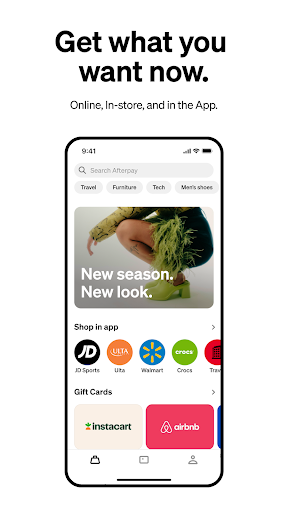
- In-App Shopping Hub & Exclusive Deals: Solves the problem of shopping discovery by aggregating brands and offering app-exclusive discounts. It acts as a conversion engine for partner brands while providing users with curated, compelling offers, creating a flywheel of engagement.
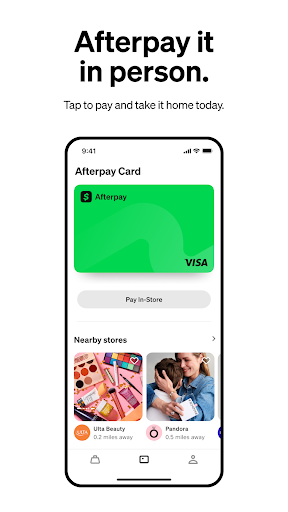
- In-Store Tap & Pay Integration: Solves the fragmentation between online and offline shopping by extending BNPL functionality to physical retail. It makes the flexible payment model seamless for all purchase environments, a critical feature for a complete shopping tool.
- Integrated Gift Card Purchases: This clever feature transforms a typically large, upfront expense into a manageable payment plan, solving the budgeting issue for gifts. It encourages users to think of Afterpay as a payment method for all gifting occasions.
- Dynamic Spending Limit & Payment Management: Directly addresses user concerns about overspending and control. The ability to manage payment days and see a real-time spend limit provides a layer of financial oversight within the app, fostering responsible usage.
🎨 User Experience & Design
Based on the feature set described, the UX for a shopping-focused payment app like Afterpay must prioritize clarity, control, and seamlessness. Users need to instantly understand their budget, upcoming payments, and discovery options. A successful UI would utilize a clean, intuitive dashboard displaying spending power, payment schedule, and curated product feeds. The checkout process, both in-app and at partner retailers, must be frictionless—requiring minimal taps. The in-store "Tap to Pay" feature indicates a focus on speed, a key UX metric for physical retail. The inclusion of configurable notifications and central account management points to a design philosophy centered on user empowerment and transparency, which is crucial for financial services within the shopping category.
⚖️ Pros & Cons Analysis
- ✅ The Good: Offers genuine financial flexibility with transparent, interest-free short-term plans.
- ✅ The Good: Acts as an all-in-one platform for payment, shopping discovery, and exclusive deals.
- ✅ The Good: Bridges online and in-store shopping seamlessly, providing a unified experience.
- ✅ The Good: Empowers users with tools to manage payment schedules and view spending limits in real-time.
- ❌ The Bad: Eligibility criteria and potential late fees can be a barrier and a risk for undisciplined spenders.
- ❌ The Bad: The Pay Monthly option, while flexible, involves APR-based loans (0-35.99%), which can lead to significant cost if not managed carefully.
- ❌ The Bad: Relies heavily on a network of participating brands; utility diminishes for shopping outside this ecosystem.
🛠️ Room for Improvement
To evolve beyond being a payment facilitator, the app could integrate more robust financial wellness tools. A future update could introduce a spending analytics dashboard showing purchase trends across brands, helping users understand their consumption patterns. Enhanced budgeting features, like setting category-specific limits or savings goals powered by "round-up" functionality from purchases, would position it as a holistic financial assistant. Furthermore, simplifying the merchant discovery process with better filters, location-based in-store alerts, and user-driven ratings/reviews within the app would strengthen its role as a primary shopping directory.
🏁 Final Conclusion & Recommendation
Afterpay is ideally suited for budget-conscious shoppers, early adopters of financial technology, and consumers who value the ability to manage cash flow without resorting to high-interest credit. However, it requires a degree of financial discipline to avoid late fees and loan interest. For users who shop frequently within its partner network and pay on time, it provides significant value through flexibility and exclusive access. The final verdict is a recommendation for savvy shoppers who treat it as a planning tool, not a license to overspend. It is a powerful, convenient app that fundamentally shifts purchasing power, but its utility is directly proportional to the user's financial mindfulness.
Best Similar Apps